
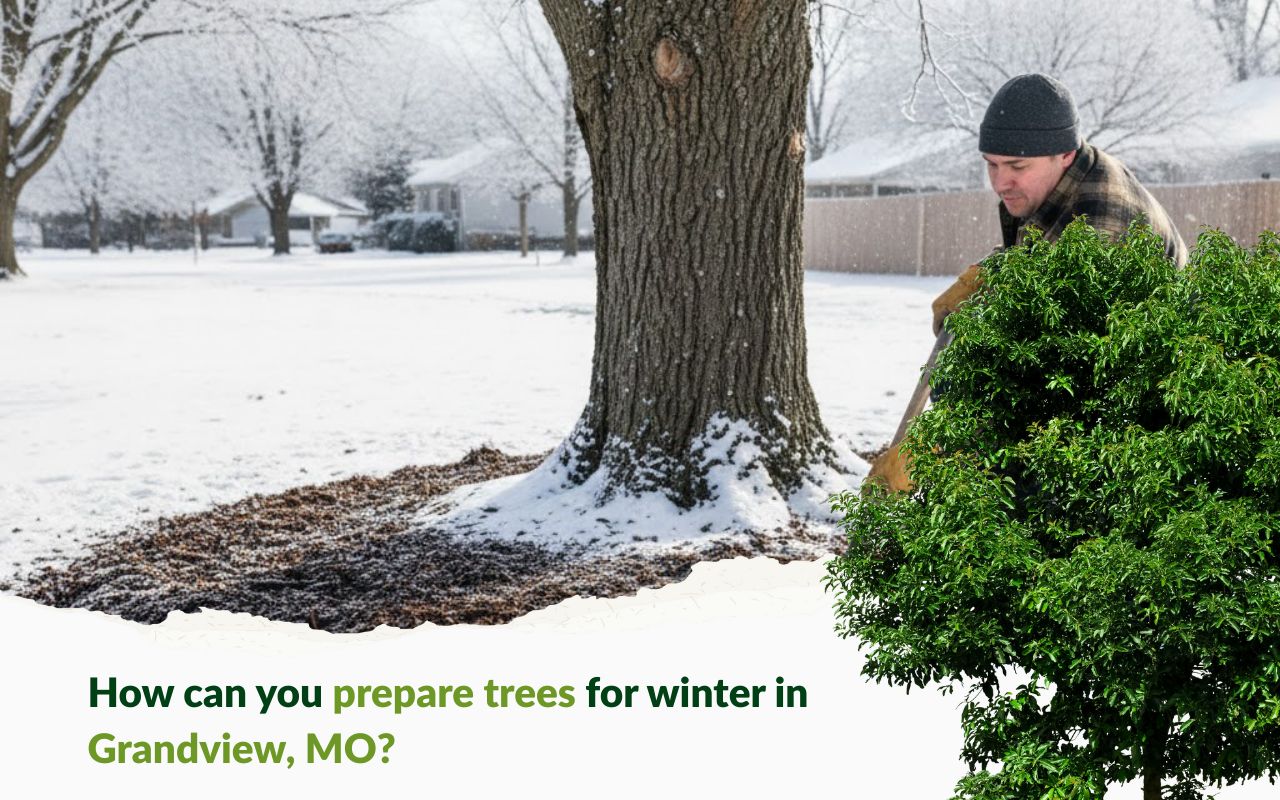
Winter in Grandview, MO, can swing from mild sunshine to sudden ice storms, and your trees feel every change. Using Winter Tree Preparation Tips in Grandview, MO helps prevent broken branches, root damage, and costly removals. This guide explains practical, homeowner-friendly steps so your trees stay healthy, safe, and ready to thrive when spring returns. Follow these tips to protect.
How can you prepare trees for winter in Grandview, MO?
Start with a health check, then prune weak limbs, add a mulch ring, protect trunks, and water during mild spells. Grandview homeowners can prepare trees by inspecting for damage, pruning weak limbs, adding a wide mulch ring, watering during dry spells, and shielding trunks from sunscald and ice. These Winter Tree Preparation Tips in Grandview, MO reduce storm breakage, protect roots from freezing, and help trees leaf out strongly when warmer weather arrives.
Why winter tree preparation matters in Grandview
Consistent winter tree care in Grandview, MO reduces breakage, disease, and safety hazards while protecting your landscape investment. As trees shift from growth to dormancy, cold snaps, ice, and heavy snow can strain branches and roots. Applying Winter Tree Preparation Tips in Grandview, MO now helps you avoid emergencies and expensive removals when storms hit.
- Broken limbs: Heavy snow and ice can snap brittle branches.
- Root stress: Freeze–thaw cycles can heave shallow roots and dry out soil.
- Structural risks: Hidden decay can turn large limbs into fall hazards.
Before harsh weather, consider a professional tree risk assessment to identify weak branches, decay, or leaning trees that might fail under winter loads.
How to assess tree health before the first frost
A quick fall inspection reveals problems you can correct before winter magnifies them. Walk your yard and look at each tree from the ground up. Note dead or broken limbs, mushrooms at the base, peeling bark, or cavities. These may indicate internal decay that could worsen under snow and ice.
- Scan the canopy for dead or crossing branches.
- Check the trunk for cracks, oozing sap, or missing bark.
- Inspect the root flare for mushrooms, soft spots, or exposed roots.
- Test soil moisture by squeezing a small handful; it should feel slightly moist, not soggy.
If you see significant cracking, fungal growth, or large dead limbs, seek local arborist advice before winter storms arrive.
Pruning strategies for safer winter canopies
Thoughtful tree pruning in winter removes hazards and shapes strong, balanced canopies. Dormant trees respond well to careful cuts because there is less sap flow and fewer insect or disease pressures. Focus on safety first, then structure.
- Remove dead, diseased, or rubbing branches back to the branch collar.
- Thin crowded areas to improve light penetration and reduce ice buildup.
- For young trees, keep one central leader and evenly spaced scaffold branches.
- Avoid “topping” or removing large sections of the crown at once.
To avoid guesswork, review these seasonal pruning tips and align your cuts with an annual tree trimming schedule so your trees stay safe and healthy year-round.
Mulching techniques for cold-weather root protection
Mulch works like a natural blanket, protecting tree roots from freezing and drying out. A proper mulch ring moderates soil temperature, conserves moisture, and supports protecting tree roots from freezing during Grandview’s freeze–thaw cycles.
- Apply a 2–4 inch layer of shredded bark, wood chips, or compost.
- Extend mulch out to the tree’s drip line where possible.
- Keep mulch 3–4 inches away from the trunk to prevent rot and pests.
- Refresh thin or washed-out mulch before consistent freezes arrive.
On slopes or windy locations, secure mulch with straw, leaf litter, or biodegradable mats so it stays in place through winter storms.
Shielding trunks and branches from extreme temperatures
Thin-barked and young trees benefit from extra protection against sunscald and frost cracks. Sudden temperature swings can heat bark on sunny days and refreeze it quickly at night, causing splitting or peeling.
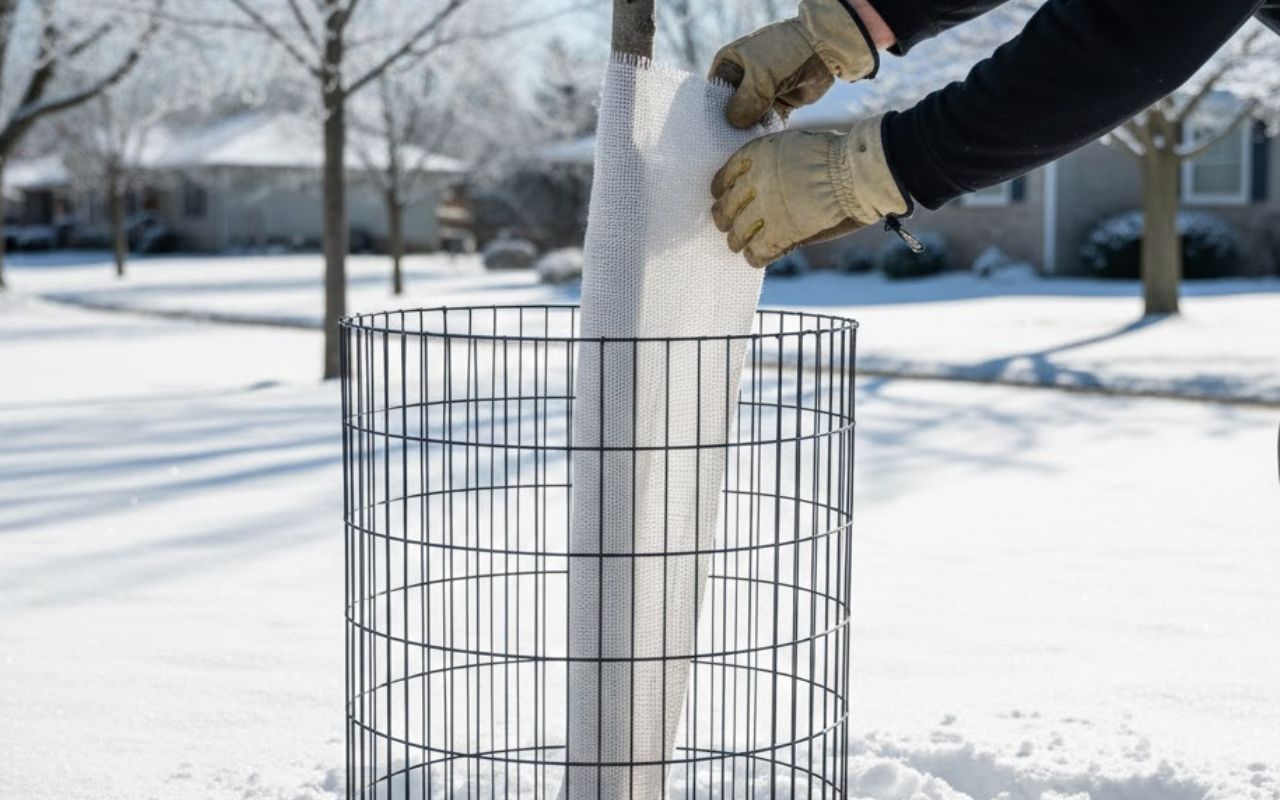
Wrap trunks of young or sensitive trees with breathable tree wrap or burlap from the base up to the first branches. Secure gently so it stays in place but does not constrict growth. Remove wraps in early spring to prevent moisture buildup and insect problems.
For added protection, use temporary windbreaks—such as burlap screens or fencing—on the prevailing wind side. These barriers reduce drying winds and help prevent twig dieback and ice damage.
Smart winter watering and root protection practices
Even dormant trees lose moisture and may need supplemental water during dry Grandview winters. Consistent winter watering for trees is especially important for young plantings and evergreens with shallow roots.
On mild days when soil is not frozen, water deeply around the root zone until the top 6–8 inches of soil are moist. Use a slow trickle so water soaks in rather than running off. As part of your Winter Tree Preparation Tips in Grandview, MO, combine deep watering with mulch to lock in soil moisture and reduce root stress.
Avoid watering right before a hard freeze, when standing water could create an ice layer around roots. Instead, target daytime temperatures above freezing and allow several hours for drainage.
Monitoring trees and spotting winter damage
Regular winter check-ins help you catch damage early and prevent small issues from becoming hazards. After heavy snow or ice, scan trees for broken, hanging, or bent branches that could fall.
- Gently brush off heavy snow from small branches using an upward motion.
- Never shake icy branches; let the ice melt naturally to avoid snapping limbs.
- Watch for sunscald—pale, cracked patches of bark, often on the south or southwest side.
- In late winter and early spring, note twigs that snap easily or show brown tissue inside.
Signs like fungal conks at the base, peeling bark, and extensive dieback may indicate serious structural problems. In those cases, scheduling local arborist advice helps you decide whether pruning, cabling, or removal is safest.
Frequently Asked Questions
When should I schedule winter tree pruning in Grandview, MO?
Most structural pruning is best done between late fall and early spring while trees are dormant. For timing that fits local weather patterns and species, review the recommended dates in the tree trimming schedule and book services before major snow and ice events are common.
How can I plan year-round tree care around winter needs?
A written plan keeps inspections, pruning, and watering on track. Use the annual tree maintenance calendar to schedule fall inspections, winter pruning, mulching, and late-winter checks so your trees stay protected in every season.
Do I need a professional after an ice storm damages my trees?
Yes, call a professional if large limbs are broken, near power lines, or over homes and driveways. A certified arborist can perform a safe tree risk assessment, remove hazardous branches, and advise on long-term recovery strategies.
What if I’m unsure whether my trees are healthy enough for winter?
Subtle signs of decay or stress can be easy to miss. If you see mushrooms, trunk cavities, or extensive deadwood, schedule a visit through local arborist advice to get personalized guidance and a treatment or removal plan before severe weather arrives.
How do I request expert help with winter tree care in Grandview?
The safest approach is to combine DIY care with professional support. For tailored Winter Tree Preparation Tips in Grandview, MO and on-site service recommendations, you can contact our Grandview tree care team and request an inspection or estimate.
How to prepare your Grandview trees for winter: step-by-step
Use this checklist to turn winter planning into simple, repeatable actions each year.
- Walk your property and note dead limbs, mushrooms, or leaning trees.
- Schedule pruning and hazard removal using the tree trimming schedule.
- Apply a 2–4 inch mulch ring around each tree, keeping it away from the trunk.
- Install trunk wraps or windbreaks on young, thin-barked, or exposed trees.
- On mild days, water deeply around vulnerable trees if the soil is dry.
- Log key tasks and reminders in your tree maintenance calendar so Winter Tree Preparation Tips in Grandview, MO become part of your annual routine.
- If anything looks unsafe or uncertain, contact our Grandview tree care team for a professional evaluation.
References
- Protecting Your Trees and Shrubs in Winter – The Old Farmer’s Almanac
- How to Protect Trees from Winter Weather – Homes & Gardens