
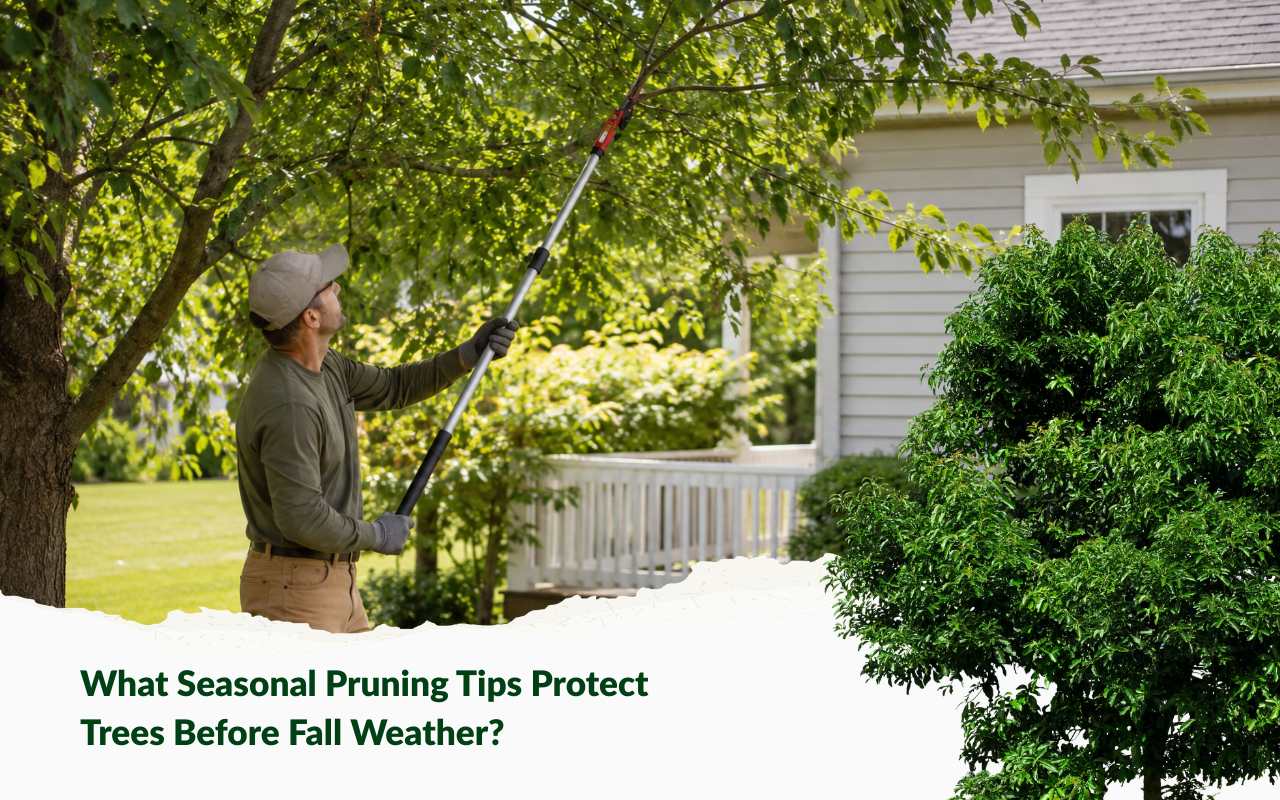
Seasonal pruning tips help homeowners remove damaged, crowded, or unsafe growth before fall weather adds stress. The goal is to improve clearance, airflow, and tree shape without cutting too much or pruning at the wrong time.
When pruning feels risky or unclear, reviewing your options with Landscape and Tree Services can help you decide what is safe to handle and what needs trained tree care.
Seasonal Pruning Tips Reduce Damage Before Cooler Months
Late summer pruning should focus on safety, structure, and light cleanup. Heavy shaping can stress a tree, but selective cuts can remove weak limbs before wind, rain, or cooler weather makes problems worse.
At Perez Landscape and Trees LLC, we look for branches that may fall, rub, block views, or grow too close to the home. The U.S. Forest Service explains that pruning supports safety, tree health, and appearance when done correctly.
- Remove dead or broken limbs first.
- Trim branches touching roofs or siding.
- Cut crossing limbs that rub bark.
- Improve clearance near paths and driveways.
- Leave healthy limbs when they support tree shape.
Small cuts are usually safer than large cuts because trees can close smaller wounds more easily. If a branch is heavy, high, or near wires, use professional help instead of risking injury.
Late Summer Pruning Tips Improve Airflow And Clearance
Late summer pruning tips work best when cuts are light, clean, and planned. The goal is not to force new growth. Instead, pruning should open crowded areas, remove hazards, and help the tree enter fall in better condition.
Our team at Perez Landscape and Trees LLC checks the branch angle, the tree’s balance, and nearby property before recommending a cut. Thinning crowded branches can let more light and air move through the canopy. However, removing too much can expose limbs and weaken the tree.
Use these pruning rules when deciding what to trim:
- Cut damaged limbs before healthy limbs.
- Keep cuts outside the branch collar.
- Avoid topping or flat cutting trees.
- Do not remove large limbs without support.
- Stop if the tree shape becomes uneven.
For larger cleanup or clearance concerns, a quick Contact Perez Landscape and Trees request can help you understand the safest next step.
Pruning Rules Prevent Stress And Costly Tree Problems
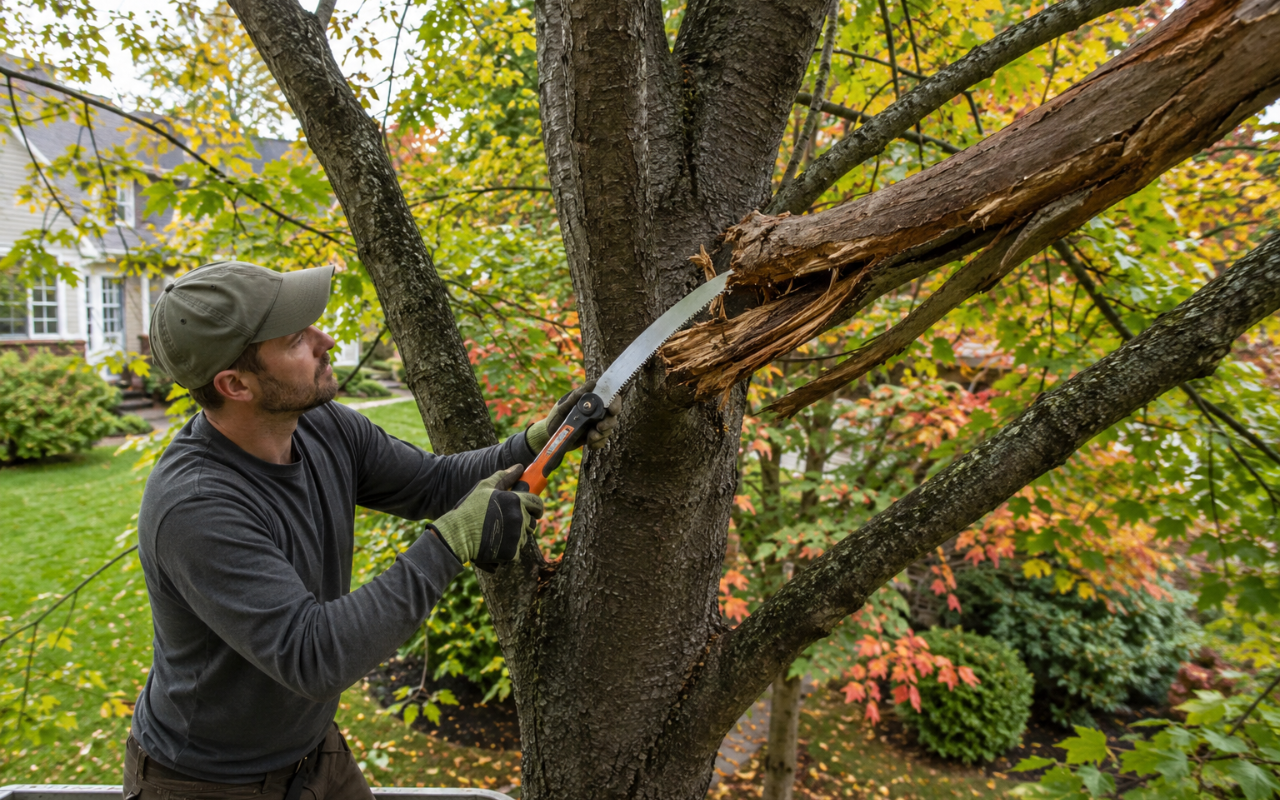
Good pruning rules protect the tree from damage after the cut. A clean cut in the right place helps the tree respond naturally, while jagged cuts, stubs, and over-pruning can invite decay or weak regrowth.
Perez Landscape and Trees LLC uses a practical approach because every property has different trees, slopes, structures, and access points. We do not recommend cutting just to make a tree look smaller. Instead, we check what the tree needs and what the property needs.
Common mistakes include cutting too close to the trunk, leaving long stubs, removing too much canopy, and pruning spring-blooming shrubs too late. Penn State Extension notes that flowering shrub timing matters because some shrubs form next year’s buds on older wood.
Never remove more than needed to solve the problem. When a tree has disease signs, cracked limbs, or large hanging branches, it is safer to pause and get guidance before cutting.
Clear Signs Show Which Branches Need Attention First
Homeowners can spot many pruning priorities by looking for damage, crowding, and clearance concerns. The safest cuts usually start with branches that are already dead, broken, rubbing, or creating a risk around the property.
With Perez Landscape and Trees LLC, customers can expect straightforward recommendations before work begins. We explain which limbs should be removed, which branches should stay, and why some cuts may harm the tree.
- Dead branches with brittle bark.
- Broken limbs hanging in the canopy.
- Branches rubbing against each other.
- Growth blocking sidewalks or driveways.
- Limbs touching roofs, fences, or gutters.
- Heavy branches leaning over outdoor areas.
Clearance pruning helps protect both trees and property when cuts are selective. If a branch is above a roof, near power lines, or too large to control, schedule help through our Tree Care Contact Page.
Our Pruning Process Guides Homeowners From First Contact
A clear pruning process helps homeowners understand what happens before any cutting starts. We first ask about the tree, the concern, the location, and nearby structures so the work can be planned with safety in mind.
When customers contact Perez Landscape and Trees LLC, we review the issue and explain what information is helpful. Photos can help, but an on-site review may be needed for height, weight, access, or property risks.
- We ask what problem you noticed.
- We review clearance, damage, and safety concerns.
- We explain practical pruning options.
- We prepare for safe access and cleanup.
- We review the finished area after work.
Good pruning starts with a clear reason for every cut. That approach helps prevent unnecessary trimming and keeps the work focused on tree health, safety, and property protection.
Frequently Asked Questions
Can I prune trees myself in late summer?
You can handle small, reachable cuts when branches are light and easy to control. Use sharp tools, gloves, and eye protection. For heavy limbs, roof clearance, or branches near wires, review safer options through our Professional Outdoor Services.
What branches should be removed before fall weather?
Focus on dead, cracked, hanging, crossing, or rubbing branches first. Also look for limbs touching gutters, siding, fences, or walkways. These branches can become bigger problems when wind and rain arrive, especially if they already show weakness.
Which pruning cuts are safest for healthy trees?
Thinning cuts are often safer than random heading cuts because they remove a branch at a natural junction. Clean cuts outside the branch collar help the tree respond better. If the cut location is unclear, use the Schedule A Tree Review page.
Can late summer pruning hurt flowering shrubs later?
Yes, some shrubs form next year’s flower buds before fall. Pruning them too late can remove those buds. Summer-blooming shrubs often handle light pruning better, but spring-blooming shrubs may need a different schedule.
How do I know when pruning needs professionals?
Call for help when limbs are large, high, cracked, near power lines, or above valuable property. Professional pruning also helps when a tree looks unbalanced or diseased. Our Tree And Landscape Service Options can help you choose the right next step.
Plan Safer Tree Care Before Problems Grow Larger
Seasonal pruning tips work best when every cut has a clear purpose. With Perez Landscape and Trees LLC, you get practical guidance, safer planning, and respectful cleanup for your property. To protect trees before fall stress increases, start with a clear review through our Contact Our Local Tree Team.