
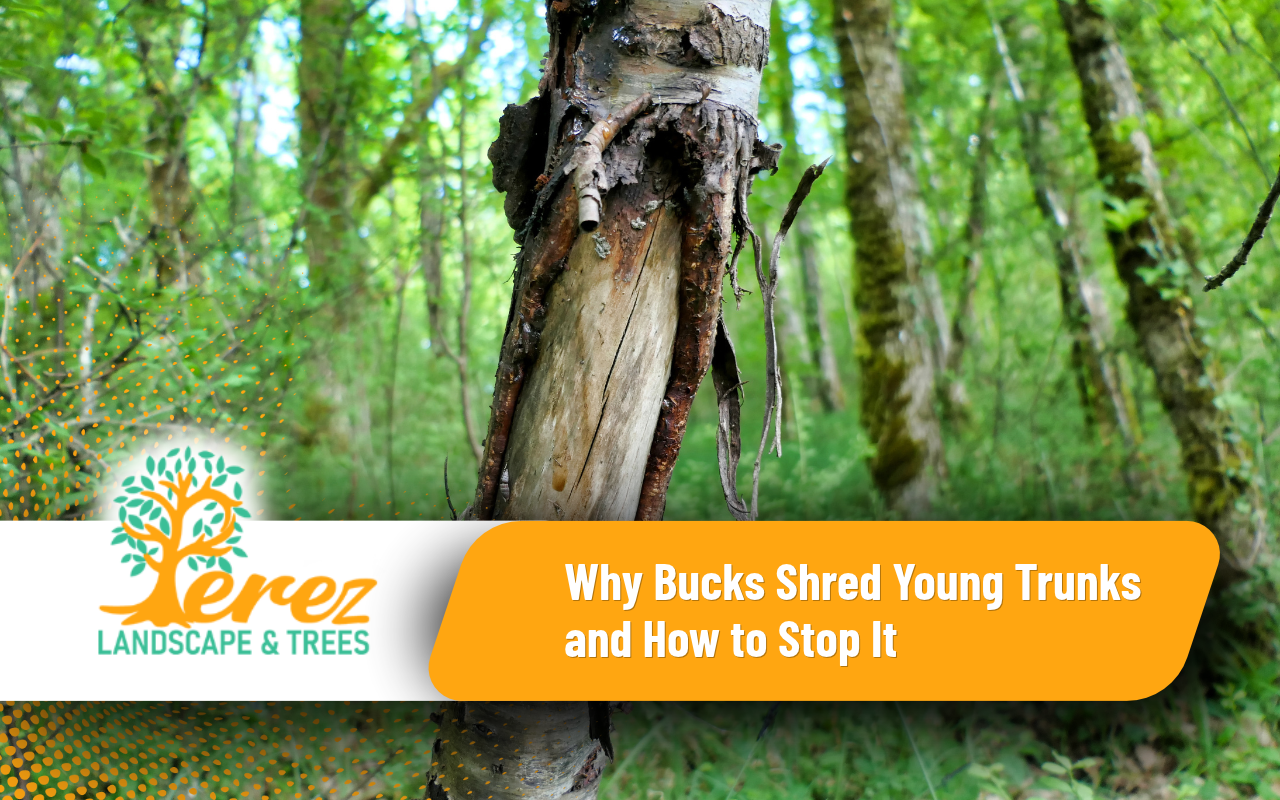
You find a young maple in November with bark hanging in strips, scraped bare from knee to waist height. It looks like vandalism, but it is usually a buck rubbing its antlers. A single night can undo years of growth. If you have found fresh damage, you can request a tree assessment with a free estimate.
Deer rubbing damage on young trees is common across Kansas City suburbs that border parks, creeks and wooded lots. The answers below explain why it happens, how to judge the damage and which protection actually works.
Why Do Deer Rub Their Antlers on Young Trees?
Bucks rub trees in late summer and fall to remove velvet from their antlers and to mark territory during the breeding season. They prefer small, smooth-barked trees with trunks about one to four inches wide, because those trunks bend and hold their scent well.
Rubbing usually peaks from September through November, though damage can appear into early winter.
How Can You Tell Deer Rub From Other Bark Damage?
Deer rub leaves shredded, frayed bark on one side or around the trunk, usually between one and four feet above the ground. Broken twigs and scuffed soil at the base are common. Rodent damage, by comparison, shows small tooth marks near the soil line.
| Damage type | Height on trunk | What it looks like |
|---|---|---|
| Deer rub | About 1 to 4 feet | Shredded strips, broken lower branches |
| Deer browsing | Branch tips up to about 6 feet | Ragged, torn twig ends |
| Rabbit or vole chewing | Soil line to about 2 feet | Small, neat tooth marks |
| Mower or trimmer damage | Base of trunk | Clean cuts or wounds at grass level |
Will a Tree Recover From Deer Rub?
It depends on how much bark is gone. A tree with damage on less than a quarter of the trunk usually recovers with time. Damage around half the trunk is serious, and a trunk stripped all the way around is often fatal.
To get an honest read on your tree, you can protect your young trees with help from our licensed crew.
At Perez Landscape and Trees LLC, we measure how much of the trunk is damaged before recommending repair or replacement. The bark carries water and nutrients between roots and leaves. When that layer is cut all the way around, the tree cannot feed its roots and slowly declines.
What Should You Do Right After Finding Damage?
Trim loose, hanging bark back to firm edges with a clean, sharp knife, so the wound can callus evenly. Do not paint or wrap the wound with sealant. Then protect the tree before the deer returns, because bucks often rub the same tree again.
- Clean ragged bark edges without cutting into healthy wood.
- Leave the wound open to air.
- Install a guard or cage the same day.
- Water during dry spells to reduce stress.
- Check for new growth in spring before deciding on replacement.
How Can You Protect Trees From Deer Before Rutting Season?
Physical barriers work best. Repellents may reduce browsing, but they rarely stop a buck that has chosen a tree for rubbing. Install protection in late summer, before rubbing starts.
- Wire mesh cages about four to five feet tall, set away from the trunk
- Sturdy stakes around the tree to block antler contact
- Trunk guards that allow airflow and are removed in spring
- Fencing for groups of young trees in open yards
Guards should not touch the bark tightly, since trapped moisture can invite insects and disease.
Which Young Trees Are Most at Risk?
Newly planted trees with smooth bark are the most common targets, including maples, redbuds, lindens, fruit trees and young evergreens. Trees planted along wood lines, creeks or open fields see the most damage, since deer travel those edges at dawn and dusk.
Deer rubbing damage on young trees is also common in newer subdivisions where homes back up to green space.
How Does Winter Care Help a Damaged Tree?
A damaged tree needs steady moisture and protection from extra stress through its first winter. A good layer of mulch keeps roots insulated and holds water. Our guide to winter mulching for trees explains how deep to spread it and how far from the trunk.
Cold snaps can also crack thin bark. Our article on young tree freeze protection and our Grandview cold weather care guide cover the rest of the winter routine.
Who Offers Young Tree Protection Service in Kansas City, MO?
Our team at Perez Landscape and Trees LLC helps homeowners and commercial properties install guards, assess damage and decide whether to keep or replace a young tree. With more than 16 years of experience, we know which local yards see the heaviest deer pressure each fall.
Frequently Asked Questions
Do deer rub the same tree every year?
Often yes. Bucks return to favorite areas, so protection should stay in place each fall until trunks are larger.
Can I wrap the wound with tape?
No. Tape and sealants can trap moisture and slow healing.
At what size are trees safe from rubbing?
Trees with trunks thicker than about four to five inches are rubbed less often, though not never.
Should I replace a fully girdled tree?
Usually yes, because a trunk stripped all the way around rarely survives.
Giving Young Trees a Fair Chance to Mature
Deer rubbing damage on young trees is easier to prevent than to repair. Guards installed before fall, quick care after damage and steady winter moisture give trees the best chance.
With Perez Landscape and Trees LLC, your young trees get protection planned around local deer activity.
Call (816) 315-1508 or schedule young tree care before next rutting season.