
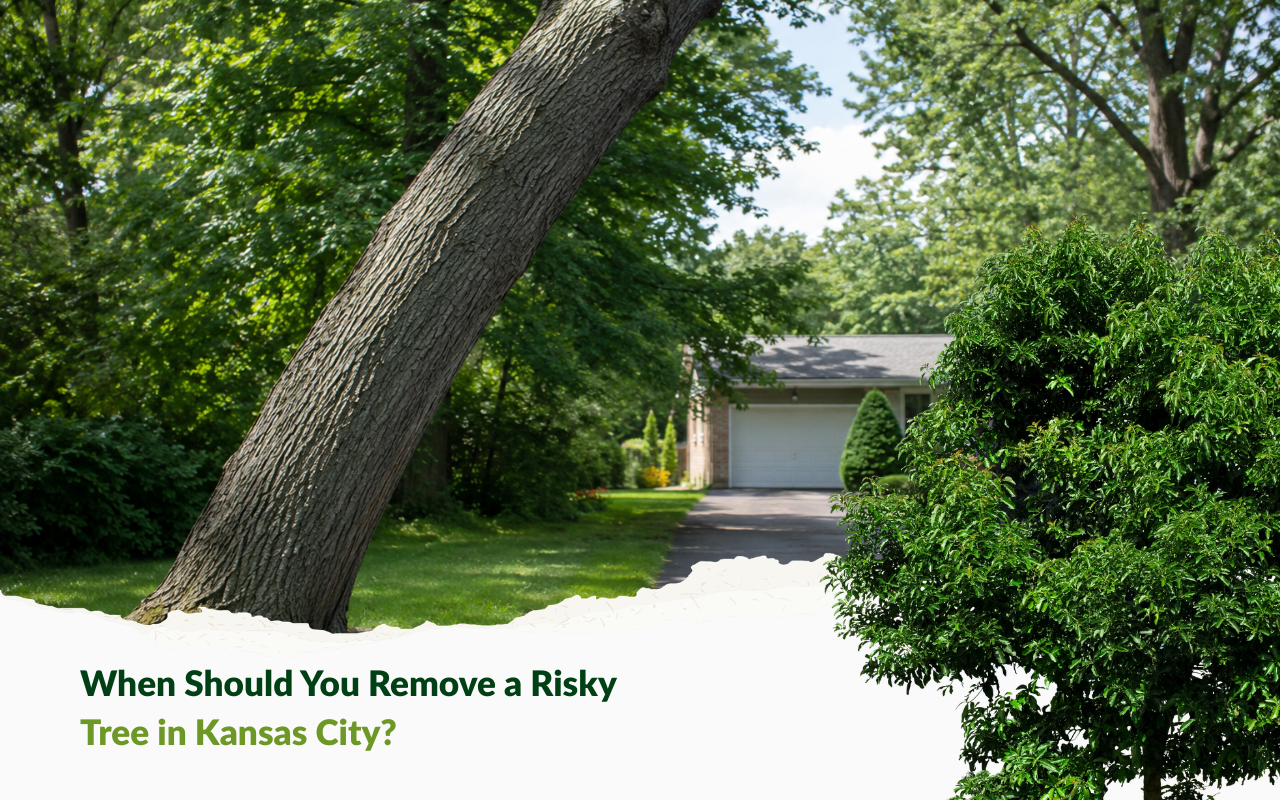
A tree may need removal if it is :
- Leaning toward a structure
- Cracked or split trunk
- Hollow or decaying sections
- Dropping large limbs
- Storm-damaged branches
- Growing too close to power lines
- Crowding your home or driveway
- Unsafe even with green leaves
When Should You Remove a Risky Tree in Kansas City?
A tree inspection looks at health, structure, roots, canopy weight, and nearby targets. Homeowners need this help when a tree shows decay, storm damage, or sudden changes. The goal is to find safety risks early and choose a practical next step before failure occurs.
Learn more about related care through our Services.
Signs A Tree May Need Removal Near Kansas City
Some tree warning signs point to serious structural risk, especially when the tree is near a house, driveway, sidewalk, garage, fence, or power line. These signs should be checked before the next storm adds more stress.
Large dead limbs over a roof, garage, sidewalk, or fence increase removal urgency. Fungal growth near the base may indicate internal decay or root issues. A tree can still have green leaves and be structurally unsafe when the trunk, roots, or branch attachments are weak.
- Sudden leaning toward a home or driveway
- Open cracks in the trunk or major limbs
- Hollow areas or soft, crumbling wood
- Large dead branches above active areas
- Fungus near the base or exposed roots
Tree Problems That Can Sometimes Be Fixed Safely
Not every risky tree needs removal. Some trees can be improved with trimming, monitoring, watering, mulching, or support when the damage is limited and the main structure remains stable.
When customers contact Perez Landscape and Trees LLC, we look for signs that a tree still has enough healthy crown, strong attachment points, and stable roots. MU Extension explains that some storm-damaged trees can recover when damage is slight and proper care is used.
Tree problems that may sometimes be fixed include:
- Small broken limbs away from structures
- Minor bark wounds with healthy surrounding tissue
- Light canopy imbalance after pruning
- Early drought stress during summer heat
- Limited storm damage on a healthy tree
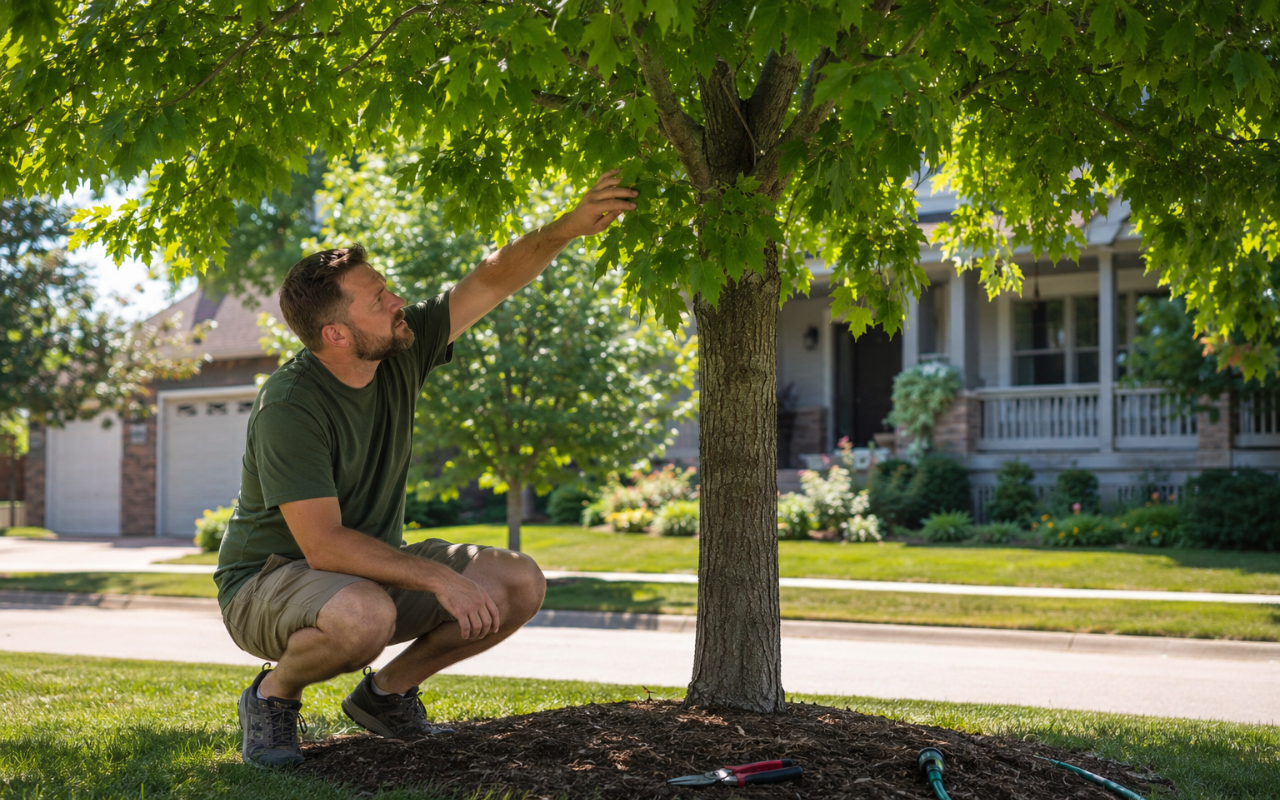
Why Tree Risk Assessments Protect Kansas City Properties
A tree risk assessment helps homeowners understand whether a tree is likely to fail and what could be damaged if it does. The inspection connects tree condition with nearby people, buildings, vehicles, and outdoor spaces.
Summer tree risk in Kansas City can rise when heat, drought stress, heavy rain, and sudden wind affect weak trees. A tree leaning toward a driveway after a Kansas City storm should be inspected before the next round of high winds.
TreesAreGood.org explains that tree risk management may include pruning, cabling, routine care, moving targets, or removal when the risk becomes unacceptable. If the concern is close to your property, request guidance through our Contact page.
What Happens During A Tree Risk Assessment Appointment
A professional inspection starts with the visible parts of the tree, then moves to the area around it. The process helps identify root movement, trunk weakness, canopy imbalance, decay, and possible targets.
With Perez Landscape and Trees LLC, you get a clear explanation before work begins. We ask about recent storms, falling limbs, changes in lean, nearby property concerns, and how long the issue has been visible.
- We review recent wind, rain, or visible damage.
- We inspect roots, trunk, limbs, and canopy shape.
- We check nearby homes, vehicles, fences, and walkways.
- We explain pruning, monitoring, or removal options.
- We help you understand the safest next step.
Tree Removal Vs Pruning Decisions Need Clear Inspection
The choice between removal and pruning depends on the defect, tree location, and chance of failure. Pruning may solve branch issues, but removal may be safer when the trunk, roots, or main structure is unstable.
At Perez Landscape and Trees LLC, we compare the tree’s condition with the risk around it. A dead branch over open lawn is different from a cracked limb above a roof. Tree hazard assessment should always consider both the tree problem and the target below.
| Tree Warning Sign | Possible Risk | Recommended Action |
|---|---|---|
| Leaning after a storm | Root instability | Schedule urgent inspection |
| Cracks in the trunk | Structural weakness | Assess for removal |
| Large dead branches | Falling limb hazard | Pruning or removal |
| Fungus at the base | Decay or root damage | Professional evaluation |
When To Remove A Tree In Kansas City
Tree removal may be the safer option when damage affects the trunk, roots, or main branch structure. A tree can sometimes be trimmed, but removal becomes more likely when the failure risk is high.
Removal should be considered when a tree leans toward a driveway after a Kansas City storm, has a split trunk, or drops large limbs repeatedly. A tree with severe internal decay, root movement, or major canopy loss may not be safe to keep.
During a tree risk assessment, we explain whether pruning, monitoring, or removal fits the condition. If the tree is close to your home, garage, fence, or walkway, do not wait for the next round of strong wind.
Kansas City Storm Risks That Make Removal Urgent
Storm season tree inspection in Missouri becomes urgent when wind, rain, ice, or saturated soil changes how a tree stands. Sudden leaning, exposed roots, hanging limbs, or trunk splits should not be ignored.
Storm damage is urgent when a tree could fall on a person, roof, driveway, fence, or utility area. MU Extension warns that twisted or bent storm-damaged branches may hold hidden pressure and can react dangerously when cut.
After heavy wind or rain, stay away from hanging limbs and downed utility lines. Take photos from a safe distance, note what changed, and review next steps on our Home page if you need local tree care support.
Frequently Asked Questions
What signs mean a tree should be removed?
A tree may need removal if it leans suddenly, has trunk cracks, drops large limbs, shows root movement, or has fungus near the base. If those signs are near a home, driveway, or walkway, request help through our Contact page.
Is storm damage urgent for Kansas City trees?
Storm damage is urgent when limbs are hanging, the trunk is split, roots have lifted, or the tree leans toward property. Keep people away from the area. Do not cut large twisted branches because hidden pressure can release without warning.
What should I do after heavy wind or rain?
After heavy wind or rain, check trees from a safe distance. Look for leaning, broken limbs, fresh cracks, exposed roots, or branches touching structures. Then review available care options through our Services page.
Can pruning fix a tree that looks risky?
Pruning can help when the problem is limited to dead, broken, or poorly placed branches. Pruning may not solve trunk cracks, root instability, severe decay, or sudden lean. A professional inspection helps separate repairable problems from removal concerns.
Who can inspect risky trees near my property?
A local tree care team can inspect risky trees near homes, driveways, fences, sidewalks, and outdoor spaces. Start with our Home page to review local tree care support and decide your next step.
Protect Your Property With Safer Tree Decisions
A tree risk assessment gives you clear information before storms make a weak tree more dangerous. When you choose Perez Landscape and Trees LLC, we inspect the tree, explain the risk, and help you decide whether pruning, monitoring, or removal is the safer choice. To schedule help, visit our Contact page.