
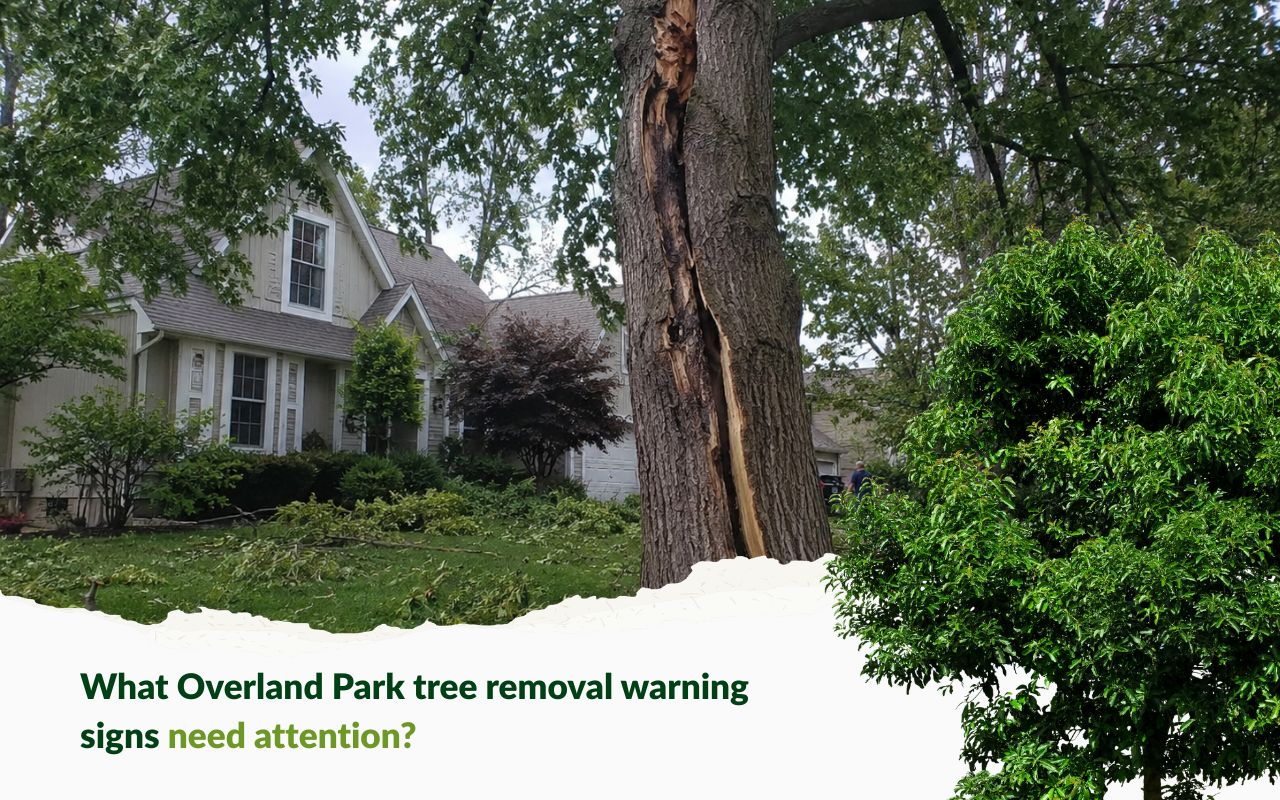
Storm damage can leave a tree looking normal from the street, even when hidden cracks, weak roots, or dying limbs are already present. In Overland Park, checking early warning signs helps you protect people, roofs, fences, driveways, and nearby utilities before a risky tree fails.
What Overland Park tree removal warning signs need attention?
Overland Park tree removal warning signs include trunk cracks, dead limbs, leaning, root damage, fungal growth, and canopy decline after storms. These signs can point to structural weakness, decay, or storm injury that should be checked before the tree becomes unsafe.
Tree removal warning signs are visible changes that show a tree may be weak, dying, or unsafe. Homeowners, property managers, and business owners need to watch for these signs because damaged trees can drop limbs, split, or fall during wind, rain, ice, or heavy storms.
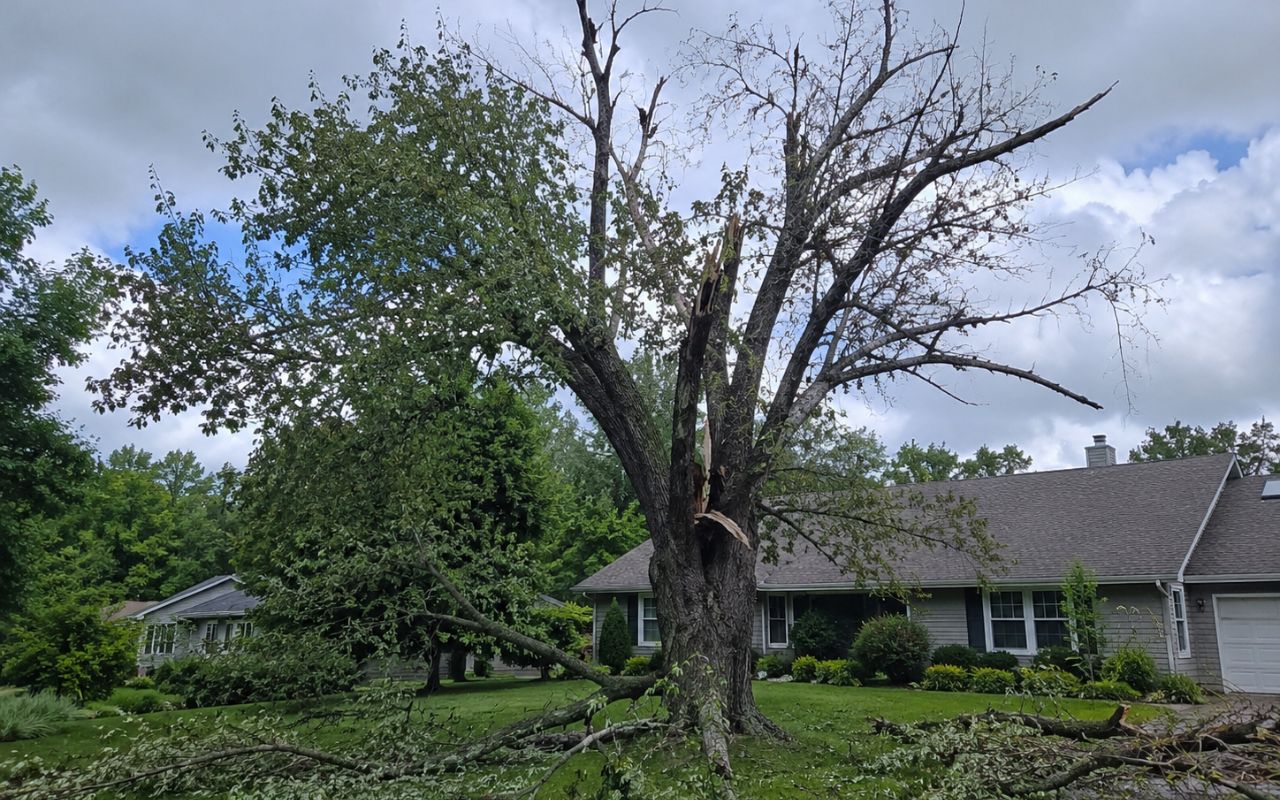
Overland Park tree removal warning signs guide safer decisions
Early warning signs help you decide when a tree needs closer review, trimming, support, or removal. At Perez Landscape and Trees LLC, we look for structural problems, decay, storm injury, and nearby property risks before explaining the safest next step.
Some trees decline slowly, while others become dangerous after one strong storm. Therefore, a short walk around the yard can reveal changes before they become costly. Look from the trunk to the highest branches, then check the soil near the roots.
Expert Tip: 🌳 Check trees after each season for new cracks, dead limbs, or leaning.
- Large dead limbs hanging over roofs, cars, patios, or walkways
- Mushrooms, conks, or soft wood near the trunk base
- Fresh leaning after wind or heavy rain
- Loose bark, deep cavities, or open wounds
- Raised soil near roots or a lifted root plate
Overland Park tree removal warning signs matter most when two or more problems appear together. For example, a leaning tree with root heave and dead upper branches needs faster attention than a tree with one small broken limb.
Cracks in the trunk can show that the tree has lost strength inside the wood. Cracked trunk indicators are especially important after storms because pressure from wind can open old weak spots and create new failure points.
Not every bark line is an emergency. However, deep splits, widening seams, and cracks near large branch unions deserve care. These areas can let moisture, insects, and decay enter the tree.
- Vertical cracks running down the trunk
- Splits where two main stems meet
- Dark, wet, or soft wood inside the crack
- Cracks paired with a sudden lean
- Open wounds near heavy limbs
When customers call Perez Landscape and Trees LLC, we ask where the crack is, how long it has been visible, and whether the tree changed after a storm. Photos also help us understand the risk before the visit.
Canopy decline after storms exposes urgent safety concerns
A thinning canopy after severe weather can signal broken limbs, root stress, or internal decline. Canopy decline after storms is a warning sign when leaves disappear unevenly, branches die back, or one side of the tree looks weaker.
Healthy trees usually leaf out with a balanced crown. In contrast, stressed trees may show bare branch tips, early leaf drop, or small yellow leaves. These symptoms can point to root injury, disease, drought stress, or storm damage.
Expert Tip: 🍃 Note canopy changes after storms before they become harder to track.
Missouri Extension storm guidance explains that hazards to life and property come first after storms. That is why hanging branches, split leaders, and broken limbs over active areas should be checked from a safe distance.
With Perez Landscape and Trees LLC, you get clear guidance on whether the tree needs pruning, monitoring, or removal. The goal is to reduce risk without removing a tree that can still recover safely.
Root problems increase property risks around Overland Park
Root damage can make a tree unstable even when the trunk looks solid. Weak roots may come from saturated soil, construction damage, compacted ground, decay, or drought stress around the root zone.
Roots hold the tree in place. When roots fail, the tree may lean, shift, or lift soil near the base. This can create danger near homes, sidewalks, fences, and driveways.
Watch for fresh soil cracks near the trunk, raised ground on one side, exposed rotten roots, or a trunk that moves during wind. These signs can show that the anchoring system is failing.
Our crew at Perez Landscape and Trees LLC can explain whether root damage points to monitoring, pruning, bracing, or removal. A tree with root decay and a heavy lean should not be ignored.
Regular inspections prevent small problems from becoming hazards
Routine checks help catch tree problems while there is still time to act. A basic inspection after each season can show new cracks, dead limbs, fungus, pests, leaning, or canopy changes before they become emergencies.
Homeowners can inspect from the ground without climbing or cutting. Start at the soil, move up the trunk, then look through the canopy. If anything looks unsafe, keep people and pets away from the area.
- Check the trunk for cracks, cavities, and loose bark.
- Look for dead limbs above roofs, decks, and paths.
- Review the canopy for thinning or uneven growth.
- Watch the soil for root lifting or soft spots.
- Use dead tree warning guide details for extra signs.
Expert Tip: 📝 Keep simple notes after inspections to track tree changes over time.
Tree risk often rises when a defect sits near a target, such as a house, driveway, or play area. A weak limb in an open field may be less urgent than a weak limb over a bedroom.
Our booking process prepares safer tree removal decisions
A clear process helps you know what to expect before tree work begins. After a review from Perez Landscape and Trees LLC, we explain visible risks, access needs, cleanup options, and whether local guidance may affect the work.
When you contact us, we first ask about the tree’s location, size, visible damage, and nearby structures. We may also ask for photos of the trunk, canopy, roots, and storm damage.
- First, we review the concern and ask what changed recently.
- Next, we check visible signs from the ground.
- Then, we explain safer options in simple terms.
- Before work begins, we discuss access and cleanup needs.
- After the service, we help you understand the cleared area.
If permits or local rules may apply, review local permit guidance before scheduling. Homeowner association rules may also affect tree work in some neighborhoods.
Professional crews reduce danger during complex tree removals
Tree removal can involve heavy limbs, unstable trunks, power lines, tight yards, and nearby buildings. A trained crew uses planning, safe work zones, and the right equipment to lower the chance of property damage or injury.
Trying to remove a hazardous tree without proper equipment can make the situation worse. Large limbs can swing, split, or fall in unexpected ways. Therefore, complex removals need careful control from start to finish.
Use a complete tree services page to review available help before deciding. For trees with major defects, a tree risk assessment can also support a safer decision.
Overland Park tree removal warning signs are easier to manage when action starts early. A planned removal is usually safer than waiting until a storm turns a weak tree into an emergency.
Frequently Asked Questions
How do I know if a cracked tree trunk is dangerous?
A cracked trunk may be dangerous when the split is deep, widening, wet inside, or close to a major limb union. If the crack appeared after wind or rain, schedule a review through contact our crew.
When should I worry about canopy decline after storms?
You should worry when the canopy becomes thin, uneven, bare on one side, or full of dead branch tips after a storm. These signs can point to hidden damage, root stress, or internal decay.
What happens if I leave a leaning tree alone?
A leaning tree can become more unstable when roots are damaged or soil stays wet. If the lean is new, paired with raised soil, or aimed toward a structure, review the issue quickly.
Why is fungus near the tree base a warning sign?
Fungus near the trunk base can show that wood is decaying inside or around the roots. When decay affects support wood, the tree may lose strength even if the canopy still looks green.
How can I tell if I need a tree removal service in Overland Park, KS?
You may need a tree removal service in Overland Park, KS when a tree has severe cracks, root lifting, heavy decay, major storm damage, or dead limbs over active areas. Use contact our crew to request help.
Timely action protects homes from preventable tree damage
Ignoring Overland Park tree removal warning signs can allow small defects to become serious hazards. If you see cracks, leaning, dead limbs, fungus, or storm damage, contact our team for a careful review and a clear next step through contact our crew.