
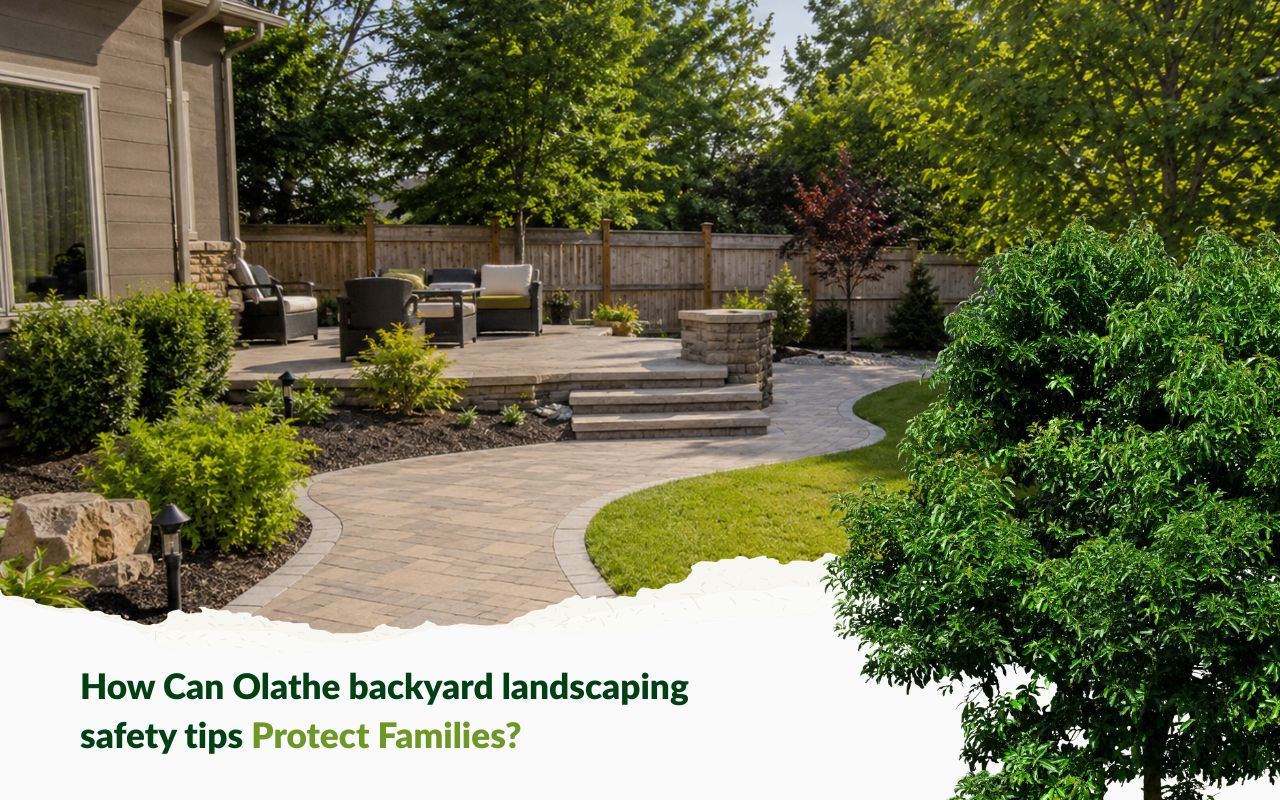
Backyard accidents often start with small details, like crowded plants, loose edging, dark steps, or wet paths. In Olathe, changing seasons can make these risks worse. These simple safety steps help you plan a yard that feels calm, useful, and easier for family members to enjoy.
How Can Olathe backyard landscaping safety tips Protect Families?
Olathe backyard landscaping safety tips help homeowners reduce slips, trips, blocked views, fire risks, and unsafe play areas while keeping the yard beautiful, practical, and easier to maintain.
Backyard safety planning uses plant layout, path design, lighting, drainage, and activity zones to make outdoor spaces easier to use. Homeowners need this service when walkways feel crowded, surfaces shift, roots lift edges, or children and guests use the yard often. It solves hidden hazards before they cause injuries.
Olathe backyard landscaping safety tips Guide Safer Outdoor Choices
Smart backyard safety starts with clear paths, visible edges, stable surfaces, and plants placed for mature growth. Olathe backyard landscaping safety tips also help homeowners prepare for rain, ice, heat, and fast seasonal growth.
At Perez Landscape and Trees LLC, we plan safety details around how people actually move through the yard. That includes patios, gates, steps, play areas, garden beds, and shaded corners.
Useful safety choices include:
- clear walking routes between the patio, gate, and seating areas
- low plants near corners for better visibility
- firm edging that does not lift above the path
- mulch placed below walkway height
- lighting near steps, slopes, and narrow turns
K-State Research and Extension explains that choosing the right plant for the right place matters before planting. That advice supports safer layouts because mature size affects paths, sightlines, and maintenance.
Safe plant spacing near walkways Reduces Daily Yard Risks
Safe plant spacing near walkways keeps branches, roots, flowers, and mulch from crowding areas where people walk. Good spacing also improves airflow, supports plant health, and makes maintenance easier.
Most trip risks near beds start when young plants are placed too close to hard surfaces. As plants mature, stems spread, roots expand, and leaves can hide path edges.
Before planting, compare each plant’s mature height and width. Then leave extra room near steps, gates, turns, and seating areas. With Perez Landscape and Trees LLC, you get layout guidance that keeps beauty and movement in balance.
Use these spacing checks before adding new plants:
- Keep shrubs away from narrow walkway edges.
- Place taller plants behind shorter border plants.
- Trim growth before foliage covers path corners.
- Choose low groundcovers near high-traffic areas.
- Leave room for tools, hoses, and seasonal cleanup.
Plant size at maturity matters more than size on planting day.
Reducing trip hazards Keeps Paths Clear After Storms
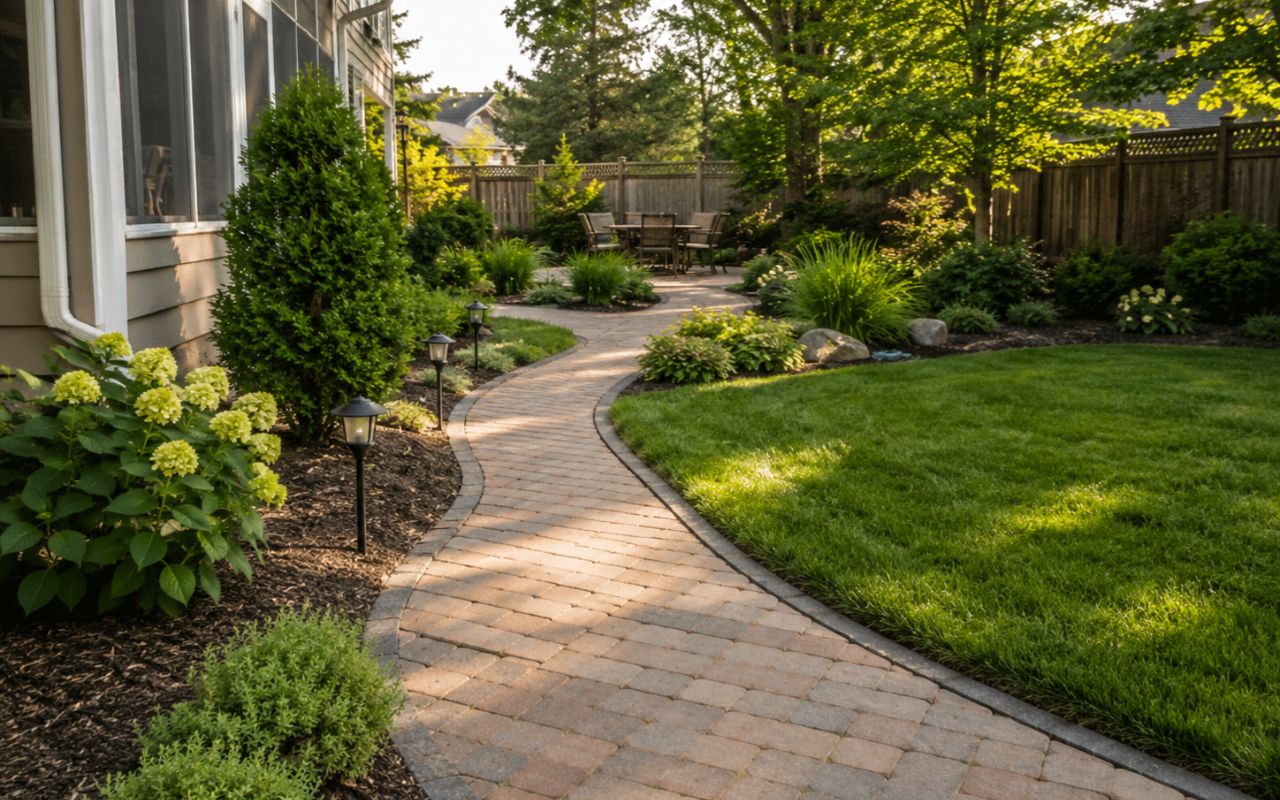
Reducing trip hazards protects guests, children, and older adults from uneven surfaces, hidden debris, exposed roots, and loose materials. Yard safety improves when walking areas stay visible, level, and free from clutter.
Olathe storms can leave branches, wet leaves, soil washout, and loose mulch across paths. These issues may look minor during the day, yet become harder to see at night.
Watch for these common warning signs:
- Raised pavers or stones
- Tree roots crossing walkways
- Wet leaves collecting near steps
- Loose gravel near slopes
- Edging that sticks above walking surfaces
- Hoses left across paths
For root concerns, review Root Damage Indicators. For seasonal cleanup, use Fall Leaf Cleanup Yard Safety Tips.
Small height changes can cause falls when they appear near steps, gates, or shaded paths.
Textured Pathway Surfaces Improve Wet Weather Footing
Safe pathway surfaces give feet better grip during rain, frost, and normal watering. Textured pavers, stable stone, clean concrete, and well-set gravel can lower slip risks when installed and maintained correctly.
Smooth surfaces may feel easy to clean, but they can become slick after summer rain. Moss, algae, and wet leaves also reduce traction.
Choose materials based on how the path is used:
- Use textured pavers for main walking areas.
- Choose compacted gravel only where it can stay contained.
- Add step lighting where surfaces change height.
- Avoid polished stone on slopes or steps.
- Clean organic buildup before it becomes slippery.
Good drainage protects both safety and surface life. Water should move away from patios, walkways, steps, and play spaces.
Layered Lighting Supports Safer Evening Backyard Use
Layered lighting helps people see steps, turns, gates, furniture, and plant bed edges after sunset. A safe lighting plan uses soft path lights, task lights, and security lighting without creating harsh glare.
Dark yards can hide toys, roots, hose lines, and wet leaves. That makes familiar paths unsafe during evening cookouts or quick trips outside.
Place path lights along main routes. Add downward lighting near stairs, decks, and retaining wall edges. Motion lights can support security near sheds, gates, and side yards.
Lights should reveal hazards, not shine directly into people’s eyes. Check bulbs and fixtures after storms because tilted lights may miss the walking surface.
Defined Play Zones Create Safer Family Outdoor Spaces
Defined play zones help children use one area while adults keep equipment, tools, grills, and furniture away from active movement. Clear zones also make supervision easier in busy backyards.
A play space should have soft ground materials, visible borders, shade, and enough room around equipment. The U.S. Consumer Product Safety Commission shares playground safety guidance that highlights the value of safer surfacing and inspection.
Keep play areas away from fire pits, water features, steep slopes, and hard garden edging. Store tools and lawn equipment outside the active play zone.
Helpful play zone features include:
- soft landing surfaces under active play equipment
- low borders that show the edge of the area
- shade from trees, sails, or umbrellas
- clear space around swings and slides
- regular checks for loose bolts or damaged materials
Families can also explore broader options through Outdoor Services.
Fire Feature Placement Limits Heat And Ember Risks
Fire pits, grills, and outdoor cooking areas need open space, nonflammable surfaces, and regular cleanup. Safer placement lowers the risk of heat damage, ember spread, and accidental burns.
The National Fire Protection Association recommends careful grill use to help prevent fires, burns, and property damage. In backyard design, that starts with distance from siding, fences, branches, dry leaves, and play areas.
Place fire features on stone, gravel, concrete, or another nonflammable base. Keep water, sand, or a proper extinguisher nearby when flames are active.
Before using a fire area, check for:
- overhanging limbs
- dry mulch near flames
- windy weather
- children or pets nearby
- furniture placed too close
Never leave an active flame unattended. Wait until embers are fully out before leaving the area.
Backyard landscaping service in Olathe KS Simplifies Safer Planning
A professional backyard landscaping service in Olathe, KS can help homeowners see hazards that are easy to miss. A second set of trained eyes can review grade, plant placement, paths, roots, drainage, and activity areas.
When customers contact Perez Landscape and Trees LLC, we first ask about the yard’s use, safety concerns, problem areas, and goals. Photos can help us understand crowded beds, uneven surfaces, or drainage issues.
Our team at Perez Landscape and Trees LLC reviews how people enter, walk, sit, play, and maintain the space. Then we explain safer options without adding pressure.
Common review points include:
- walkway width and surface condition
- plant spacing near paths and windows
- tree limbs, roots, and falling debris risks
- lighting around steps and gates
- water movement after rain
- safe access for future maintenance
Visit Landscaping Services to learn more about yard planning and outdoor improvements.
Booking a Safety Review Prepares Your Yard Project
A simple booking process helps homeowners understand what to expect before any yard work begins. Clear questions, site review, option discussion, and preparation steps make the project easier to plan.
Before work begins with Perez Landscape and Trees LLC, we explain what we see, what may need attention, and which steps can help improve safety. We do not expect homeowners to know every hazard before calling.
Here is what the process may include:
- Initial contact through a call, message, or contact form
- Basic questions about the yard, paths, plants, and concerns
- Review of photos or a site visit when needed
- Clear explanation of practical options
- Preparation guidance before service begins
- Final review of completed work and care tips
Use Contact Our Team when you are ready to discuss safer backyard options.
Frequently Asked Questions
How do I know if my backyard has trip hazards?
Look for raised pavers, exposed roots, loose edging, wet leaves, hoses, uneven steps, and hidden path edges. The guide on Root Damage Indicators can help with root-related warning signs.
When should I improve plant spacing near walkways?
Improve spacing when plants touch walking areas, block corners, hide edges, or need constant trimming. Safe plant spacing near walkways is best planned before shrubs reach full size.
What happens if leaves stay on backyard paths?
Wet leaves can hide uneven surfaces and reduce traction. Regular cleanup supports reducing trip hazards, especially near steps, gates, patios, and shaded walkways. See Fall Leaf Cleanup Yard Safety Tips.
Why is lighting important for backyard safety?
Lighting helps people see steps, path edges, toys, roots, furniture, and wet spots after sunset. Good lights guide movement without creating glare or dark gaps.
How do I start a safer backyard landscaping plan?
Start by listing your biggest concerns, such as paths, plants, drainage, lighting, or play areas. Then request help through Contact Our Team.
Start Your Safer Backyard Plan With Clear Guidance
Olathe backyard landscaping safety tips work best when they match your space, family, and daily routine. For help reviewing paths, plants, lighting, and outdoor zones, visit Contact Our Team and share what feels unsafe.