
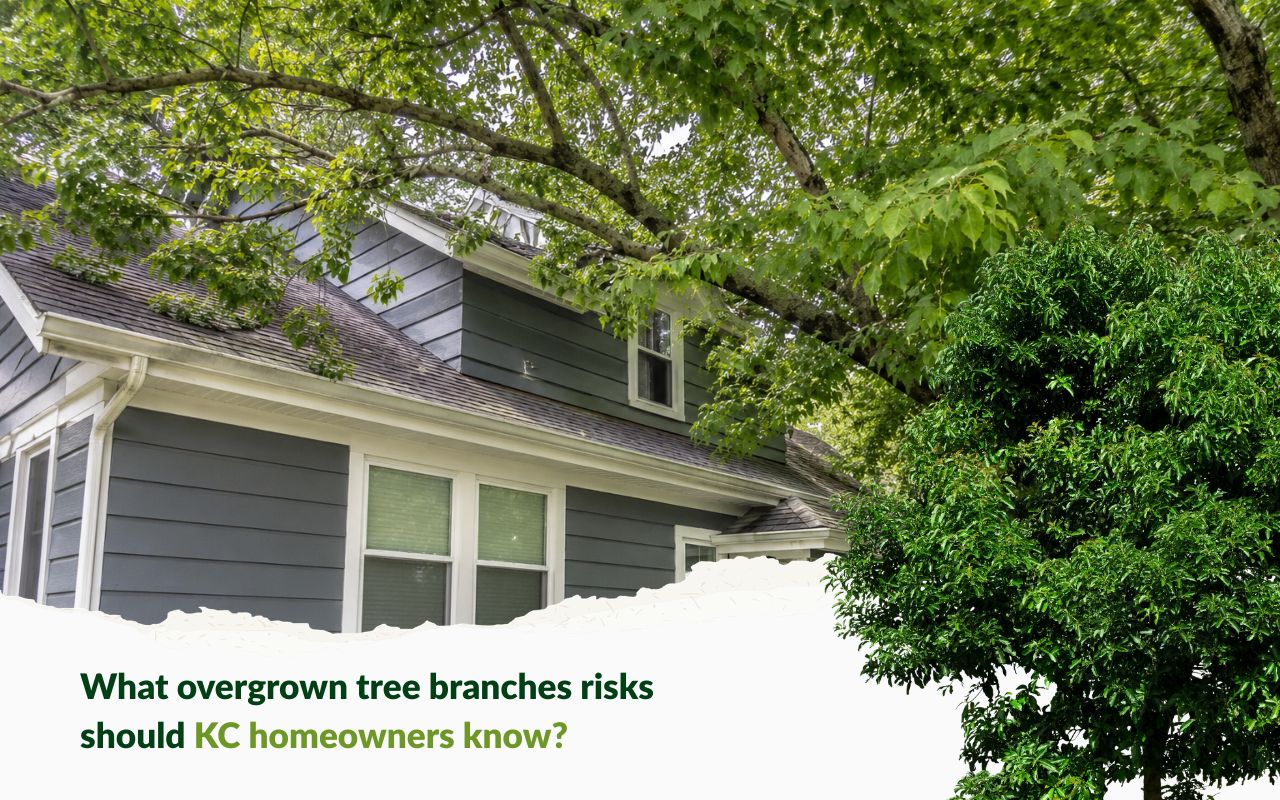
Branches that look harmless today can become a real problem after wind, ice, or heavy rain in Kansas City. When limbs hang over roofs, driveways, sidewalks, or neighboring yards, they deserve attention. At Arborist Inspection in KC Before Tree Removal, we help homeowners understand what should be checked before branches fail.
What overgrown tree branches risks should KC homeowners know?
Overgrown tree branches risks include falling limbs, roof damage, blocked gutters, sidewalk hazards, pest problems, and possible neighbor disputes. Homeowners should watch for dead wood, cracks, sagging limbs, and branches near structures or power lines before damage happens.
For many homeowners, branch safety starts with knowing which limbs are too heavy, damaged, crowded, or too close to the home. This kind of tree care helps families protect roofs, gutters, vehicles, walkways, and neighboring property before weather turns a weak limb into a serious hazard.
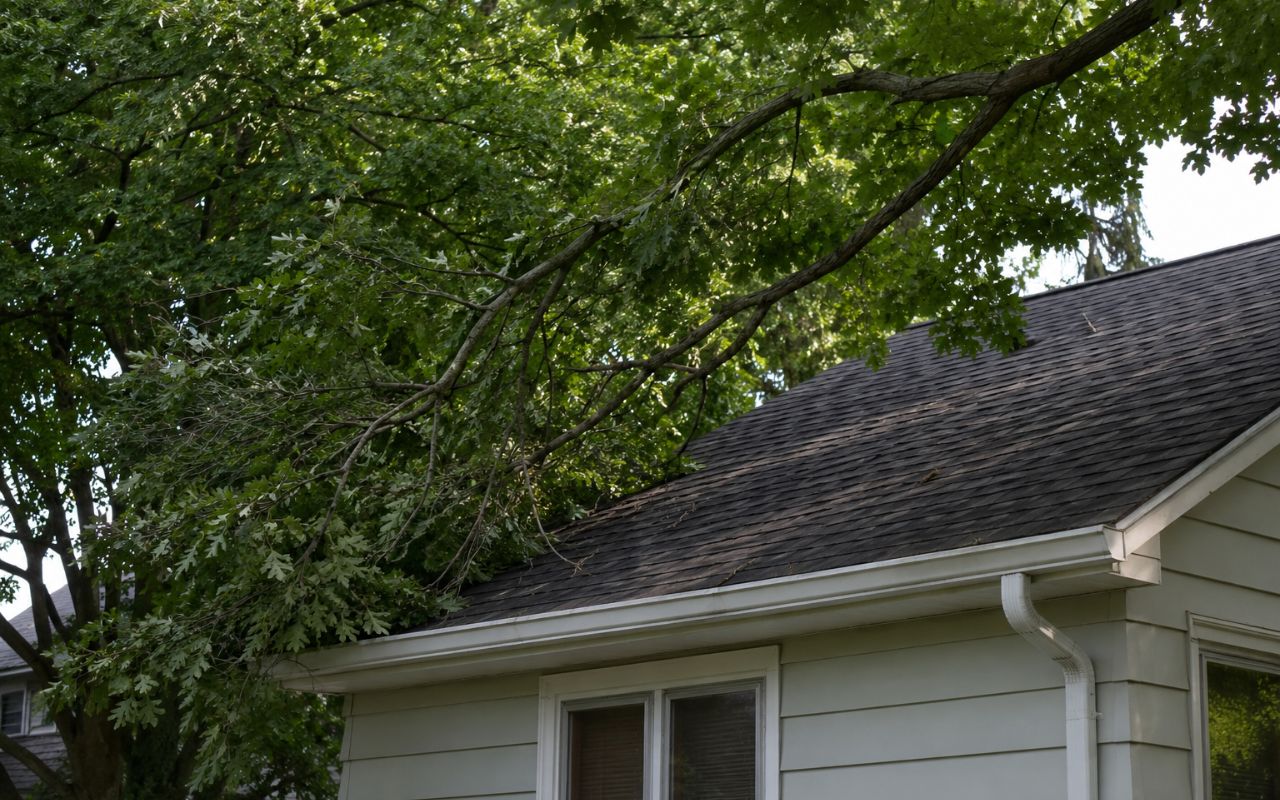
Recognize overgrown tree branches risks before damage spreads
Overgrown limbs become risky when weight, decay, poor spacing, or weather pressure makes them likely to break. The danger grows when branches hang above roofs, cars, fences, sidewalks, or play areas where people and property can be hit.
At Perez Landscape and Trees LLC, we look for branch weight, weak angles, rubbing limbs, and canopy crowding during a property review. Dense growth can block airflow and sunlight, which may leave some areas weaker. According to MU Extension, pruning can support tree health, size, form, and vigor.
- Roof contact that can lift shingles or scrape gutters
- Dead limbs that may fall without clear warning
- Heavy canopy sections that catch wind during storms
- Branches near walkways that can create safety concerns
When branches touch structures or hang over high-use areas, it is time to review them carefully.
Identify hazardous branches with simple homeowner warning signs
Hazardous branches often show visible signs before they break. Cracks, peeling bark, dead leaves, fungal growth, hollow areas, and sagging limbs can all point to hidden weakness that should be reviewed before the next storm.
Homeowners asking how to identify hazardous branches should start with a slow walk around the yard. Look from the ground, not from a ladder. Notice limbs that lean lower than before, rub against other branches, or show exposed wood.
- Cracks or splits along the branch or trunk connection
- Fungal growth near bark, roots, or large limbs
- Dead leaves in season on one branch section
- Hollow sounds when a low branch is tapped safely
- Fresh breaks after wind, ice, or heavy rain
When customers contact Perez Landscape and Trees LLC, we ask what changed, where the branch is located, and whether it threatens a roof, driveway, fence, or neighbor’s yard.
Understand overhanging branch liability Missouri homeowner concerns
Overhanging branches can create liability concerns when a homeowner knows about a hazard and does not take reasonable steps to address it. Records, inspections, and timely pruning can help show that safety concerns were handled responsibly.
Overhanging branch liability Missouri homeowner concerns often involve neighbors, fences, parked vehicles, sidewalks, and shared property lines. We do not give legal advice. However, we do recommend documenting visible problems, photos, inspection dates, and pruning work.
With Perez Landscape and Trees LLC, you can discuss branch concerns before a minor issue becomes a larger dispute. If a limb is hanging over a neighbor’s property, polite communication can help. A tree review can also support safer decisions.
- Take dated photos of visible hazards.
- Keep pruning and inspection records.
- Review limbs after major storms.
- Use Seasonal Pruning Tips for Healthier Trees for timing guidance.
Choose tree pruning service in Kansas City wisely
A tree pruning service in Kansas City, MO should focus on safety, branch structure, tree health, and property protection. Good pruning removes risky limbs without cutting too much or leaving weak stubs that can create future problems.
Large trees can be dangerous to cut without the right tools and experience. MU Extension warns that working in large trees is dangerous and recommends using a competent, insured arborist when mature trees need pruning. This matters when limbs are high, heavy, or storm-damaged.
At Perez Landscape and Trees LLC, we review the branch location, nearby structures, tree condition, and safe access points. Then we explain which limbs should be trimmed, which may need closer inspection, and what can wait. Safe pruning decisions protect both the tree and the property.
If branches are near wires, roofs, or steep areas, do not try to cut them yourself. Ask for help through Contact Perez Landscape and Trees LLC in Kansas City, MO.
Prepare for safer pruning through our review process
Our pruning process starts with questions about the tree, the branch location, recent storm damage, and the area below the limb. This helps us understand the risk before we recommend trimming, closer inspection, or another safe next step.
When you contact Perez Landscape and Trees LLC, we first ask what you noticed and where the branch is located. During the appointment, we check the canopy, trunk connection, nearby targets, and signs of decay. Before work begins, we explain the recommended approach.
- Share the concern, including photos when available.
- We review the tree location and visible risks.
- We explain trimming options and safety concerns.
- Approved pruning is completed with care.
- We help you understand what to watch next.
This process helps homeowners understand when are tree branches dangerous homeowner in KC and when a deeper review is the better choice.
Frequently Asked Questions
When are tree branches dangerous for Kansas City homeowners?
Tree branches are dangerous when they are dead, cracked, heavy, leaning, rubbing the roof, or hanging over areas people use often. Weather can make weak limbs fail faster. For deeper checks, use Arborist Inspection in KC Before Tree Removal.
What signs show a branch could fall soon?
Common warning signs include bark splits, exposed wood, dead leaves, fungal growth, fresh storm cracks, and limbs that sag lower than nearby branches. A branch can also become risky when it rubs another limb or hangs above a roof, vehicle, walkway, or fence.
Can overhanging branches damage roofs and gutters?
Yes, overhanging branches can scrape shingles, clog gutters, damage fascia, and drop debris that holds moisture near the roofline. Trimming at the right time can reduce these risks. Review Seasonal Pruning Tips for Healthier Trees before planning routine maintenance.
Should I prune large branches by myself?
Small, low branches may be manageable with proper tools and safety gear. Large, high, cracked, or storm-loaded limbs should be handled by trained professionals. Heavy branches can shift suddenly, damage property, or injure someone when the cut is made.
Who should I contact about hazardous tree branches?
Contact a local tree care team when branches threaten roofs, cars, walkways, fences, or neighboring property. Share photos and describe the concern clearly. You can start through Contact Perez Landscape and Trees LLC in Kansas City, MO for practical next steps.
Reduce branch hazards with careful local tree guidance
Overgrown tree branches risks are easier to manage when you act before damage happens. Check your trees after storms, watch for visible warning signs, and ask for help when limbs are high, heavy, or close to structures. For more guidance, visit Tree Branch Safety Guide for Homeowners and plan your next safe step.