
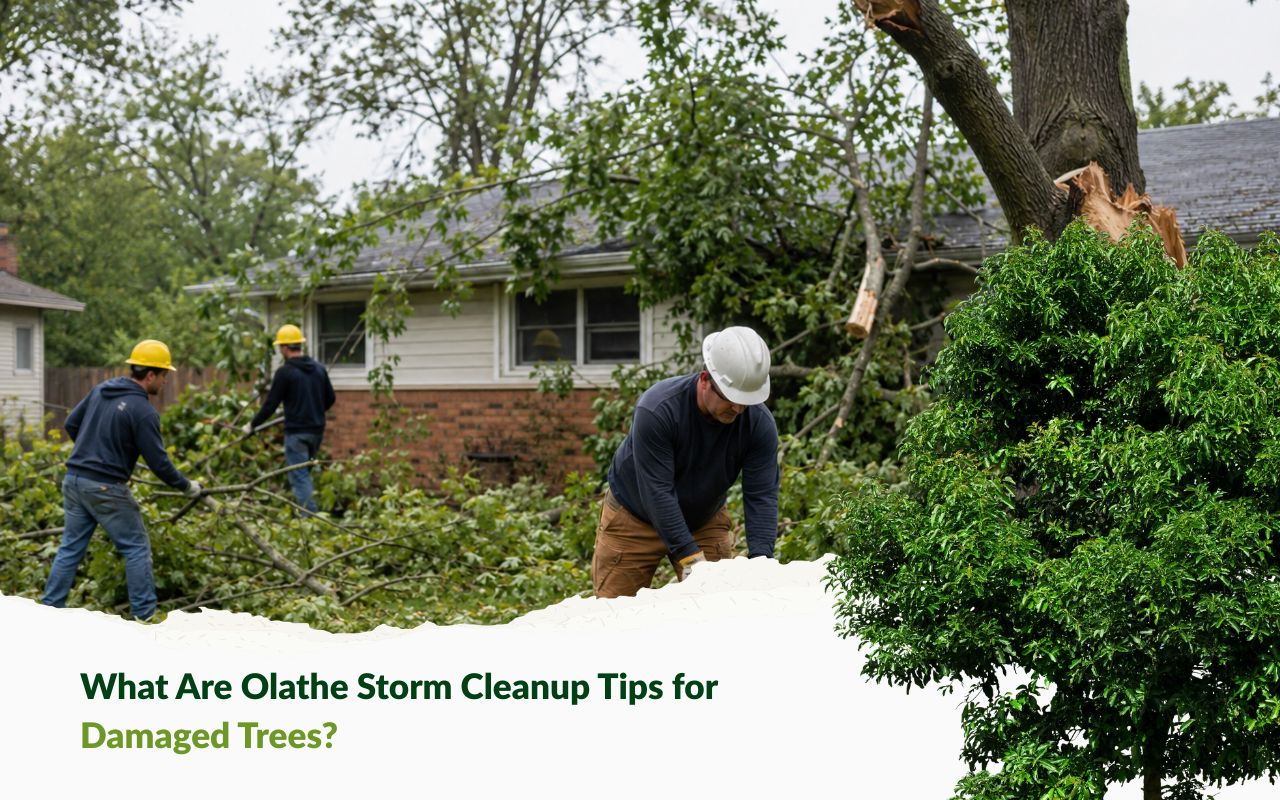
Storms can leave broken limbs, leaning trunks, and debris across your yard. However, the right cleanup plan protects people first. Then, it helps you decide what can be pruned, repaired, documented, or removed safely.
What Are Olathe Storm Cleanup Tips for Damaged Trees?
Olathe storm cleanup tips for damaged trees help homeowners inspect hazards, avoid unsafe limbs, document damage, and choose safe repair or removal steps after severe weather.
Olathe storm cleanup tips for damaged trees are practical steps for homeowners after wind, lightning, or heavy rain harms trees. These tips help people with broken branches, leaning trunks, exposed roots, or debris decide what is safe, what needs records, and when professional help is needed.
Assessing Damage First Protects Your Home And Trees
A careful first look helps you find urgent hazards before cleanup begins. Start with trees near roofs, driveways, fences, walkways, and utility lines. Then decide which damage is minor, which needs pruning, and which may require removal.
At Perez Landscape and Trees LLC, we recommend walking the property slowly after the storm has fully passed. Therefore, look for cracked trunks, split branches, fresh leaning, exposed roots, and hanging limbs.
Do not stand under damaged branches. Also, do not pull on limbs caught in another tree. A limb under pressure can shift fast and fall without warning.
- Check trees from a safe distance first.
- Take wide photos of the whole tree.
- Take close photos of cracks, wounds, and exposed roots.
- Mark trees that lean toward buildings or wires.
- Call for help when the damage looks unstable.
According to First Aid for Storm-Damaged Trees, a mature shade tree can usually survive the loss of one major limb if the broken branch is pruned back correctly.
For more warning signs, review our guide to storm warning signs.
Using Safe Cleanup Steps Prevents Avoidable Tree Injuries
Safe cleanup starts with distance, patience, and the right protective gear. Hanging limbs, twisted branches, and downed wires can create serious danger. Therefore, homeowners should clear only low-risk debris and leave unstable trees to trained crews.
Hanging limb safety matters because suspended branches can fall during cutting, pulling, or wind movement. As a result, never work below a broken branch.
The National Weather Service says people should stay in safe shelter at least 30 minutes after the last thunder before going outside.
- Wear gloves, eye protection, boots, and a hard hat.
- Keep children, pets, and neighbors away from the work zone.
- Avoid ladders near damaged trees.
- Treat every downed or touching wire as live.
- Stop work if branches are caught under pressure.
If a tree touches power lines, call the utility company first. Then request professional support when the area is safe.
Key Takeaway: First, inspect damaged trees from a safe distance. Then, protect people before pruning, moving debris, or making repair decisions.
Choosing Proper Tools Keeps Storm Debris Work Controlled
The right tools make light cleanup safer and more organized. However, tools do not replace training when trees are leaning, cracked, or under tension. Therefore, use hand tools for simple debris and request help for risky cuts.
At Perez Landscape and Trees LLC, we check the work area before using saws or ropes. Next, we explain which limbs can be cut safely and which ones need controlled removal.
| Cleanup Need | Helpful Tool Or Safer Next Step |
|---|---|
| Small fallen twigs and light branches | Use gloves, loppers, and a tarp for simple collection. |
| Low broken branches within easy reach | Use hand pruners or loppers without standing under the limb. |
| Higher damaged limbs | Use professional help instead of climbing or using unsafe ladders. |
| Large hanging limbs or leaning trunks | Request trained removal because pressure can release suddenly. |
Simple tools can help with small branches. However, chainsaws, ropes, winches, and chippers require care, space, and experience.
For urgent hazards, see our page about urgent tree help.
Pruning Broken Limbs Correctly Supports Healthy Tree Recovery
Proper pruning helps storm-damaged trees close wounds and reduce future weak points. However, poor cuts can slow recovery. Therefore, broken branches should be removed cleanly near the branch collar without tearing bark.
For small broken limbs, make clean cuts where the branch joins a larger limb. Also, avoid leaving long stubs because they can decay.
Missouri Extension advises removing jagged remains of smaller broken branches and cutting larger broken branches back to the trunk or main limb.
- Remove only broken, dead, or unsafe branches.
- Do not top the tree.
- Do not make flush cuts against the trunk.
- Watch large wounds for decay later.
- Ask for an inspection when the tree has major cracks.
Because every tree reacts differently, a professional inspection can help decide whether repair or removal is safer. You can learn more about a professional inspection.
Key Takeaway: Good tools and clean cuts support safer recovery. However, high limbs, pressure points, and major wounds need trained help.
Repairing Uprooted Trees Requires Prompt Careful Yard Action
Some small or partly uprooted trees may recover if roots stay moist and the trunk remains sound. However, large uprooted trees are often unstable. Therefore, quick assessment matters before staking, backfilling, or removal.
If a small tree has shifted, keep exposed roots from drying out. Then gently reset the root area only when the tree is light enough to handle safely.
Do not pull a large tree upright with a vehicle. Also, do not stake a cracked trunk and hope it will heal.
Perez Landscape and Trees LLC checks root exposure, soil movement, trunk splits, and lean direction before recommending repair. This helps homeowners avoid saving a tree that may fall later.
A tree with more than half of its crown gone, a split trunk, or a weak root plate may not have enough structure to recover safely.
Documenting Tree Damage Clearly Strengthens Your Insurance Claim
Documenting tree damage creates a clear record before cleanup changes the scene. Photos, notes, dates, and receipts can help explain what happened. Therefore, collect evidence before cutting branches, moving logs, or hiring removal support.
Start with wide photos that show the tree, home, driveway, fence, or shed. Then take close photos of broken limbs, trunk cracks, exposed roots, and damaged property.
Keep a simple cleanup log. Include the storm date, damage found, safety steps taken, and any equipment or service receipts.
- Photo of the full tree and nearby structures.
- Close photo of each broken or split area.
- Photo of debris before moving it.
- Receipt for rentals, disposal, or professional service.
- Notes from any tree inspection or risk review.
Clear records can reduce confusion during a claim. Also, they help a tree care crew understand the original damage.
If you need help deciding whether a damaged tree is a future hazard, request a risk review.
Key Takeaway: Some trees can recover with fast care, while others remain unsafe. Clear documentation also helps support insurance conversations.
Requesting Expert Help Reduces Serious Storm Removal Risks
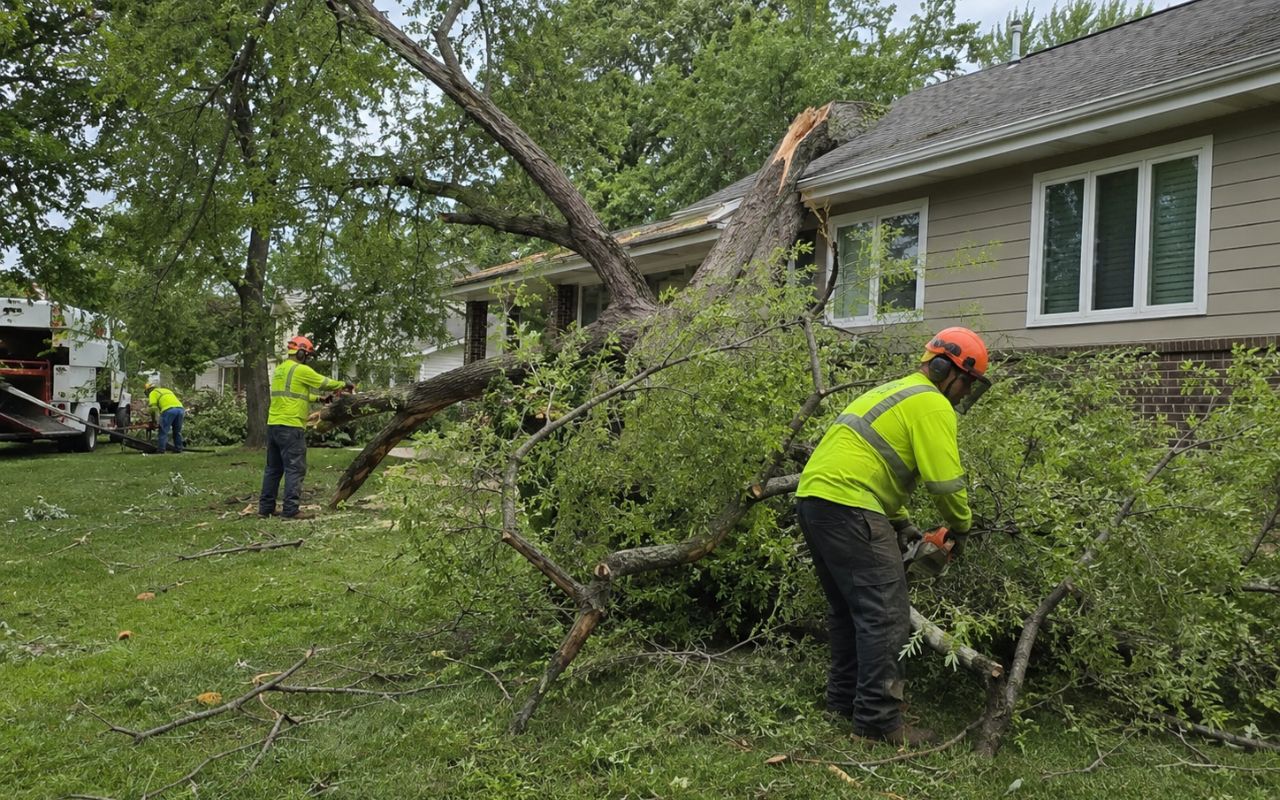
Professional help is important when a tree leans toward a structure, touches wires, or has heavy hanging limbs. Emergency tree removal in Olathe, KS requires safe cutting, controlled lowering, and careful debris handling.
According to OSHA, tree care and removal work can expose workers to falls, struck-by objects, lacerations, and energized power lines.
At Perez Landscape and Trees LLC, we inspect the tree, explain the safest plan, and remove hazards with the right equipment. Also, we clean the area so the yard is safer after the work is complete.
Emergency tree removal in Olathe, KS is not only about speed. It is about preventing extra damage to roofs, fences, vehicles, and people.
Call for help when a tree is split, uprooted, resting on a structure, or blocking access. Also, call when branches are too high or heavy to control from the ground.
Preventing Future Damage Builds A Safer Yard
Preventive tree care lowers the chance of severe storm damage later. Regular inspections, careful pruning, and early removal of weak limbs help trees handle wind better. Therefore, storm cleanup should lead into a simple maintenance plan.
After cleanup, look at every remaining tree. Check for deadwood, crossing branches, weak unions, soil heaving, and limbs growing over the roof.
Olathe storm cleanup tips for damaged trees work best when paired with seasonal care. Therefore, schedule checks before spring storms and after major weather events.
- Trim dead or damaged limbs before storms arrive.
- Keep heavy branches away from roofs and driveways.
- Watch for mushrooms, cracks, or soft trunk areas.
- Improve drainage around trees with exposed roots.
- Keep emergency contact information easy to find.
With steady care, your yard becomes easier to manage after future storms. Also, small problems are often less stressful when found early.
Key Takeaway: Trained help reduces high-risk removal hazards. Then, regular care helps your trees stay safer before the next storm.
Frequently Asked Questions
How do I know if a storm-damaged tree is unsafe?
A tree may be unsafe if it leans suddenly, has a split trunk, exposes lifted roots, or holds large hanging limbs. Review our storm warning signs for more help.
When should I call for emergency tree removal?
Call when a tree blocks access, rests on a structure, touches wires, or threatens people. For urgent help, visit our urgent tree help page.
What happens if I leave a hanging limb alone?
A hanging limb can fall during wind, cleanup, or normal yard use. Because hanging limb safety is serious, avoid standing below it and request a professional inspection.
Why is documenting tree damage important after a storm?
Documenting tree damage helps show what happened before cleanup begins. Photos, notes, and receipts can support insurance talks and guide a risk review.
How do I get help with damaged trees in Olathe?
You can share your concerns, photos, and location through our contact our crew page. Then we can discuss safe next steps for your yard.
Restore Your Yard Safely With Confident Next Steps
Olathe storm cleanup tips for damaged trees help you protect your home, document problems, and choose safe care. If your yard has risky limbs or leaning trees, Perez Landscape and Trees LLC is ready to help. Start by using our contact our crew page.