
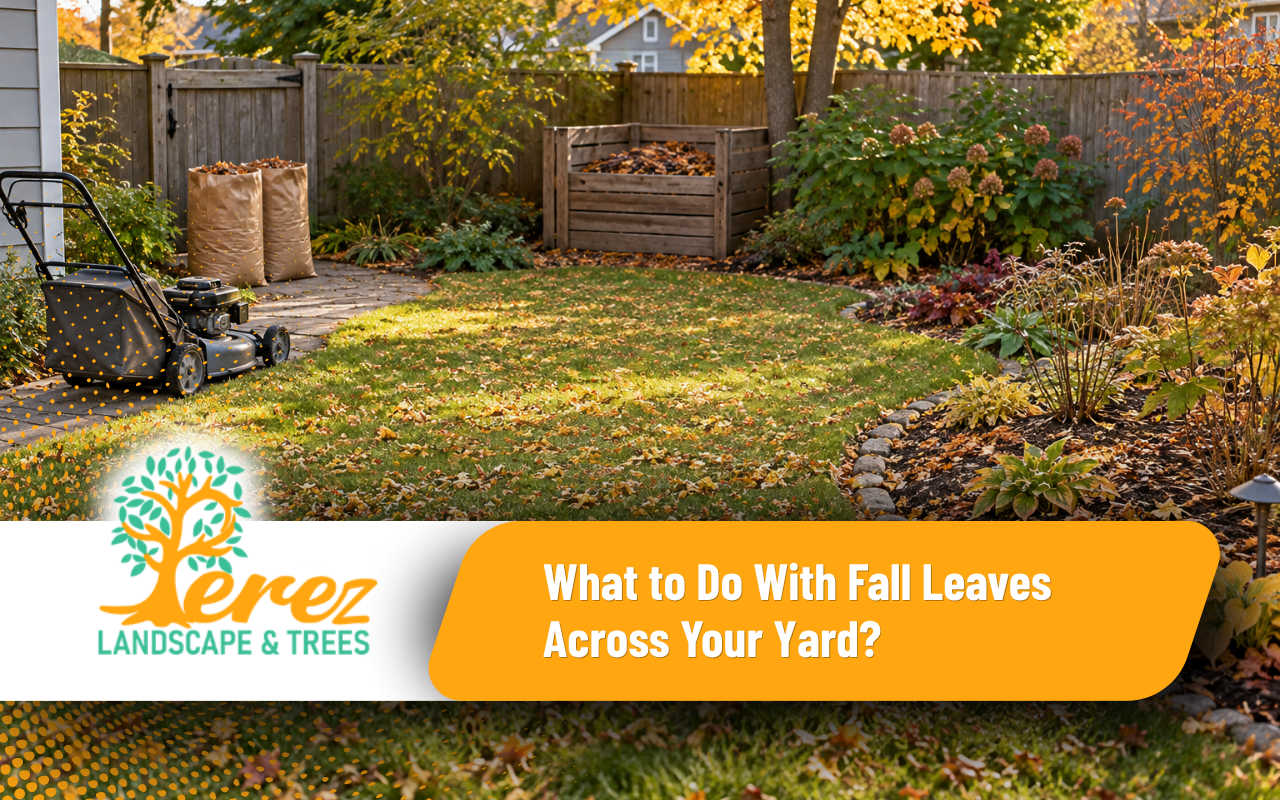
- Mulch a light leaf layer into established grass.
- Compost surplus leaves with suitable green material.
- Retain leaves in garden areas where they do not smother plants.
- Remove dense mats from turf and keep drains clear.
- Check current local collection rules before bagging leftovers.
Leaves can pile up faster than you can decide where they belong. At Perez Landscape and Trees LLC, we encourage you to sort them by yard area. Review our seasonal landscape maintenance options, then plan which leaves to reuse and which areas need clearing as autumn progresses.
Fall leaf management puts fallen organic material to useful work while protecting the surfaces beneath it. Homeowners can choose mowing, composting, garden retention, or collection. The appropriate option depends on leaf volume, grass condition, planting layout, and available space, rather than one rule that applies to every part of the yard.
Deciding What To Do With Fall Leaves By Area
The surface beneath the leaves determines the best first decision. Established grass, a garden bed, and a paved drain need different treatment. Choosing what to do with fall leaves by location helps you keep useful material without letting dense layers interfere with lawn growth.
Start with a simple yard map. Mark established turf, new grass, beds, paths, and drainage openings. Then note where leaves collect heavily after wind. Our guidance for established Kansas City lawns provides related turf care background.
- Keep grass blades visible after mulching leaves.
- Move surplus leaves to suitable beds or compost.
- Keep paths, drains, and access points clear.
- Avoid burying small plants beneath a compacted layer.
At Perez Landscape and Trees LLC, we suggest checking the yard repeatedly during leaf fall rather than waiting for one large final cleanup.
Mulching Light Leaf Layers Without Covering The Grass
Mowing leaves into small pieces can help reuse a manageable layer on established turf. The result should settle between grass blades rather than create a covering. Wet, heavy piles need removal or redistribution before they can be handled effectively with ordinary mowing.
The University of Missouri’s “Autumn Leaves: From Trash to Treasure” discusses recycling leaves through lawn mulching and other uses. If you ask, “should you mulch leaves into the lawn,” the answer depends on the amount and the result. Stop when fragments conceal the grass. More material is not automatically more beneficial.
Follow equipment instructions and check for hidden debris. However, repeated mowing will not turn a thick wet pile into a suitable lawn covering.
For grass that has just been seeded, avoid equipment traffic that could damage young plants. Move leaves carefully instead. Our safe autumn cleanup practices addresses the separate safety side of handling leaves and working around the yard.
Composting Surplus Leaves In A Manageable Home System
Composting suits leaves that exceed what the lawn or beds can accept comfortably. Start with a manageable volume so the pile can be maintained rather than becoming an oversized heap that stays untouched through winter.
MU Extension’s “Fall leaves and faded garden plants make great compost” recommends combining leaves with green plant material. Learning how to compost fall leaves involves managing the mix and the pile’s condition. Dry leaves alone break down differently from a balanced, actively maintained compost pile.
- Choose a collection area away from paths and drains.
- Add leaves with suitable untreated green plant material.
- Keep the pile damp enough for decomposition without waterlogging.
- Turn or manage the pile to maintain air movement.
Our team at Perez Landscape and Trees LLC encourages you to choose a system that fits your maintenance time. Finished compost has no guaranteed date. Ask about garden maintenance and bed planning if surplus leaves exceed your available reuse space.
Retaining Leaves In Beds While Avoiding Winter Mats
Leaves can remain in suitable garden areas where they protect soil and provide habitat. This differs from leaving an entire lawn under a dense covering. Evaluate the plants underneath and the layer’s condition, then redistribute material where it blocks growth or access.
Many homeowners ask, “is it bad to leave leaves on the grass over winter.” Thick matted leaves can smother turf, especially when they remain wet. Small fragments dispersed among visible grass blades are a different situation. The decision should reflect the actual layer rather than the calendar alone.
Keep leaf mulch away from direct trunk contact and avoid piling it against structures. Leave some suitable garden litter undisturbed where it does not bury delicate plants or create a nuisance.
With Perez Landscape and Trees LLC, you can discuss a balance between a maintained lawn and less disturbed planting areas. Choose a few intentional leaf destinations, and remove material that blocks drainage rather than moving every leaf off the property.
Arranging Collection When Reuse Space Cannot Handle Everything
Collection is reasonable when leaf volume exceeds the space available for mulching or composting. Rules depend on the municipality and collection method. Before bagging, confirm the current requirements for your address, accepted materials, preparation, and the next available pickup or drop-off option.
Kansas City leaf fall can continue across several weeks, with timing affected by species and weather. Plan flexible cleanup rounds instead of promising a fixed peak date. Avoid copying an old pickup schedule into your plan. Check current city instructions before purchasing bags or setting material outside.
If you are comparing leaf removal in Kansas City MO, ask whether the service includes collecting, hauling, or leaving material for municipal pickup. Confirm the destination before work begins.
Use our request leaf handling guidance to discuss the yard area and your intended result. Specify removal, bed reuse, or composting. Knowing what to do with fall leaves makes that request much clearer.
Frequently Asked Questions
Can I Leave Every Fallen Leaf On My Lawn?
Not if leaves form a dense layer that hides the grass. Mulch manageable amounts and move excess material elsewhere. Our maintaining grass through seasonal changes provides related lawn care guidance. Newly seeded areas may need careful leaf removal rather than mower traffic.
How Can I Tell Whether Mulched Leaves Are Excessive?
Look at the lawn after mowing. Grass should remain visible rather than disappear beneath leaf fragments. If material still forms a continuous layer, collect some of it. Wet piles and repeated heavy leaf fall can require a different destination even after they are chopped.
Should Leaves In Garden Beds Be Removed Before Winter?
Not necessarily. Suitable leaf cover can remain where it does not smother plants, pile against trunks, or block drainage. Review the planting layout before clearing everything. Our planning care for planting beds can help you connect leaf handling with the surrounding garden’s maintenance needs.
Will A Leaf Pile Become Finished Compost By Spring?
That is not guaranteed. Decomposition depends on the materials, moisture, air, temperature, and management. A pile of leaves may take longer than an actively managed compost mix. Keep expectations flexible, and do not plan a spring planting project around an unverified completion date.
What Details Help When Arranging A Seasonal Leaf Cleanup?
Share photos, the areas to clear, access limits, and whether you want reuse or hauling. Include any drains or newly seeded grass that need protection. Review our preparing safely for leaf cleanup to identify relevant yard conditions before discussing the work.
Turning Autumn Leaf Decisions Into A Practical Yard Plan
Choosing what to do with fall leaves is easier when each yard area has a purpose. At Perez Landscape and Trees LLC, we encourage thoughtful reuse and timely clearing where needed. Match leaf volume to available space, then plan your autumn leaf cleanup with clear instructions for lawns, beds, compost areas, and leftover material.