
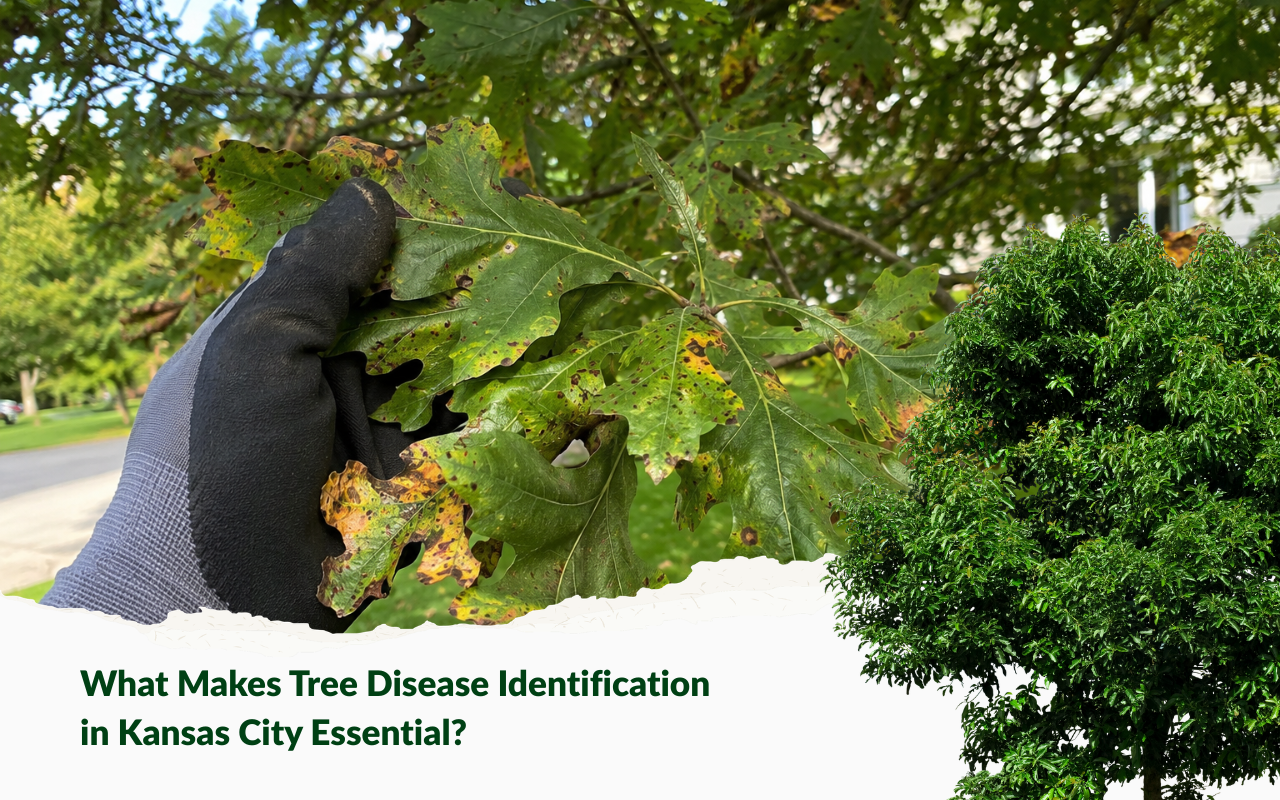
Tree disease identification in Kansas City helps property owners separate temporary stress from infection, decay, or serious decline. A careful review of leaves, bark, branches, roots, and nearby conditions can reveal warning signs early. For related guidance, review Signs of Dead Trees Kansas City Home Guide.
This type of tree evaluation checks visible symptoms and the conditions around the tree. Homeowners need it when leaves change early, branches die back, bark cracks, or fungi appear. The goal is to identify likely causes, reduce safety risks, and choose suitable care before the problem becomes harder to manage.
Recognize Common Tree Diseases Before Damage Spreads Further
Common tree diseases often create patterns in leaves, branches, or bark before the whole tree declines. However, drought, compacted soil, insects, and storm damage can produce similar signs. Accurate identification starts by reviewing the entire tree instead of relying on one damaged leaf.
Our team at Perez Landscape and Trees LLC checks symptom location, canopy density, bark condition, and root-zone changes. A professional Arborist Inspection in KC Before Tree Removal can clarify whether the concern involves disease, environmental stress, or structural damage.
- Anthracnose may cause dark leaf spots, curling, and early leaf drop.
- Powdery mildew can leave a pale coating across leaf surfaces.
- Bacterial leaf scorch may create dry, brown leaf margins.
- Root decay can appear as mushrooms, weak growth, or sudden leaning.
Compare Oak Tree Diseases Through Clear Canopy Clues
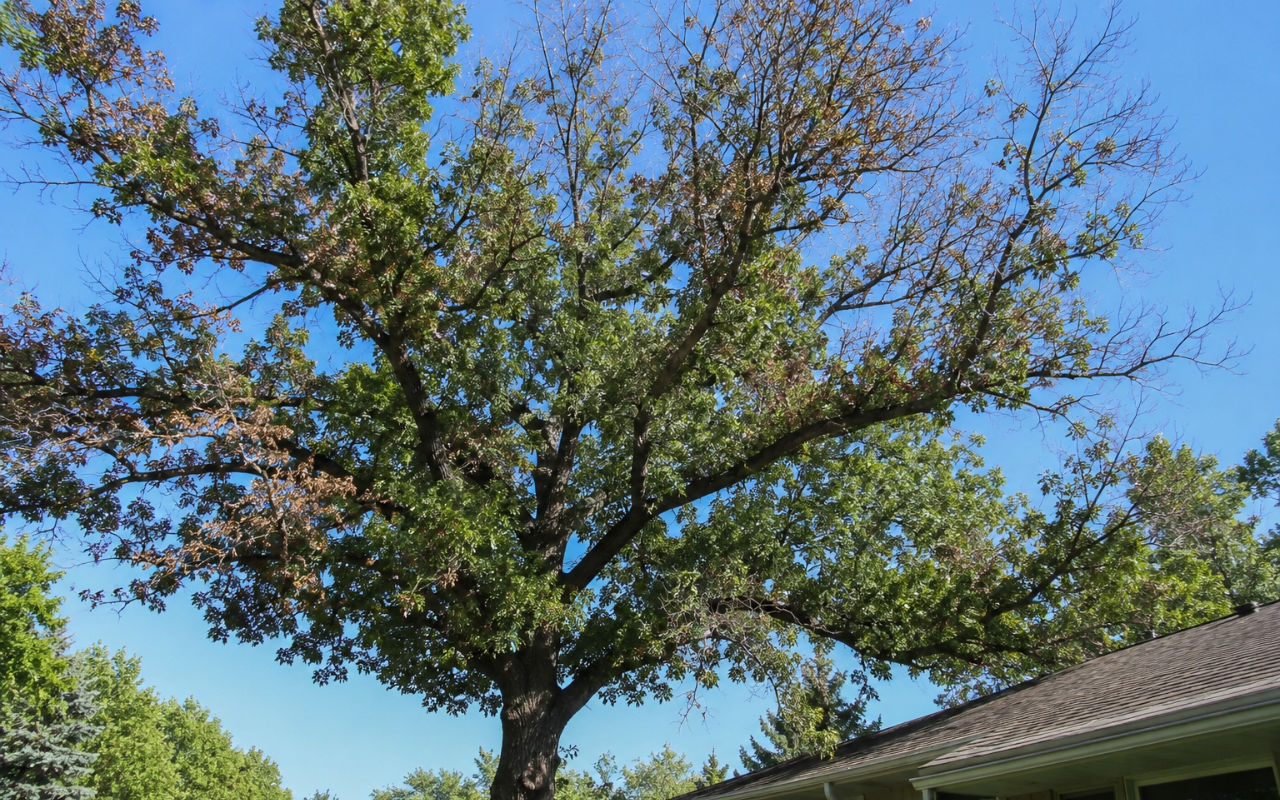
Oak tree diseases deserve prompt attention because several problems can cause similar browning, wilting, or branch loss. Oak wilt is especially serious, while leaf spots and environmental stress may be less urgent. The pattern, timing, and location of symptoms help separate these possibilities.
The Missouri Department of Conservation explains that oak wilt is a lethal disease, especially for red oak species. Warning signs may begin high in the crown and move downward. Rapid summer wilting and unusual leaf drop should not be treated as normal seasonal change.
- Top-down wilt may suggest a vascular problem.
- Scattered branch decline may indicate stress or localized damage.
- Dark leaf spots may fit a foliar disease.
- Fungal growth near the base may point to decay.
With Perez Landscape and Trees LLC, you receive a practical review of the tree and its surroundings. Avoid cutting suspect oak branches without guidance because fresh wounds can increase exposure during certain seasons.
Distinguish Disease From Drought, Pests, and Normal Stress
Knowing how to tell if a tree is diseased or dying requires more than checking leaf color. Healthy trees can shed leaves after heat, drought, transplant shock, or storm damage. Disease becomes more likely when symptoms repeat, spread, or appear with bark, root, and branch problems.
Start by comparing the tree with nearby trees of the same species. Then look for several warning signs appearing together. Sparse leaves, dead twigs, bark separation, cavities, oozing areas, mushrooms, and a new lean deserve closer review. Use a Tree Risk Assessment and When to Remove a Tree when health concerns also involve people or property.
A green layer beneath lightly scratched twig bark can show living tissue. Still, a scratch test does not diagnose disease. Do not climb, cut large limbs, or work near power lines while checking a declining tree.
Follow A Tree Disease Inspection Service Process
A tree disease inspection service should turn visible concerns into clear next steps. When you contact us, we ask what changed, when symptoms began, and whether storms, digging, or recent work affected the area. That history helps focus the on-site review.
During the appointment, our team at Perez Landscape and Trees LLC examines the canopy, limbs, trunk, root flare, soil area, and nearby targets. We explain what we observe without assuming every symptom has one cause.
- Share the tree species and symptom timeline when known.
- Show areas with leaf loss, cracks, fungi, or dieback.
- Review drainage, soil changes, storms, and nearby construction.
- Discuss monitoring, pruning, testing, treatment, or removal options.
Lab testing may be needed for a confirmed diagnosis because different diseases can look alike. To schedule an evaluation, use the Request Tree Care Guidance page and describe the symptoms you see.
Reduce Future Disease Risk With Consistent Tree Care
Preventive care cannot stop every infection, but it can reduce stress that leaves trees more vulnerable. Correct watering, careful pruning, suitable mulch, and protected roots support normal growth. Routine checks also make new symptoms easier to notice and compare over time.
Keep mulch away from the trunk, avoid damaging roots, and clean pruning tools between trees. Water the root zone deeply when conditions are dry rather than wetting only the trunk area. Do not apply fungicides without identifying the problem, since the wrong treatment may waste time or hide worsening symptoms.
Document changes with dated photos during the growing season. If a canopy thins, a crack widens, or fungi return, those records help show whether the condition is stable or progressing. They also give the inspection team useful details about symptom timing.
Frequently Asked Questions
What symptoms suggest a tree disease needs professional inspection?
Repeated early leaf drop, spreading dieback, bark cracks, cankers, mushrooms, and sudden canopy thinning deserve professional review. Several symptoms together are more concerning than one damaged leaf. Compare additional warning signs in Signs of Dead Trees Kansas City Home Guide.
Can diseased trees recover without being removed from property?
Some trees recover when the cause is identified early and the structure remains sound. Care may involve pruning, watering changes, soil improvements, monitoring, or disease-specific treatment. An Arborist Inspection in KC Before Tree Removal can help determine whether preservation remains practical.
Why do mushrooms grow around a tree trunk?
Mushrooms near a trunk can indicate decaying wood or roots, although the visible fungus alone does not show the full condition. Check for soft wood, cavities, exposed roots, or leaning. Avoid digging into major roots while investigating the area.
When should oak tree leaf changes cause concern?
Oak leaf changes need attention when browning, wilting, or leaf loss starts unexpectedly during the growing season. Symptoms beginning high in the crown may require fast evaluation. A Tree Risk Assessment and When to Remove a Tree also addresses nearby safety concerns.
Should homeowners treat tree disease before confirming the cause?
No. Similar symptoms can come from fungi, bacteria, insects, drought, root injury, or soil problems. Treatment should match the likely cause and the tree’s condition. Confirm the problem before applying chemicals, especially when decline is spreading or the tree stands near structures.
Choose Timely Guidance To Protect Kansas City Trees
Early observation gives you more options when leaves, bark, roots, or branches change. Contact Perez Landscape and Trees LLC for a careful review and a clear discussion of practical next steps. Use our Request Tree Care Guidance page before damage spreads or safety concerns increase.
References
- Tree and Shrub Problems in Kansas: Diseases, Insects, and Environmental Stresses
- Oak Wilt – Missouri Department of Conservation