
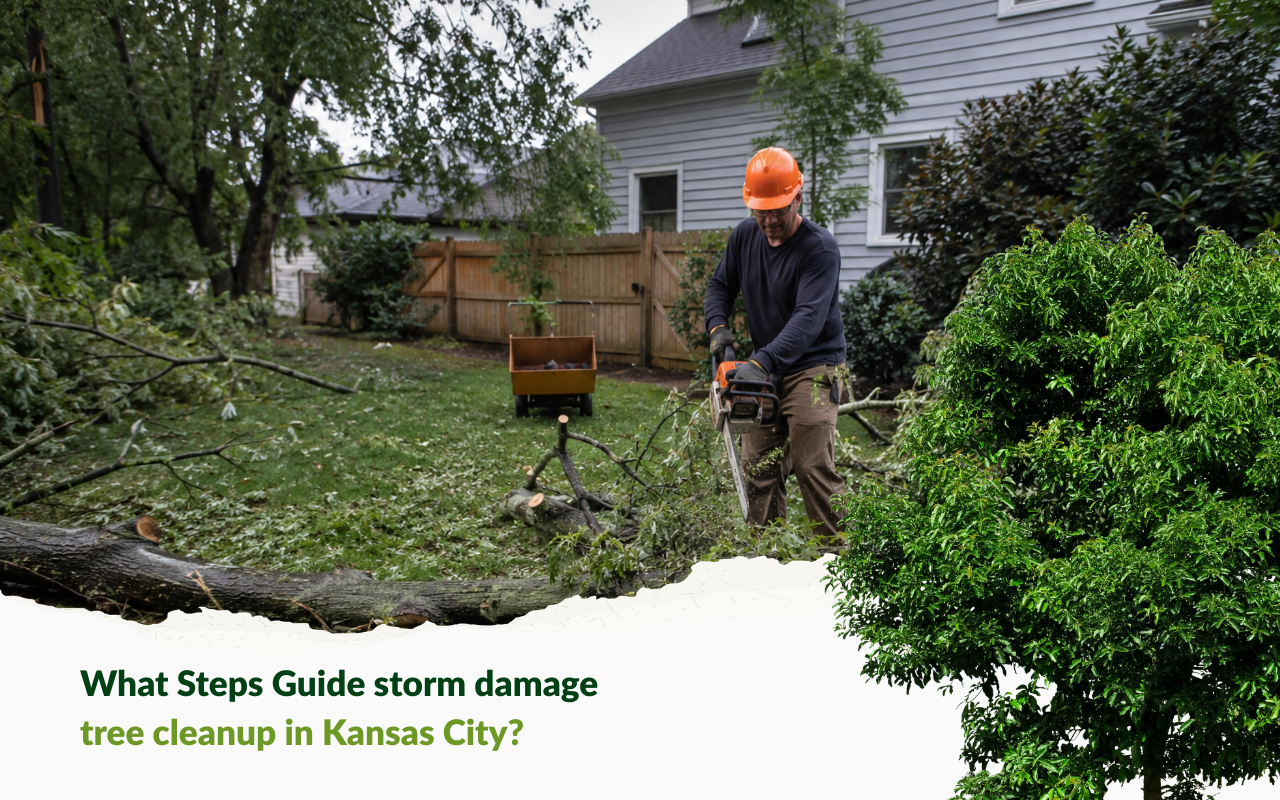
Storm cleanup after a tree fall involves clearing branches, checking the tree’s structure, removing hazards, and restoring safe access around the property. Homeowners need this service after strong wind, hail, lightning, or heavy rain damages trees and leaves debris that can injure people or cause more property damage.
What Steps Guide storm damage tree cleanup in Kansas City?
Kansas City storms can leave heavy limbs, split trunks, and blocked paths across your yard. Before cutting or moving anything, check for power lines, unstable branches, and hidden damage. For early warning signs before the next storm, review Signs of Dead Trees and When to Remove Them From Your Yard.
Protect Your Property Before Storm Debris Removal Begins
Safety comes first after severe weather because damaged trees can shift without warning. Ready.gov advises people to watch for fallen power lines and trees after thunderstorms. Before starting storm debris removal, keep people away from unstable limbs, wet ground, and damaged structures.
Begin with a slow walk around the property only when conditions are safe. At Perez Landscape and Trees LLC, we ask customers what fell, what is blocked, and whether any wires or structures are involved. That helps us understand the safest next step.
- Stay away from power lines and utility equipment.
- Keep children and pets inside or away from debris.
- Photograph damage before moving large branches.
- Mark unsafe areas with cones, tape, or clear barriers.
- Avoid cutting limbs under pressure.
Large broken limbs can release stored pressure suddenly, especially when they are twisted or pinned.
Identify Hazards That Require Emergency Tree Removal Fast
Some storm damage can wait, but hazardous trees need faster attention. Emergency tree removal after storm in Kansas City, MO may be needed when a tree leans toward a home, blocks access, rests on a roof, or has cracked major limbs above active areas.
After high winds, look for split trunks, raised roots, hanging branches, and fresh cracks near the base. According to the National Weather Service, severe thunderstorms can produce winds strong enough to break large branches or knock over trees. That makes a careful inspection important.
Our team at Perez Landscape and Trees LLC checks the trunk, canopy, root area, and nearby targets before recommending removal. If the tree may be saved, we explain that too. For deeper risk checks, visit Tree Risk Assessment for Safer Tree Removal Decisions.
A leaning tree after a storm should be treated as a safety concern until it is inspected.
Handle Fallen Trees Safely After Kansas City Thunderstorms
Fallen trees should be handled in sections, not rushed. The safest approach is to remove loose branches first, watch for movement, and avoid cutting any wood that looks bent, pinned, or loaded with tension. When in doubt, stop and call trained help.
Many homeowners search for what to do after tree falls in storm in KC because the damage feels urgent. Start by checking whether anyone is hurt, then look for utility hazards from a safe distance. Next, clear small loose branches only if they do not require a chainsaw.
Compare the risk before deciding what to move:
- Low risk: small branches on open lawn areas.
- Medium risk: limbs near fences, sheds, or walkways.
- High risk: trunks on roofs, wires, vehicles, or driveways.
- Severe risk: split trees still standing or partly hanging.
With Perez Landscape and Trees LLC, customers get clear guidance before cutting begins, especially when weight and angle make cleanup unsafe.
Arrange Emergency Tree Cleanup After Thunderstorm Damage Carefully
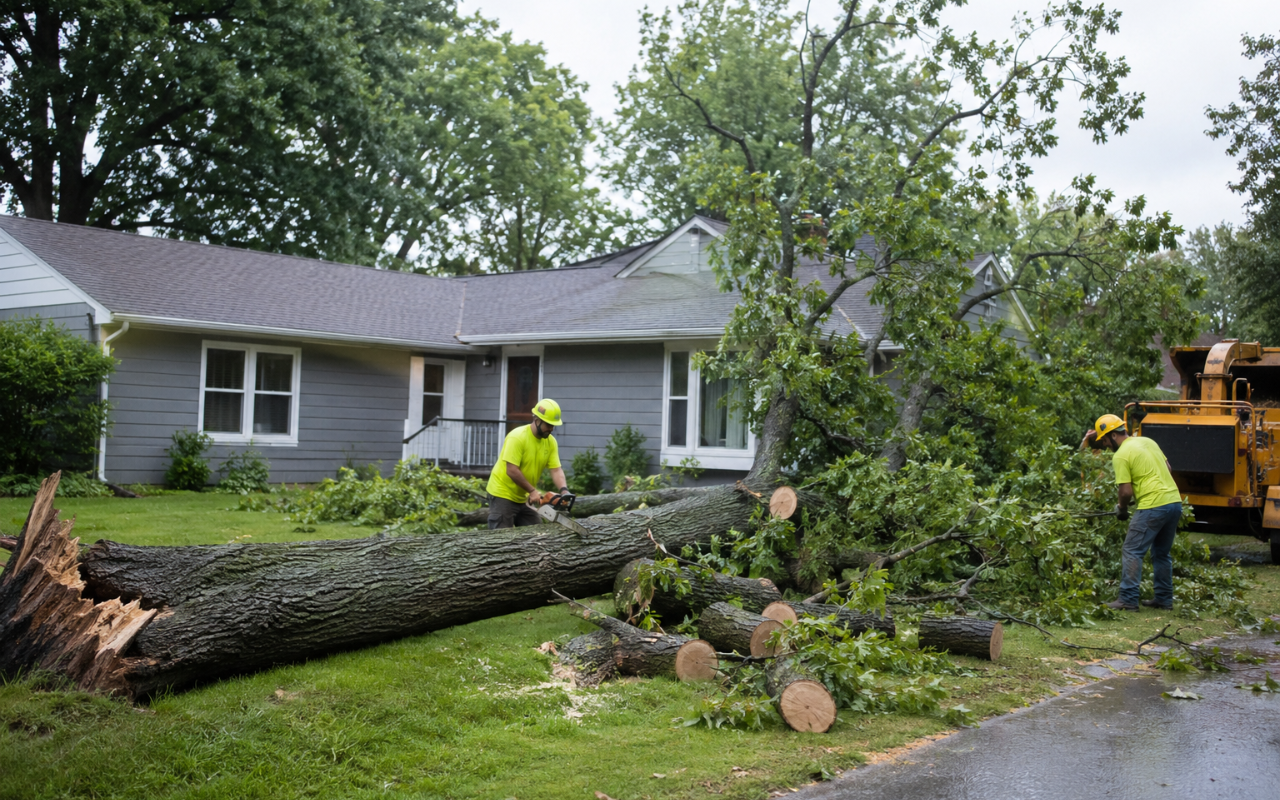
Emergency tree cleanup after thunderstorm damage should follow a clear process. A planned approach helps protect the property, reduce injury risk, and keep debris removal organized. The goal is not only clearing wood, but also preventing more damage during cleanup.
When you contact Perez Landscape and Trees LLC, we first ask about the tree’s location, size, damage type, and nearby structures. Photos can help us understand whether the issue involves storm debris removal, trimming, or full removal.
- We review the reported damage and visible hazards.
- We ask whether wires, roofs, or access points are affected.
- We inspect the tree, limbs, trunk, and root area.
- We explain safe cleanup or removal options.
- We remove debris in a controlled order when work begins.
Before work starts, clear access helps crews move safely and efficiently. To request help, use Contact Perez Landscape and Trees LLC in Kansas City, MO.
Prepare Future Trees To Reduce Storm Cleanup Risks
Healthy, maintained trees often handle storms better than neglected trees. Regular checks can reveal deadwood, weak unions, decay, root problems, and poor branch structure before the next thunderstorm. Preventive care can reduce the need for major storm damage tree cleanup in Kansas City.
Look at trees before storm season and after strong winds. Remove dead branches, watch for fungus near the base, and notice branches that rub or cross. The University of Missouri Extension notes that storm-damaged trees can sometimes recover with proper care and time when there is no immediate safety risk.
At Perez Landscape and Trees LLC, we help property owners understand which trees may recover and which ones may create future hazards. Early inspections can prevent small defects from becoming dangerous storm failures.
- Check trees after major wind or heavy rain.
- Prune deadwood before it falls.
- Keep mulch away from the trunk base.
- Watch for sudden leaning or exposed roots.
- Schedule help before hazards grow worse.
Frequently Asked Questions
Who should I call after a storm damages trees?
Call a tree cleanup team when fallen limbs are heavy, unstable, or near structures. If wires are involved, contact the utility company first. For property cleanup questions, use Contact Perez Landscape and Trees LLC in Kansas City, MO to describe the damage safely.
Can I cut storm damaged branches by myself?
You may remove small loose branches if the area is safe and no power lines are nearby. Avoid chainsaw work on bent, hanging, or pinned limbs. Branches under tension can snap back, so larger cleanup should be handled by trained workers.
When does a fallen tree need urgent removal?
Urgent removal may be needed when a tree blocks a driveway, rests on a roof, leans toward a home, or affects utility lines. If the tree looked weak before the storm, review Signs of Dead Trees and When to Remove Them From Your Yard for related warning signs.
What happens to branches after storm debris removal?
Branches are usually stacked, hauled away, chipped, or prepared for proper green waste disposal. The right method depends on the amount of debris and local rules. Clean removal helps reopen walkways, reduce pests, and make the yard safer after the storm.
How can I know if a tree is still safe?
A tree may need inspection if it has cracks, exposed roots, hanging limbs, decay, or a new lean. A safer next step is reviewing Tree Risk Assessment for Safer Tree Removal Decisions. A risk review helps decide whether trimming, monitoring, or removal is best.
Restore Safe Outdoor Space With Professional Cleanup Support
Storm damage tree cleanup in Kansas City is easier when safety, inspection, removal, and debris hauling follow a clear plan. If fallen limbs, cracked trunks, or blocked areas are making your yard unsafe, contact our team for careful guidance. Start with Contact Perez Landscape and Trees LLC in Kansas City, MO.