
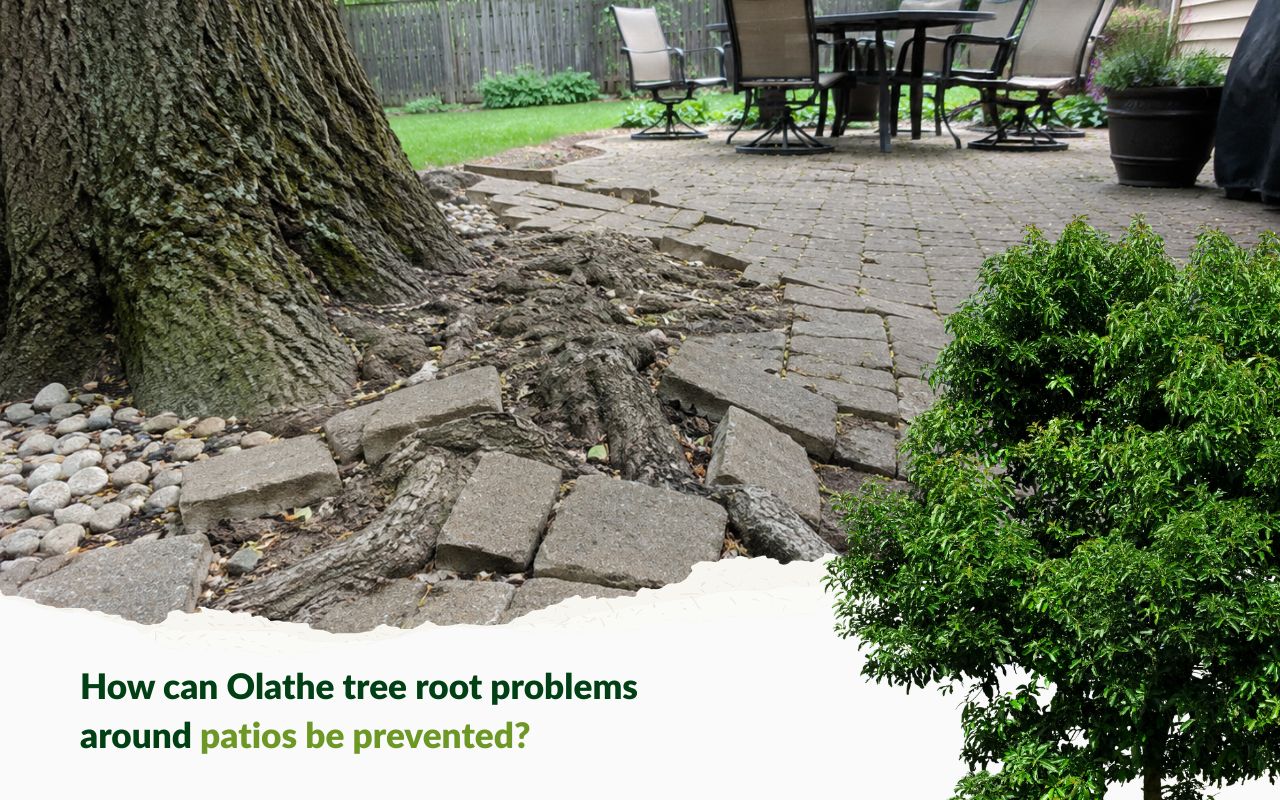
Uneven patio stones can start as a small backyard concern. In Olathe, mature trees, clay soil, and outdoor living areas often meet in the same space. When roots grow under pavers or concrete, the patio may shift, become unstable, or become harder to use safely.
How can Olathe tree root problems around patios be prevented?
Olathe tree root problems around patios can be prevented by spotting early lifting, managing moisture, choosing safer tree placement, and correcting root pressure before pavers or slabs move further.
Tree root problems around patios happen when roots grow under pavers, concrete, edging, or compacted soil. Homeowners with mature shade trees often need help when roots lift surfaces, change drainage, or create trip hazards. The goal is to protect the patio while keeping healthy trees stable whenever possible.
Spot Early Signs Before Patio Damage Spreads Further
Small surface changes often show root movement before major patio damage appears. Raised paver edges, widening gaps, new cracks, and poor drainage can point to roots growing under the hardscape.
At Perez Landscape and Trees LLC, we look for both visible damage and nearby tree conditions. A lifted corner may seem minor, but small changes can become trip hazards after rain, freeze cycles, or steady root growth.
- Raised or tilted patio pavers
- Cracks along concrete slabs or joints
- Soil lifting near pavers after wet weather
- Water pooling near the tree or patio edge
- Edging stones that lean, buckle, or separate
Early checks help prevent larger repairs. You can also review Root Damage Indicators to compare warning signs around your yard.
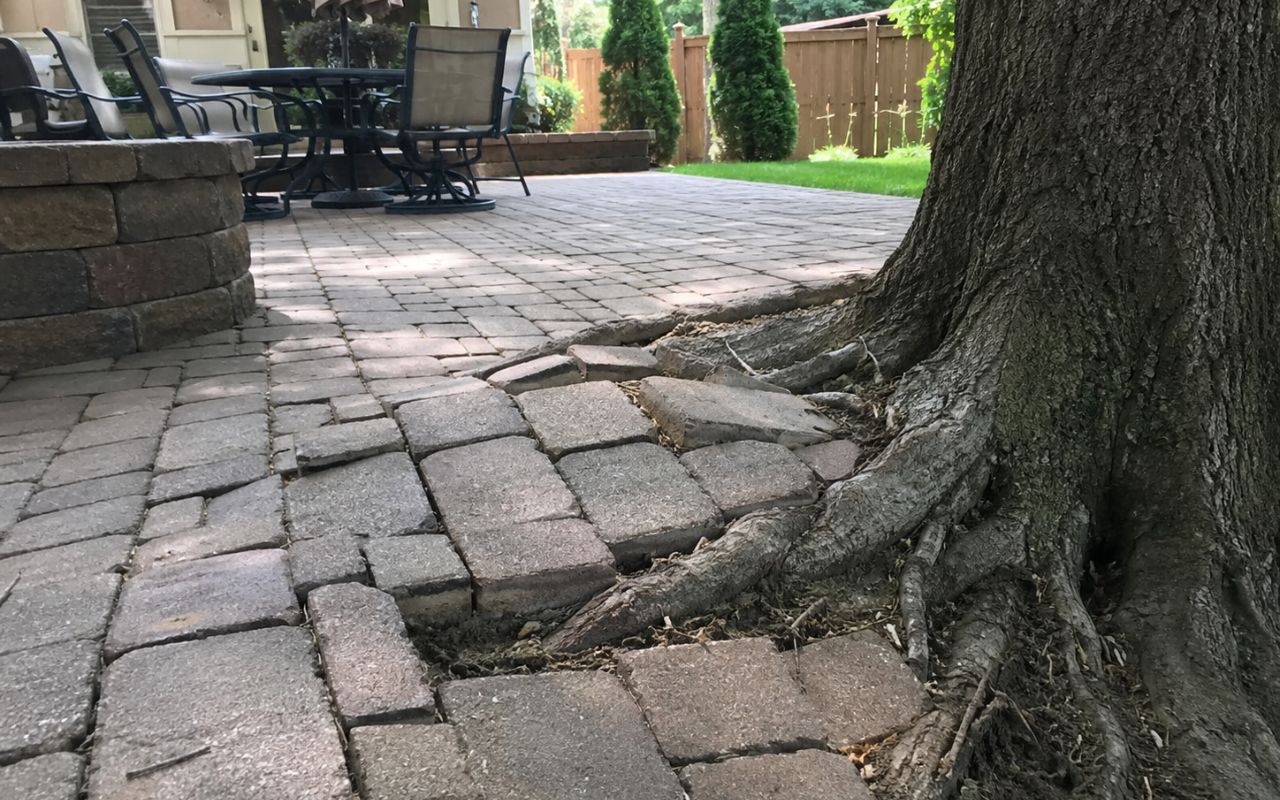
Reduce Olathe tree root problems around patios safely
Safe root control starts with knowing which roots are causing pressure and which roots support tree health. Cutting the wrong roots can harm stability, so inspection should come before digging.
Olathe tree root problems around patios often involve root pressure on hardscapes, compacted soil, and moisture patterns. The U.S. Forest Service notes that tree and sidewalk conflicts can relate to soil conditions, planting space, tree size, and construction materials.
Root pressure usually increases when roots find easier growth paths under sand beds, loose base material, or wet patio edges. Therefore, the best solution may include root pruning, base repair, drainage changes, or a root barrier. The safest option depends on the tree, patio, and soil.
Protect Patio Edges From Soil Lifting Near Pavers
Soil lifting near pavers can happen when roots expand under the patio base and push the surface upward. Better drainage, stronger edging, and corrected base layers can reduce movement.
Some patio problems are not caused by roots alone. Poor compaction, water pooling, thin base material, and weak edge restraints can also let pavers shift. When customers contact Perez Landscape and Trees LLC, we ask about the tree location, patio age, drainage, and visible lifting.
- Improve drainage so water does not collect near patio edges.
- Reset loose pavers after root and soil issues are reviewed.
- Add proper base material where the patio has settled.
- Use edge restraints to hold pavers in place.
- Consider root barriers where they fit the site safely.
For broader outdoor repairs, our Landscaping Services page explains how landscape work can support safer, cleaner outdoor areas.
Choose Safer Trees And Spacing Near Outdoor Living Areas
Tree choice and planting distance affect future patio problems. Smaller trees, thoughtful placement, and enough root space can lower the chance of root pressure near patios.
Large, fast-growing trees can bring shade and beauty, but they may need more room than a small patio area allows. Before planting, consider the mature canopy, root spread, soil type, and nearby hardscapes. The MU Extension explains that many active root tips grow near the soil surface, which makes planting space important.
With Perez Landscape and Trees LLC, you get guidance that considers shade, safety, and long-term yard function. Proper spacing is easier than rebuilding a lifted patio. For planning support, visit our More Services page.
Handle Root Pressure On Hardscapes With Practical Repair Choices
Root pressure on hardscapes should be handled with a plan that protects people, trees, and patio materials. The right repair depends on damage level and root location.
Not every lifted patio needs the same fix. A small edge lift may need paver resetting and base correction. A large raised section may need deeper review, root pruning, or a redesign around the tree.
- Minor movement: lift and reset pavers after checking the base.
- Moderate lifting: inspect roots and improve the patio foundation.
- Severe pressure: review tree health before major cutting.
- Repeated damage: adjust layout, edging, drainage, or tree placement.
At Perez Landscape and Trees LLC, we also review whether an arborist-style inspection is needed before any major decision. You can learn more through Arborist Inspection.
Prepare For Our Root Review And Patio Service Visit
A clear service process helps homeowners understand what happens before any work begins. We first review the visible issue, nearby trees, patio movement, drainage, and safe repair options.
When you call Perez Landscape and Trees LLC, we can discuss what you are seeing and what areas feel unsafe. Photos can help us understand raised pavers, cracks, tree distance, and water pooling before the visit.
- We ask where the patio is lifting or cracking.
- We review nearby trees, roots, slopes, and drainage.
- We inspect the surface and surrounding soil when possible.
- We explain practical repair options before work begins.
- We help you understand next steps after the review.
This process helps prevent rushed decisions. It also helps protect tree health when root work may be involved.
Frequently Asked Questions
How do I know if tree roots are lifting my patio?
You may notice raised pavers, new cracks, uneven edges, or soil lifting near the patio. These signs can also come from drainage or base problems, so a root review is helpful. Visit Root Damage Indicators for more signs.
When should I call for help with uneven pavers?
Call when pavers move, edges rise, or the surface becomes a trip risk. Early service can reduce deeper damage and help protect nearby trees. You can start through our Contact Page.
What happens if I cut patio roots myself?
Cutting roots without inspection can weaken a tree or create new stress. Large roots may support tree stability. A professional review helps decide whether root pruning, repair, or redesign is safer.
Why is root pressure worse near hardscapes?
Roots often grow where soil, moisture, and oxygen are easier to reach. Patio edges, sand beds, and weak base areas can create paths for root growth under pavers or slabs.
Can landscaping changes help prevent future patio lifting?
Yes. Better drainage, mulch placement, stronger edges, and safer planting choices can reduce future movement. Our Landscaping Services can support patio areas and nearby planting zones.
Schedule Clear Guidance Before Patio Root Damage Worsens
Olathe tree root problems around patios are easier to manage when small warning signs are checked early. For safer next steps, contact us through the Contact Page and share what you are seeing around your patio.