
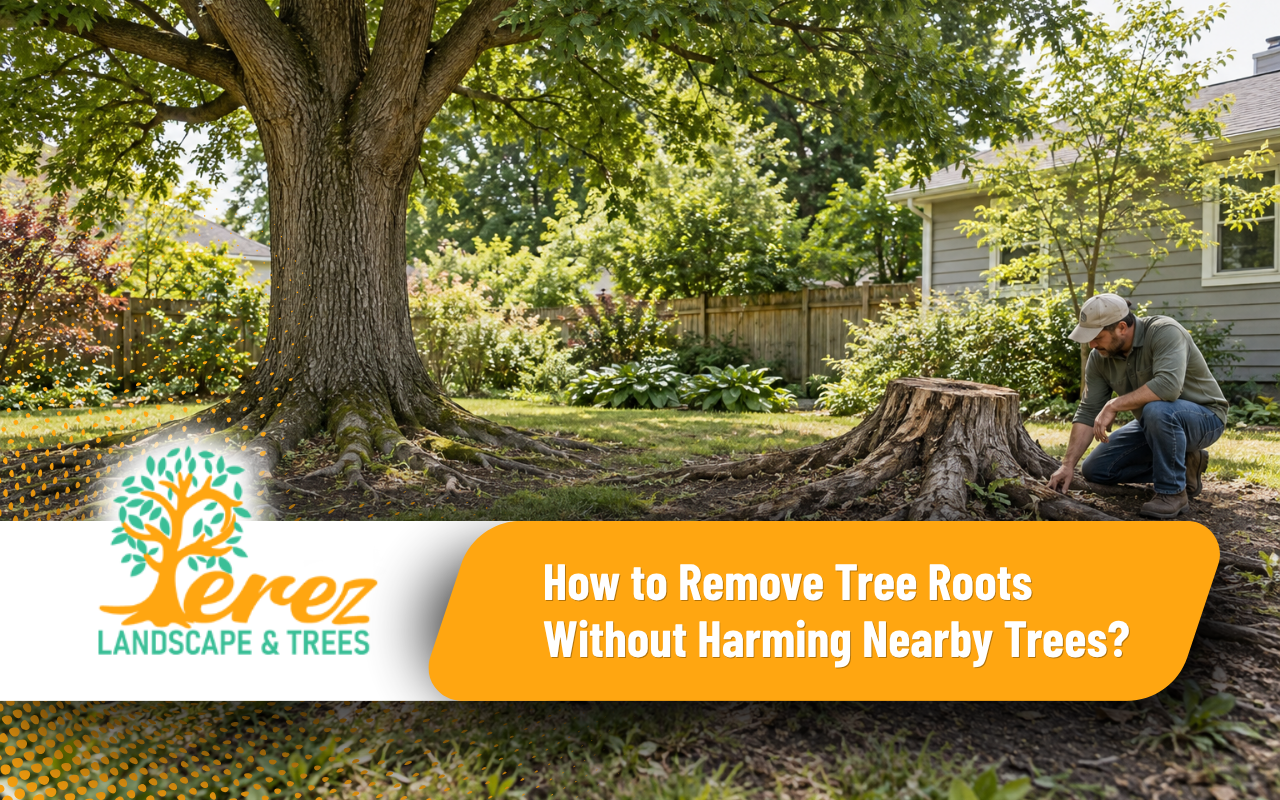
- Determine whether roots belong to a living or removed tree.
- Locate utilities and identify nearby structures.
- Have living-tree roots assessed before cutting.
- Remove only confirmed, unnecessary dead root sections within the project area.
- Restore the soil and monitor the site.
Raised pavement can make root cutting seem like an easy repair. Yet the same roots may support a living tree. At Perez Landscape and Trees LLC, we recommend starting with the tree’s condition. Review our tree root condition guide and ask for guidance before disturbing roots near your planned work.
Root removal involves exposing and removing selected underground wood that conflicts with a specific project. The task differs greatly between living trees and trees already removed. Homeowners planning driveway repairs or planting need to identify that difference before choosing tools, because cutting live roots can affect both health and stability.
Establishing How To Remove Tree Roots Without Guesswork
Root ownership determines which actions are appropriate and which trees need protection during the proposed work. Before choosing how to remove tree roots, establish whether the wood supports a living tree and why removal is necessary for your project.
The University of Maryland Extension explains that excavation can cause root damage with symptoms appearing years later. A green canopy does not prove cutting was harmless. Avoid using a fixed percentage of roots as a safe allowance. Root size, location, species, and existing tree condition all matter.
If you ask, “can you remove roots without killing the tree,” the answer is sometimes, but survival is only one consideration. Anchorage can also be affected. Our driveway root damage overview provides background on visible concerns without replacing an assessment of proposed cuts.
Sketch the tree, roots, and project edge before discussing cuts.
Protecting Living Trees When Pavement And Roots Conflict
Pavement conflicts call for a joint review of the tree and the repair design. Cutting the visible root may solve an immediate obstruction while creating a tree problem. Explore whether the surface or layout can change before removing important living roots.
- Consider moving the path or narrowing the repair footprint.
- Ask whether a raised or bridged design is appropriate.
- Keep excavation and heavy equipment away from protected roots.
- Seek tree stability guidance before any major cut.
Ask Extension’s “Tree Root: To Cut or Not to Cut” emphasizes protecting roots during construction. It supports reviewing the work area rather than assuming every exposed root is disposable. When researching how to cut tree roots near a driveway, prioritize that assessment over generic cutting instructions.
Our team at Perez Landscape and Trees LLC encourages you to document the conflict before planning demolition. For future patio work, our root planning before patio installation helps connect the landscape decision with the construction layout.
Removing Dead Root Sections After The Stump Is Ground
After stump grinding, remaining roots do not automatically require full excavation. Remove dead sections only where they obstruct a defined task. Roots outside that footprint can often remain. First confirm that the selected wood belongs to the removed tree rather than nearby living vegetation.
Understanding how to remove roots after stump grinding starts with the finish you need. For a small planting area, limited clearance may be enough. For a structural base, the builder must define the required excavation and preparation. Do not use lawn repair standards for foundations.
Clear loose grindings so the site can be evaluated. Then identify the root route and surrounding utilities. Small confirmed dead pieces in an unobstructed area may allow careful hand excavation. Large or deeply buried sections require suitable equipment and trained operators.
At Perez Landscape and Trees LLC, we advise keeping the requested root work specific. Describe the obstruction and future use rather than asking for every root beneath the yard to disappear.
Preparing An Excavation Plan Before Soil Becomes Frozen
Autumn planning can help you define root work before winter limits soil access. However, a seasonal deadline never makes risky cutting appropriate. Confirm the tree decision, locate buried features, and coordinate the excavation area before choosing a date for the work.
- Draw the exact project footprint and identify nearby trees.
- Request utility locating before digging and locate private irrigation separately.
- Confirm which roots may be disturbed and which need protection.
- Agree on access, debris handling, backfill, and the finished surface.
For tree removal in Lee’s Summit MO, our Lee’s Summit tree removal information covers the standing-tree decision. Stump grinding and root excavation should still be clarified separately.
With Perez Landscape and Trees LLC, you can share your root removal plans before committing to patio or driveway changes. Include the spring project goal even if the excavation happens earlier. Resolve the layout first, so seasonal pressure does not drive unnecessary damage to trees you want to retain.
Recovering Disturbed Soil And Monitoring Remaining Tree Health
After excavation, the ground needs restoration suited to the site. A repaired planting surface should not conceal unstable voids or leftover obstacles. Living trees near the work also need observation, because root injury can produce delayed changes rather than immediate obvious symptoms.
Use appropriate soil and restore drainage without raising the grade against a tree trunk. Remove large wood debris from areas intended for lawn repair. Then inspect for settling after rain. Do not bury the root flare of nearby trees while smoothing the disturbed area.
Watch for reduced leaf growth, wilting, branch decline, or a new lean. These signs deserve professional review rather than extra root cutting. Maintain sensible watering during dry conditions, and avoid adding fertilizer or sealants as an automatic cure for injury.
When considering how to remove tree roots, include recovery in the plan from the start. Keep dated photographs to explain any later changes.
Frequently Asked Questions
Can Surface Roots Stay If They Interfere With Mowing?
Often, yes. A mulch area or adjusted lawn edge may be more suitable than cutting roots. Avoid covering them with deep soil. Our recognizing exposed root concerns explains why the root’s condition and role matter before changing the surface around a tree.
Do Buried Roots Remain After A Stump Grinding Job?
Yes, roots beyond the grinding area generally remain. Their presence does not mean the work failed. Determine whether they conflict with your next project, and confirm any extra clearance separately. Avoid excavating an entire yard when only one small planting area needs attention.
Should I Cut Roots To Repair A Raised Driveway?
Not before assessing the tree and reviewing the repair layout. The visible root may help anchor the tree. Our understanding root and driveway conflicts can help you describe the problem, but a generic size rule cannot establish whether a proposed cut is safe.
Will Root Removal Prevent Every Future Shoot From Growing?
No, regrowth depends on the species and the remaining living root system. Removing one section does not guarantee all shoots stop. Identify the plant first, then discuss an appropriate management plan. Do not apply chemicals to unknown roots that may connect to desirable trees.
Share the layout, nearby tree locations, photographs, and any previous root or drainage problems. Our preparing for patio root conflicts can guide that discussion. Mark existing features and utility locations before discussing excavation. That preparation helps you compare alternative layouts while the design remains flexible.
Choosing Root Work That Protects Your Remaining Landscape
Learning how to remove tree roots includes recognizing when removal is the wrong choice. At Perez Landscape and Trees LLC, we encourage you to define the obstruction, protect living trees, and plan recovery. Keep the project footprint clear, then request root project guidance before driveway repairs or spring patio construction move beyond the planning stage.