
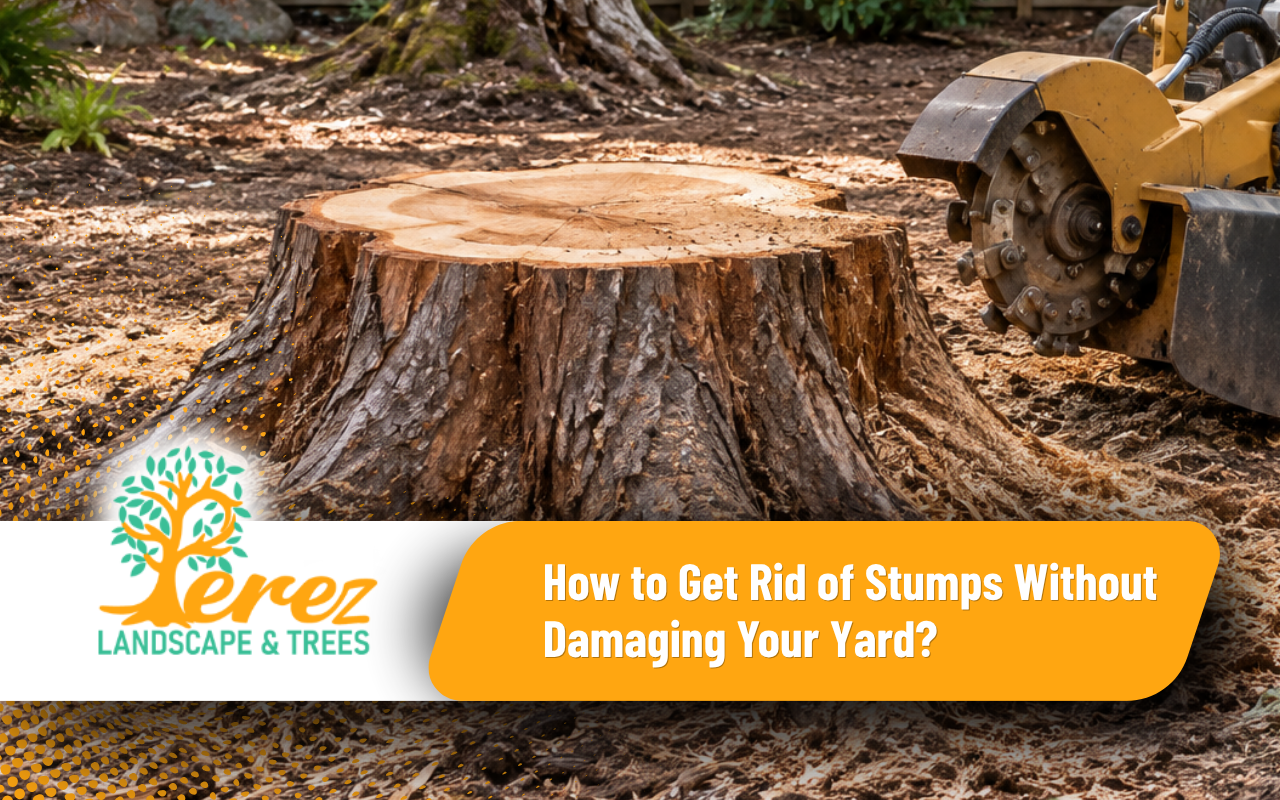
- Grind a stump when you need surface space cleared.
- Excavate when the root crown conflicts with planned construction.
- Allow natural decay where waiting is practical.
- Avoid burning as a routine backyard solution; confirm local restrictions.
- Check utilities and nearby living roots before disturbing soil.
An old stump can block mowing long after summer tree removal ends. At Perez Landscape and Trees LLC, we encourage you to match the method to your next yard project. Review our tree and landscape options and ask about the work your site needs before choosing equipment or treatments.
Stump management addresses the remaining trunk base and the wood below ground after a tree is cut down. Homeowners may need clearance for grass, planting, or construction. The right approach depends on access, underground obstacles, and whether the project requires surface clearance or removal of the buried root crown.
Choosing How to Get Rid of Stumps Safely
The intended use of the cleared space should guide your method. A lawn patch and a patio foundation have different needs. Before deciding how to get rid of stumps, identify what must disappear and what can remain safely below the finished surface.
Compare stump grinding vs stump removal by the result each produces. Grinding breaks the stump into chips and usually leaves surrounding roots. Excavation removes the main buried stump and selected attached roots. Neither description guarantees every distant root will disappear. Define the required clearance before accepting a proposal.
| Method | Useful situation | Main limitation |
|---|---|---|
| Grinding | Clearing a stump from a lawn area | Buried roots usually remain |
| Excavation | Removing wood within a construction footprint | Greater soil disturbance and access needs |
| Natural decay | An unused area without a clearance deadline | Slow and unpredictable breakdown |
| Burning | Only where authorities permit the specific activity | Fire, smoke, and incomplete removal risks |
Review our seasonal tree removal considerations when planning access.
Checking Access And Underground Obstacles Before Work Begins
Equipment access and buried features can change an otherwise simple plan. A stump near a fence may require different machinery than one beside an open driveway. Check the route into the yard and the working space around the stump before work starts.
- Record the stump’s width and visible height.
- Measure narrow gates and note steps or slopes.
- Identify nearby trees, fences, drains, and irrigation.
- Arrange utility locating before excavation and identify private lines separately.
At Perez Landscape and Trees LLC, we recommend sharing these details when discussing a stump removal service in Kansas City MO. Ask whether grinding, excavation, debris handling, and soil restoration appear separately in the scope. A tree removal agreement does not automatically include stump work.
Our Blue Springs removal planning covers standing trees; confirm stump work separately.
Allowing Natural Decay When Immediate Clearance Is Unnecessary
Natural decay can suit a stump in an unused garden corner where you can wait. Wood breakdown depends on moisture, species, size, and site conditions. This approach should never be presented as a quick substitute for removing an obstacle within a building area.
Illinois Extension’s “Removing Tree Stumps” describes moisture and soil contact as ways to support decay. If you are researching how to rot a tree stump, start with realistic expectations. Decay has no fixed completion date. Cold conditions slow biological activity, so autumn treatment does not promise spring clearance.
Keep the area identifiable and inspect it as the wood softens. Do not hide a hard stump beneath a thin lawn covering. That can leave a mower obstacle or an uneven walking surface. Avoid salt, bleach, and fuel mixtures that can damage surrounding soil.
Our team at Perez Landscape and Trees LLC encourages you to compare waiting with physical removal before spending money on products. Choose a method that matches your deadline rather than a claim of overnight results.
Understanding Why Backyard Burning Creates Additional Removal Risks
Burning introduces a different set of risks from grinding or digging. A stump contains buried wood, and a surface fire may leave substantial material behind. Smoke, nearby structures, dry leaves, and local restrictions all affect whether the activity is even permitted.
Illinois Extension’s newer stump guide warns against pouring fuel onto stumps and notes that burning may continue for days. Searches for how to burn out a tree stump should therefore lead to a fire authority check, not an improvised fuel recipe. Do not assume recreational fire rules cover stump disposal.
Compare nonburning methods first. Charred wood can still obstruct planting, while autumn leaves add combustible material near the site.
Before deciding how to get rid of stumps, separate convenience from suitability. We suggest asking about access and the finished surface rather than treating fire as an automatic shortcut.
Restoring The Cleared Area For Its Intended Use
Restoration should reflect what will occupy the space after stump work. Lawn repair requires a suitable soil surface. Construction requires its own preparation standards. Leaving a hole full of loose grindings does not provide the same result as preparing soil for planting.
- Confirm the agreed removal depth and remaining wood.
- Separate excess chips from the area intended for turf.
- Use suitable soil for the proposed planting surface.
- Check the grade and monitor later settling.
With Perez Landscape and Trees LLC, you can discuss landscaping after clearance through our stump site planning request. Explain whether you want grass, a bed, or a future hardscape. That goal makes the next conversation more useful.
Grinding does not prepare a structural foundation. Have construction requirements reviewed separately. Likewise, do not assume the old tree’s exact planting spot is ideal for its replacement. Remaining wood and roots can affect the new planting layout, so consider nearby space and soil conditions.
Frequently Asked Questions
Can I Leave An Old Stump In My Garden?
Yes, an old stump can remain where it creates no practical obstacle or unacceptable risk. Keep it away from regular foot traffic and review any regrowth. Our outdoor maintenance service overview can help you decide whether the surrounding area needs separate care.
Does Grinding Remove Every Root Beneath The Entire Yard?
No, grinding usually removes the stump and a defined amount of nearby wood. Roots outside that area generally remain. Ask which depth and footprint the work includes, especially if a patio, planting hole, or drainage project will later use the same space.
Should I Clear A Stump Before Winter Ground Freezes?
It can be helpful if you need planting or excavation while soil remains workable. However, weather, access, and the project goal matter more than a universal deadline. Review our weather factors for removal work when deciding whether to proceed or plan ahead.
Will A Stump Rot Quickly After Adding Household Chemicals?
No household mixture provides a dependable rapid result. Some products can harm soil or nearby plants without solving the clearance problem. Natural decay varies widely, so use physical removal when you need a defined outcome rather than relying on an uncertain breakdown date.
What Information Helps When Requesting A Stump Work Estimate?
Provide photos, dimensions, gate width, nearby structures, and your intended use of the cleared area. Also mention utility markings and irrigation. Send those details through our request stump clearance guidance and ask the provider to specify removal, debris handling, and restoration separately.
Planning Stump Clearance Around Your Next Outdoor Project
Knowing how to get rid of stumps starts with the result you need. At Perez Landscape and Trees LLC, we encourage a clear plan for access, clearance, and landscape recovery. Choose the method before buying supplies, then discuss your stump project so you can confirm the available options and the scope your property requires.