
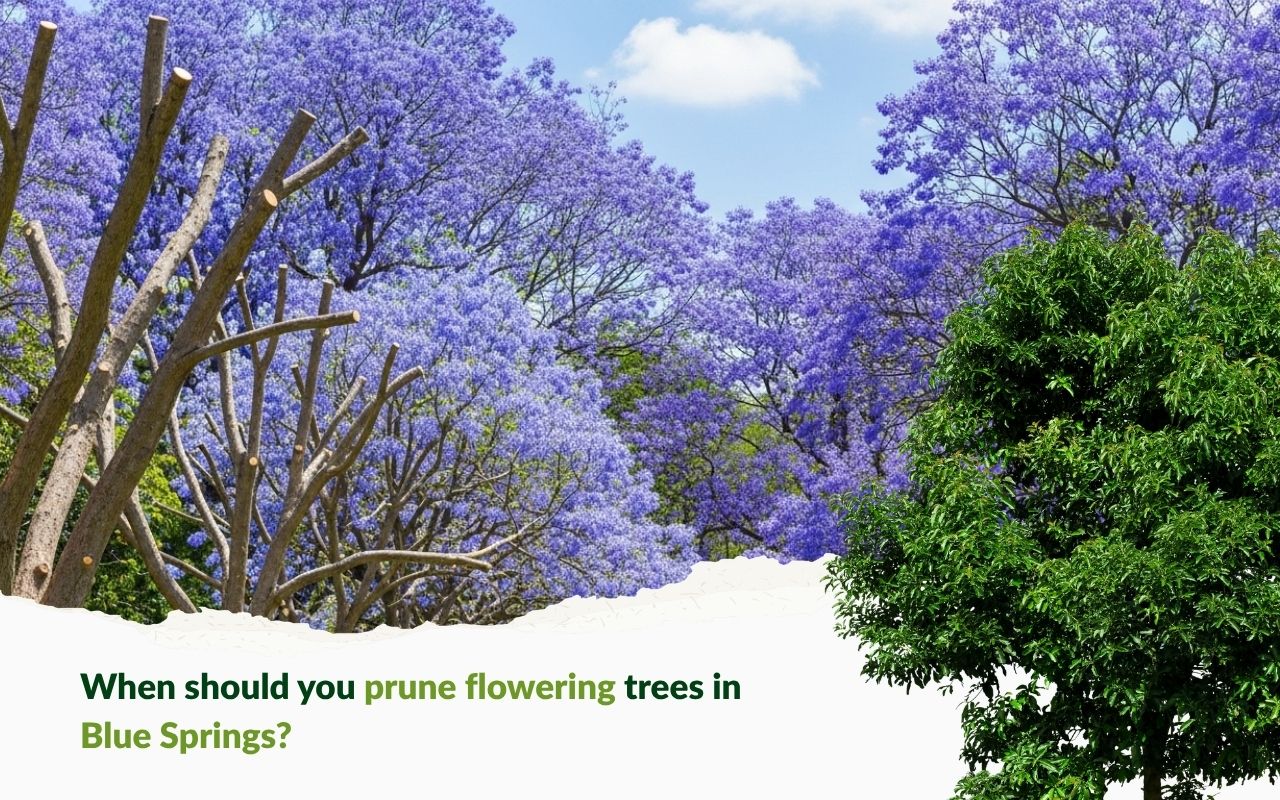
Blue Springs flowering trees need careful timing. We trim after the main bloom ends, not before buds open. That simple step protects future flowers and keeps shape, safety, and health in balance. At Perez Landscape and Trees LLC, we use this timing to help local ornamentals stay strong and beautiful.
When should you prune flowering trees in Blue Springs?
For most spring-blooming ornamentals, the best window comes right after flowering ends. This is when Blue Springs flowering trees: trim at the right time matters most. At Perez Landscape and Trees LLC, we look at bloom fade, weather, and species before we cut. That way, we shape the canopy without removing next season’s buds.
Many flowering trees bloom on old wood. Because of that, late pruning can reduce next year’s display. We prefer to protect the tree first, then refine its form. Perez Landscape and Trees LLC uses simple, careful steps that support health, airflow, and flower production.
Protect future blooms with proper seasonal pruning timing
The main goal is simple. We want to protect buds post-bloom while keeping the tree balanced. In Blue Springs, many flowering trees respond best when pruning starts after petals fall. This timing reduces stress and helps preserve flower sites for the next season.
Blue Springs flowering trees: trim at the right time is not just a slogan. It is the best way to avoid cutting off blooms before they have a chance to form. Perez Landscape and Trees LLC uses timing for ornamentals that matches each tree’s growth pattern.
- Prune after the main bloom fades.
- Wait until frost risk has passed.
- Avoid heavy cuts deep into summer.
- Watch for species that bloom on old wood.
Choose each pruning window by tree species carefully
Not every ornamental tree follows the same schedule. Some bloom on old wood, while others flower on new growth. Therefore, species ID matters before any cut. Flowering cherries, redbuds, and crabapples may all need a different plan.
We often guide homeowners to compare current growth with past blooms. That helps us decide how much to remove and when to do it. For broader local guidance, visit Best time to trim trees in Kansas City: a local guide. You can also review Trimming Frequency by Species and Why It Matters for a helpful species-based overview.
At Perez Landscape and Trees LLC, we use ornamental pruning in Blue Springs methods that fit the tree, not a one-size-fits-all calendar. That approach protects structure and supports better flowering.
Follow safe cuts that support shape and airflow
Good technique matters as much as timing. We start by removing dead, damaged, or crossing branches. Then we open the canopy with light, smart cuts. This improves air movement and lets light reach healthy growth.
Each cut should sit just above an outward-facing bud. For larger limbs, the three-cut method helps prevent bark tearing. Clean tools also matter because they lower the chance of spreading disease from one branch to another.
- Remove dead or rubbing limbs first.
- Cut above outward-facing buds.
- Use sharp, clean tools every time.
- Never top the tree.
When homeowners want local help, we recommend our service page, Where Can I Get Expert Tree Trimming in Blue Springs, MO. Perez Landscape and Trees LLC uses safe methods that keep flowering trees healthier over time.
Avoid common mistakes that reduce next spring flowers
Late-season pruning is one of the most common mistakes. It often removes buds that are already forming for the next bloom cycle. Dull tools are another problem because rough cuts heal slowly and can invite disease.
We also avoid topping. It weakens structure, spoils shape, and creates poor regrowth. Instead, Perez Landscape and Trees LLC uses clean thinning and shaping cuts that match timing for ornamentals and support long-term form.
Another key point is weather. We do not recommend major cuts right before a freeze. That exposure can damage tender tissue and slow recovery. So, when we say Blue Springs flowering trees: trim at the right time, we also mean trim in the right conditions.
Support recovery with watering mulch and light feeding
After pruning, care should continue. A deep weekly watering helps the tree settle and recover, especially in dry periods. Mulch also helps roots stay cool and moist. However, mulch should never touch the trunk.
Light feeding can help in early summer, but too much nitrogen may push leaves instead of flowers. Therefore, a balanced slow-release product works better for many ornamentals. This kind of aftercare helps protect buds post-bloom and keeps new growth steady.
- Water deeply during dry weeks.
- Add two to three inches of mulch.
- Keep mulch away from the trunk.
- Use balanced fertilizer with care.
If you need seasonal help from Perez Landscape and Trees LLC, visit our Contact Perez Landscape and Trees LLC in Kansas City, MO page to schedule a visit.
Watch tree health and adjust future pruning plans
Healthy flowering trees tell you a lot. Strong new shoots, even leaf color, and steady canopy growth usually mean the timing worked well. In contrast, weak growth, spots, or dieback suggest the tree needs closer attention.
We suggest keeping a simple record each season. Note when the tree blooms, when petals fall, and how it responds after trimming. Over time, this makes ornamental pruning in Blue Springs more accurate and easier to plan.
Use a simple process for trimming flowering trees
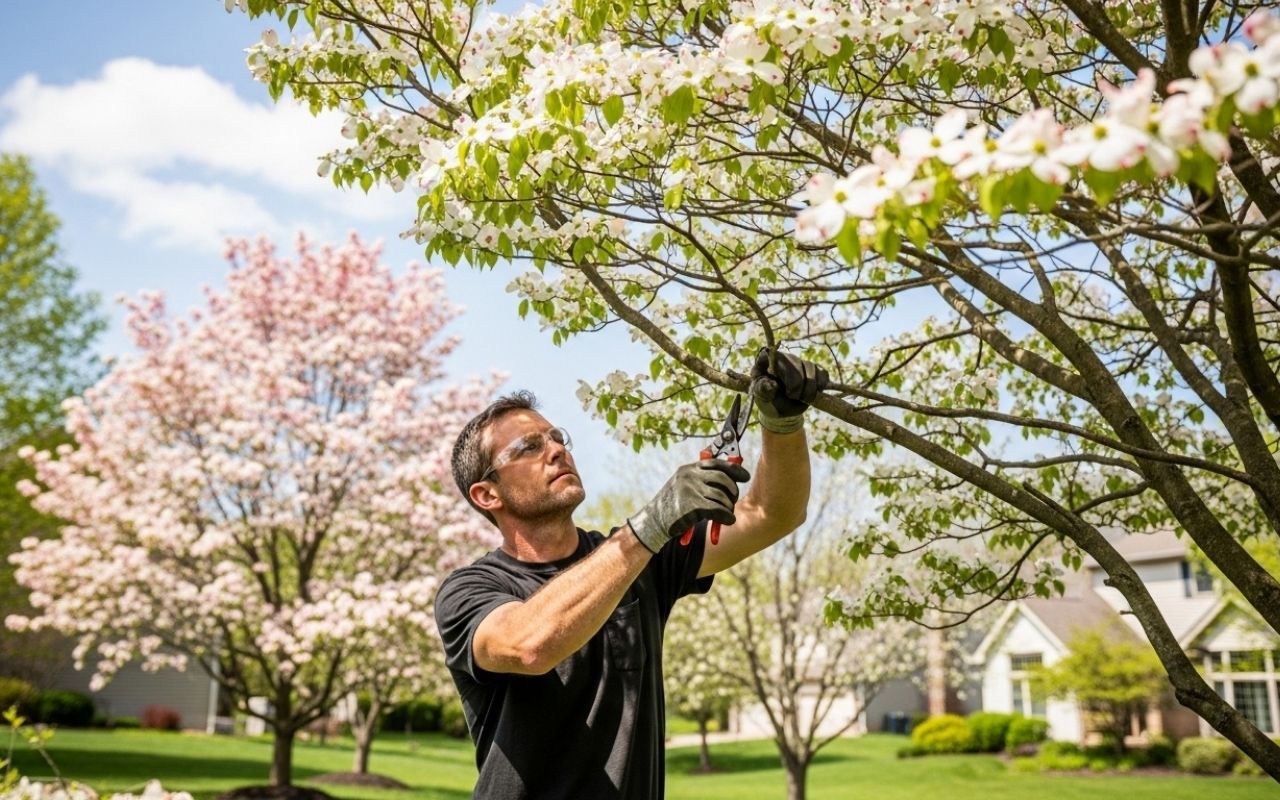
If your tree only needs light shaping, a simple process works well. First, confirm the bloom is finished. Next, inspect the canopy and remove dead or damaged wood. Then shape lightly and stop before you remove too much foliage.
- Wait until the main bloom has ended.
- Inspect the tree for damage or disease.
- Remove dead, weak, or crossing branches.
- Shape lightly to improve airflow and form.
- Water deeply and monitor new growth.
This process helps keep Blue Springs flowering trees: trim at the right time practical and easy to follow. For broader seasonal advice, see Best Time to Trim Trees for a Healthier Yard.
Frequently Asked Questions
When should spring-blooming trees be pruned in Blue Springs?
Spring-blooming trees should usually be pruned just after the flowers fade. That timing helps protect next year’s buds and supports healthy shape. For a local overview, read Best time to trim trees in Kansas City: a local guide.
Why is pruning after bloom better for ornamentals?
Pruning after bloom helps protect buds post-bloom because many ornamentals set future flowers on older wood. If cuts come too early or too late, blooms may be lost. We explain more local trimming context on Best Time to Trim Trees for a Healthier Yard.
How do I know my tree’s trimming schedule?
The schedule depends on the species, age, health, and bloom habit of the tree. That is why timing for ornamentals should never be guessed. A useful starting point is Trimming Frequency by Species and Why It Matters.
Can I trim flowering trees myself?
Light pruning may be manageable for small branches. However, larger cuts, higher limbs, or disease concerns need more care. For safe local service, visit Where Can I Get Expert Tree Trimming in Blue Springs, MO.
Where can I schedule help for ornamental pruning in Blue Springs?
You can reach Perez Landscape and Trees LLC through Contact Perez Landscape and Trees LLC in Kansas City, MO. We can review your flowering trees, check bloom timing, and recommend the right next step.