
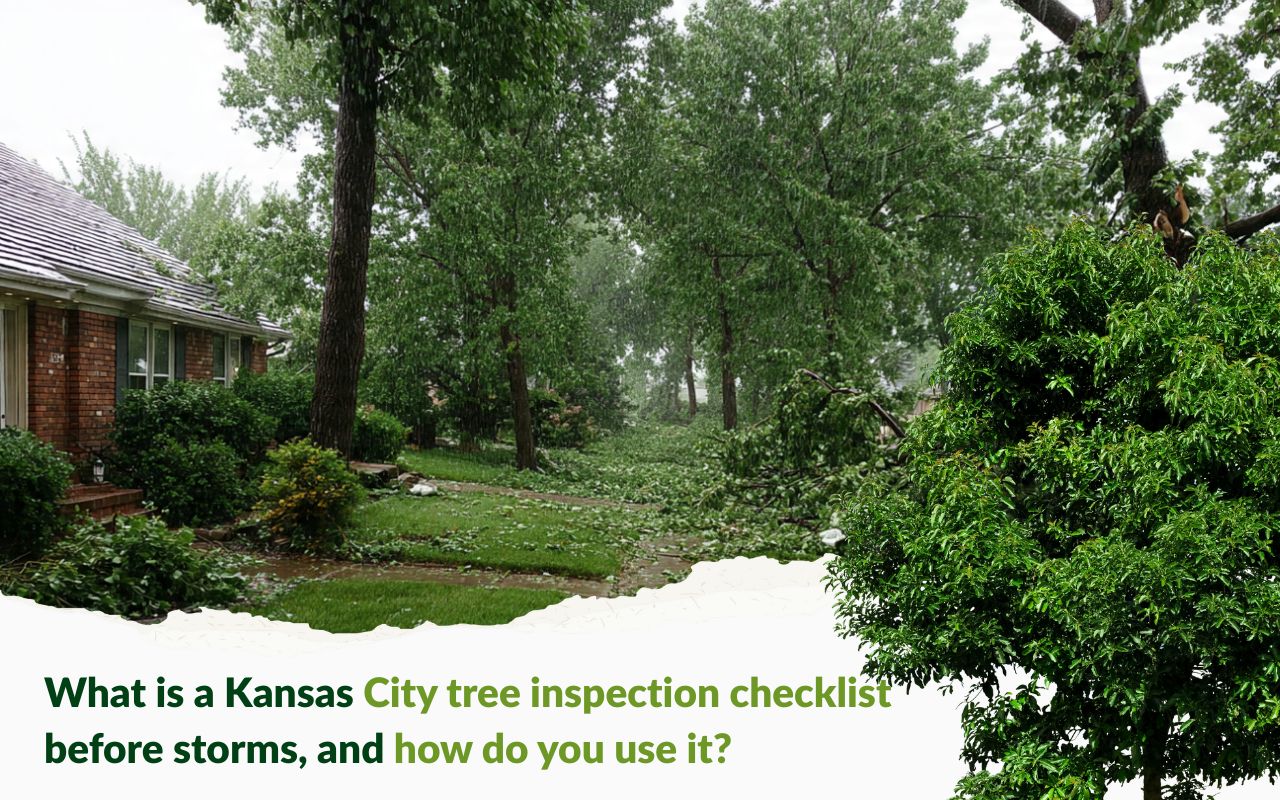
Storm season can turn small tree defects into big hazards. Therefore, a consistent Kansas City tree inspection checklist before storms helps you spot risks early. Moreover, you can reduce damage to roofs, cars, and power lines. With simple checks and timely pruning, your yard stays safer. If you want expert eyes, Perez Landscape and Trees LLC can help.
What is a Kansas City tree inspection checklist before storms, and how do you use it?
A Kansas City tree inspection checklist before storms is a short, repeatable routine. First, you scan the canopy, trunk, and roots. Next, you note structural defects and decay signals. Then, you correct what you can safely fix. Finally, you schedule professional support for higher-risk trees. As a result, Kansas City tree inspection checklist before storms habits reduce sudden failures.
Why pre-storm inspections matter in Kansas City
Storm winds amplify weak points fast. Therefore, small cracks can become break points. Also, saturated soil can loosen roots overnight. As a result, trees can lean or drop limbs without warning. Because of that, a Kansas City tree inspection checklist before storms should be part of home safety.
In addition, inspections protect your investment. Healthy trees boost shade and curb appeal. Meanwhile, neglected trees can raise cleanup stress after storms. If you want a deeper evaluation, start with Tree Risk Assessment for Safer Tree Removal Decisions.
Quick walk-around checklist you can do in 10 minutes
Start simple, and stay consistent. Therefore, do this before forecasted high winds. Also, repeat it after long rain spells.
- First, look up for hanging limbs and broken tips.
- Next, scan for branches rubbing and crossing.
- Then, check for fresh splits on trunks or major limbs.
- Also, note mushrooms, conks, or soft bark areas.
- Finally, check soil for heaving and new lean angles.
If you notice storm impacts, act carefully. Then, use Storm-Damaged Trees Signs You Should Never Ignore to compare common warning patterns.
Spotting weak branch unions before they split
Spotting weak branch unions is about finding poor attachments early. Therefore, inspect junctions where leaders meet. Also, watch for tight “V” shapes and included bark. Because stress concentrates there, these unions can tear in gusts.
- First, look for two stems competing at the same height.
- Next, check for cracks running down the union.
- Then, note heavy end-weight on long horizontal limbs.
- Also, look for old wounds that never closed cleanly.
If a tree shows repeated splitting, reduce risk quickly. Therefore, consider an expert visit from Perez Landscape and Trees LLC.
Cavity and decay clues often start small. However, internal rot can expand quietly. Therefore, look for hollows, soft spots, and fungal growth. Also, tap gently for changes in sound, and stop if bark feels fragile. Because decay reduces load capacity, storms can trigger sudden failure.
If you need a professional inspection approach, use Arborist Inspection in KC and When to Schedule Tree Removal as your next step guide.
How preventive trimming supports storm readiness
Preventive trimming Kansas City homeowners schedule can reduce canopy sail effect. Therefore, trees catch less wind. Also, removing deadwood lowers surprise breakage. Because cuts must be correct, avoid topping and random shaping.
- First, remove dead, broken, and diseased limbs.
- Next, thin crowded areas for better airflow.
- Then, reduce end-weight on long limbs.
- Finally, clear growth away from roofs and service lines.
For timing guidance, use Best time to trim trees in Kansas City: a local guide. If you prefer service help, check Tree Trimming in Kansas City, MO, for Healthier, Safer Trees.
How to use the Kansas City tree inspection checklist before storms
Use the Kansas City tree inspection checklist before storms in a set order. Therefore, you miss fewer issues. Also, keep notes to track changes over time.
- First, walk the property perimeter and look up.
- Next, photograph unions, cracks, and suspicious cavities.
- Then, check the trunk base for fungi and soft bark.
- Also, inspect soil for heaving, sink spots, or exposed roots.
- Finally, mark high-risk trees near targets like homes and driveways.
After that, decide what is safe for DIY. However, avoid ladders and chainsaws in wind conditions. If risk is unclear, Perez Landscape and Trees LLC can review the situation.

FAQs
How often should I run a Kansas City tree inspection checklist before storms?
Ideally, do a Kansas City tree inspection checklist before storms at least seasonally. Also, repeat it before forecasted high winds and after heavy rain. If you want a deeper evaluation, use Tree Risk Assessment for Safer Tree Removal Decisions.
What should I do if my tree starts leaning after rain?
First, keep people away from the fall zone. Then, look for soil heaving and exposed roots. Because leaning can worsen fast, review Leaning Tree Risks That Could Put Your Property in Danger and plan a prompt assessment.
When is preventive trimming most helpful before storm season?
Generally, trimming is best when it reduces deadwood and end-weight early. Therefore, your canopy handles wind better. For practical timing tips, use Best time to trim trees in Kansas City: a local guide and plan work before peak storms.
Which decay signs should make me call a professional?
Call when you see large cavities, fungal conks, or deep cracks. Also, call if big limbs show old wounds and fresh splitting. For an inspection roadmap, follow Arborist Inspection in KC and When to Schedule Tree Removal.
What should I check right after a storm passes?
First, look for hanging branches and new leans. Next, check for trunk cracks and root shifts. Because hidden damage is common, compare your findings with Storm-Damaged Trees Signs You Should Never Ignore and avoid cutting limbs under tension.
Plan your next storm-readiness visit
If you want fewer surprises, schedule your next Kansas City tree inspection checklist before storms day now. Therefore, you can fix issues before the next front arrives. For hands-on support, Perez Landscape and Trees LLC can help prioritize trimming, inspection, and risk reduction. To request help, use Let’s Bring Your Dream Project to Life—Contact Us Today!. Because safety matters, Perez Landscape and Trees LLC will guide the next steps clearly.
References
- Protect Your Trees from Storm Damage: 6 Must-Know Tips (Better Homes & Gardens)
- These 6 Trees in Your Yard Are Most Vulnerable to Wind Damage-Here’s How to Protect Them (The Spruce)