
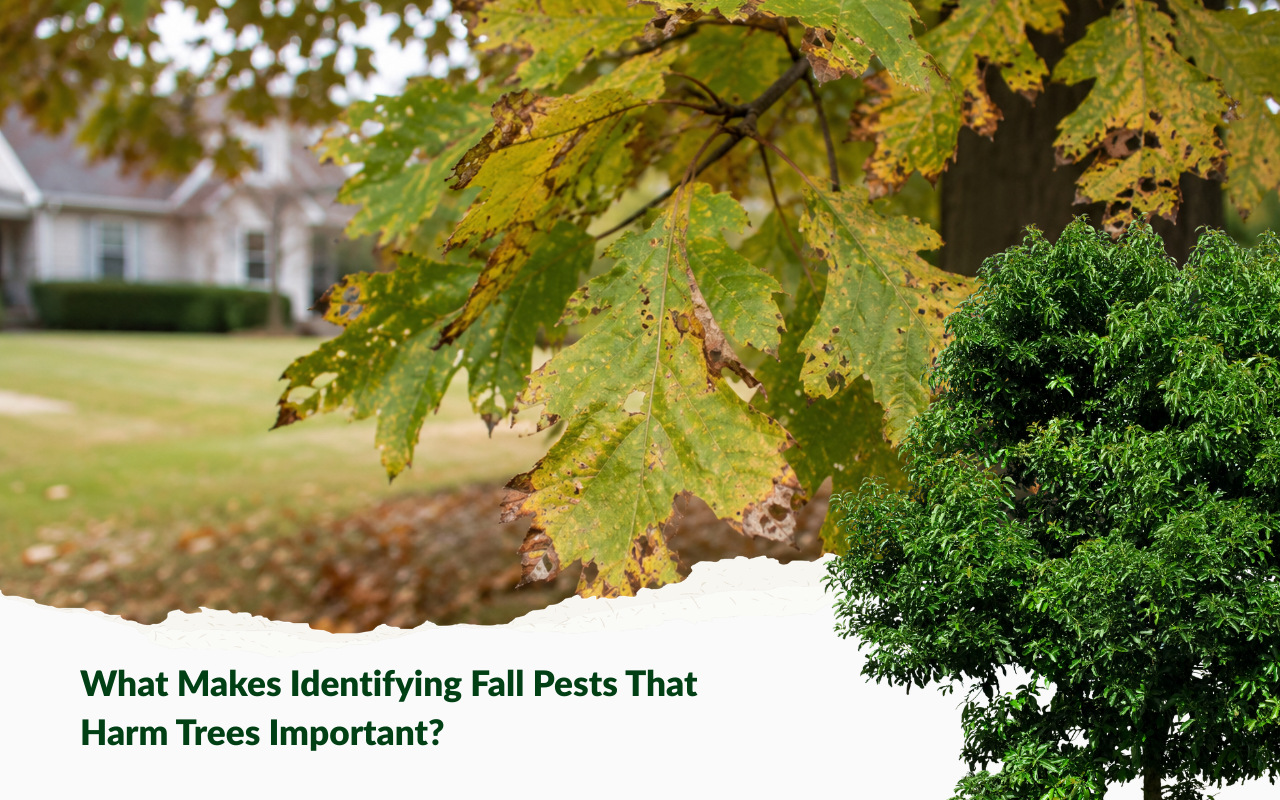
Identifying Fall Pests That Harm Trees helps homeowners spot insect activity before colder weather hides the problem. Early checks can reveal leaf damage, bark holes, sap, webbing, or weak branches, so the tree can be reviewed before pests cause deeper stress.
If you notice unusual chewing, sticky residue, or weak limbs, our tree care services can help you understand the next safe step before damage spreads.
Identifying Fall Pests That Harm Trees Protects Property Safety
Late summer tree pests can remain active as weather shifts, and their damage may become easier to see before leaves drop. At Perez Landscape and Trees LLC, we look for patterns that show whether insects are feeding, nesting, tunneling, or weakening branches.
Chewed leaf edges, pale patches, curled leaves, and webbed branch tips may point to caterpillars, mites, webworms, or leaf miners. Sticky honeydew can point to aphids or scale. According to the University of California IPM Program, regular trunk and branch monitoring helps detect borer infestations before they become serious.
- Chewed foliage near branch tips
- Sticky residue on leaves or surfaces below
- Fine webbing around small branches
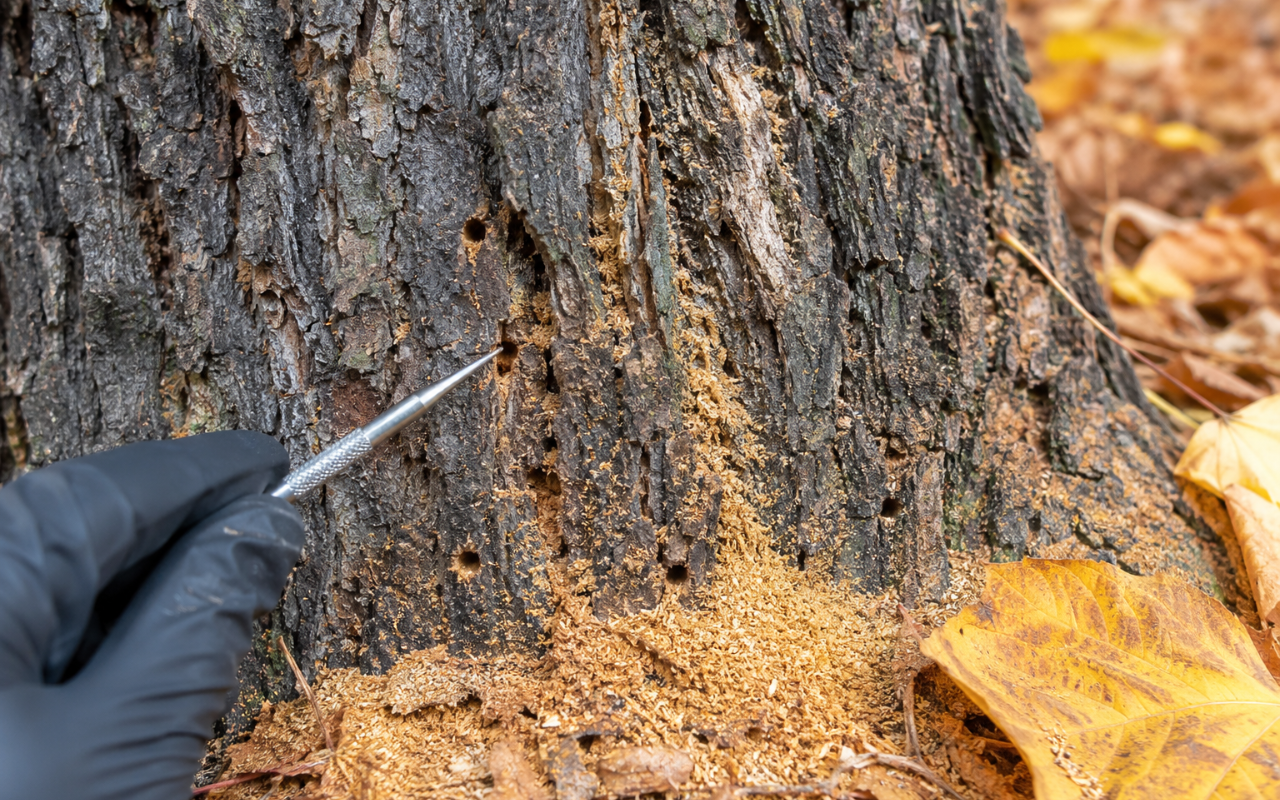
- Small bark holes with dust-like frass
If symptoms keep spreading, use our contact our team page to request guidance before the tree enters winter stressed.
Pest Damage Trees Show Through Leaves And Bark
Pest damage trees often reveal starts in two places: the canopy and the trunk. Leaf feeders usually leave visible marks first, while borers and bark beetles may stay hidden until branches thin, sap appears, or small exit holes form.
When homeowners contact Perez Landscape and Trees LLC, we ask what changed first, where the damage appears, and whether the tree has other stress. Repeated defoliation can reduce the tree’s stored energy before winter. Borer tunnels can also interrupt water and nutrient flow inside the trunk.
- Leaf holes may show active feeding.
- Yellow speckling may point to mites.
- Frass near bark may show tunneling.
- Top dieback may signal deeper decline.
The USDA Animal and Plant Health Inspection Service notes that emerald ash borer damage is often hidden under bark and decline can be gradual. That makes early visual checks important, especially when branch tips begin to die back.
Pre-Fall Pest Inspection Guides Safer Tree Care Decisions
A pre-fall pest inspection gives a clear view of tree health before cooler weather slows visible insect activity. During a review with Perez Landscape and Trees LLC, our crew checks symptoms, branch safety, and site conditions before recommending practical next steps.
Start by walking around the tree from the trunk to the drip line. Look at the top canopy, then move down to branches, bark, trunk flare, mulch, soil, and exposed roots. Photos help compare damage week by week. A simple record can show whether activity is growing or slowing.
- Check leaf undersides for eggs or tiny insects.
- Scan bark for cracks, sap, holes, and frass.
- Look for weak limbs above walkways or roofs.
- Note watering, recent pruning, and soil changes.
- Ask for a review when damage reaches the trunk.
With Perez Landscape and Trees LLC, you get clear recommendations without guesswork. For support, review our landscaping and tree services.
Safe Tree Care Reduces Risk Before Winter Weather
Preventive tree care can reduce pest pressure and help trees enter winter with stronger structure. Healthy roots, clean branch structure, proper mulch, and careful watering make trees less likely to decline after insect feeding or bark damage.
Water deeply during dry periods, but avoid keeping soil soaked. Keep mulch a few inches away from the trunk because wet bark can invite decay and shelter pests. Remove heavily infested debris when pests may overwinter in leaves, twigs, or fallen branches.
Do not cut large branches just to remove light insect activity unless safety or tree health requires it. Unneeded wounds can stress the tree and may attract some insects. If a limb hangs over a driveway, walkway, or roof, the safety concern should be reviewed before treatment decisions are made.
For support before winter, connect with Perez Landscape and Trees LLC and ask about the safest path for your property.
Professional Reviews Clarify Hidden Pest And Branch Hazards
Professional input matters when insects enter the trunk, damage covers a large canopy, or weak branches threaten people or property. Some pests look similar, so correct identification helps avoid the wrong treatment and protects beneficial insects when possible.
We check the affected tree, nearby trees, soil conditions, branch structure, and visible pest signs. Then we explain whether the issue looks like leaf feeding, sap feeding, tunneling, disease stress, drought stress, or a safety concern. Clear identification comes before treatment.
A review is especially helpful when you see:
- Dead branches near high-use areas
- Sawdust-like material near the trunk
- Large canopy thinning in one season
- Cracks, cavities, or bark separation
- Repeated pest activity after basic care
When the tree may affect a home, fence, vehicle, or walkway, request a property safety review before the damage gets worse.
Frequently Asked Questions
How often should homeowners inspect trees before fall?
Weekly checks work well while insects remain active and leaves are still easy to inspect. Look at the canopy, bark, trunk base, mulch, and fallen debris. If symptoms spread between checks, use our contact our team page for help.
What signs show pests may be inside bark?
Small exit holes, sap, frass, peeling bark, vertical cracks, and sudden branch dieback can point to insects beneath the bark. These signs deserve attention because concealed pests are harder to manage once they spread through the trunk or major limbs.
Can late summer tree pests damage healthy trees?
Yes, some late summer tree pests can damage healthy trees, especially when insect pressure is high. However, stressed trees are often more vulnerable. Good watering, careful mulch placement, and timely tree care services can reduce avoidable stress.
Should I treat every insect found on trees?
No. Some insects are harmless, and many beneficial insects help control pests naturally. Treatment should depend on the pest, damage level, tree condition, and safety risk. Correct identification helps avoid unnecessary sprays and protects the wider landscape.
When should I request a professional tree inspection?
Request help when damage reaches the trunk, branches weaken, the canopy thins quickly, or pests keep returning. A professional review helps confirm the cause and next step. You can request a property review before winter weather adds stress.
Preserve Your Trees Before Small Property Problems Spread
Small pest problems are easier to manage before symptoms become severe. Identifying Fall Pests That Harm Trees can help you act before winter stress increases. If you see leaf damage, bark holes, sticky residue, or unsafe limbs, review our seasonal tree support or reach out through the contact page for practical guidance.