
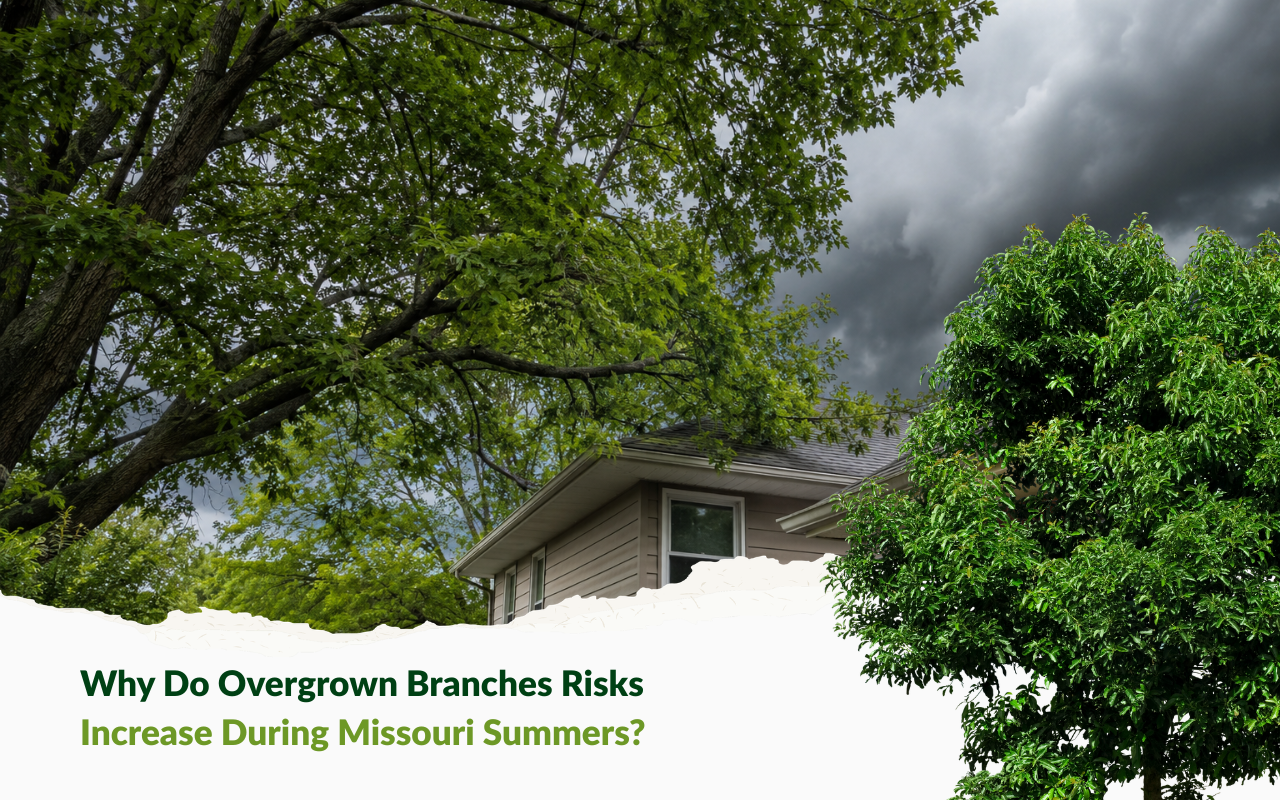
Overgrown branches risks increase during Missouri summers because heat, humidity, and storms can make heavy limbs break, scrape homes, block views, or fall near power lines. Early trimming helps reduce damage before strong wind and rain expose weak branches.
For help planning safer trimming, visit our Professional Outdoor Services.
Why Do Overgrown Branches Risks Increase During Missouri Summers?
Tree trimming removes crowded, damaged, low, or unsafe limbs from trees that have grown too close to homes, driveways, lines, or outdoor spaces. Homeowners need it when branches block sunlight, trap moisture, or shift tree weight. The goal is safer growth, cleaner clearance, and fewer preventable storm problems.
Overgrown Branches Risks Create Storm Hazards Near Homes
Storm risks grow when branches are long, dense, or unevenly weighted because wind can pull against the canopy. During summer in Kansas City, sudden storms may turn heavy limbs into falling hazards near roofs, vehicles, fences, and walkways.
When customers call Perez Landscape and Trees LLC, we look at branch direction, deadwood, canopy density, and nearby structures. Overgrown branches can act like sails during strong wind. As a result, weak limbs may snap or twist before the homeowner sees warning signs.
- Branches over roofs can scrape shingles and gutters.
- Low limbs near driveways can hit vehicles or block views.
- Crowded canopies can hold moisture and wind pressure.
- Dead limbs can fall during normal storms.
NOAA recommends preparing before severe seasonal weather, rather than waiting until danger is close. Removing overgrown branches before hurricane season also helps families think ahead, even when local storms are not tropical systems.
Heavy Canopies Threaten Tree Health and Property Safety
A dense canopy can weaken a tree by blocking airflow, trapping moisture, and adding weight to one side. Over time, that stress can increase limb failure, pest activity, decay, and property damage during windy or wet weather.
Overgrown branches July in Missouri can become more noticeable because trees are full, heavy, and fast-growing. We check for rubbing limbs, dead tips, leaning sections, and weak branch unions before trimming. In many yards, the safest plan is not heavy cutting. It is careful shaping that protects the tree’s natural form.
The University of Missouri Extension warns against topping storm-damaged trees because weak regrowth can break again later. That is why proper pruning choices matter. A cleaner canopy lets sunlight and air move through the tree while reducing unnecessary weight.
Warning Signs Reveal When Overgrown Branches Need Trimming
Clear warning signs show when branch growth has moved from normal to risky. Homeowners should look for limbs touching roofs, crossing other branches, hanging over paths, leaning heavily, or growing close to power lines and outdoor structures.
With Perez Landscape and Trees LLC, customers get a practical review of what should be trimmed, what should stay, and what may need closer attention. Some branches only need shaping. Others may need removal because they are dead, cracked, or growing toward a dangerous area.
- Trim soon when limbs touch gutters or siding.
- Call for help when branches grow near lines.
- Watch closely when one side looks much heavier.
- Schedule trimming when light no longer passes through.
Never cut branches near electrical lines yourself. Branches can conduct electricity, and unsafe cuts can create injury, outages, or property damage.
Our Review Process Prepares Trees Before Severe Weather
A simple review process helps homeowners understand what will happen before tree trimming begins. We ask about the problem, inspect visible hazards, explain safe options, and prepare the trimming approach around the tree, property, and nearby structures.
During a project review at Perez Landscape and Trees LLC, we focus on safety first. We do not guess from the ground alone when a branch looks heavy or unstable. Instead, we review the tree’s shape, nearby obstacles, and the safest next step.
- We ask where branches are causing concern.
- We check roof, driveway, fence, and line clearance.
- We explain which limbs create the greatest risk.
- We recommend trimming that protects tree structure.
- We clean up cut material after the work.
This process helps homeowners feel ready before booking. It also keeps the work focused on safety, tree health, and property protection.
Seasonal Planning Supports Safer Trees Through Summer
A seasonal trimming plan reduces overgrown branches risks before storms, heat, and rapid growth make problems worse. Homeowners should inspect trees after heavy rain, before peak summer growth, and whenever limbs move closer to homes or utility areas.
Most trees do not need constant trimming. Still, trees near roofs, sidewalks, fences, and power lines need closer attention. Young trees may need shaping every few years. Mature trees may need less frequent work, depending on species, health, soil, and exposure.
At Perez Landscape and Trees LLC, we help customers build a practical plan, not an overdone one. The best schedule protects healthy growth while reducing preventable hazards. For local support, you can request help through our Contact page.
Frequently Asked Questions
Can overgrown branches damage my roof during storms?
Yes. Branches that hang over a roof can scrape shingles, clog gutters, and break during high wind. Trimming improves clearance and lowers direct contact risks. To plan safe work around your home, review our Professional Outdoor Services.
Why are branches more risky during Kansas City summers?
Summer growth makes tree canopies heavier and denser. In Kansas City, storms can arrive with strong wind and heavy rain. When limbs are crowded or weak, that added weight can increase breakage, cleanup needs, and damage around outdoor spaces.
Should I trim branches near power lines myself?
No. Branches near power lines should be handled with proper safety steps and qualified support. Homeowners should not climb, cut, or use pole tools near energized lines. For safer guidance, start with our Contact page.
How often should homeowners check trees for overgrowth?
Homeowners should check trees after storms, during midsummer growth, and before seasonal weather changes. Look for deadwood, rubbing limbs, low branches, and roof contact. Regular observation helps catch small concerns before they require urgent trimming or removal.
What happens when I request a tree review?
We ask what you noticed, review the tree and nearby structures, then explain safe trimming options. Photos can help before the appointment. You can begin through our Home page or contact form.
Reduce Branch Hazards Before Weather Damages Your Property
Overgrown branches can look harmless until wind, rain, or weight turns them into a serious problem. When you contact Perez Landscape and Trees LLC, we explain the safest next step and help you protect your home, yard, and trees. Schedule a local review through our Contact page before damage gets worse.