
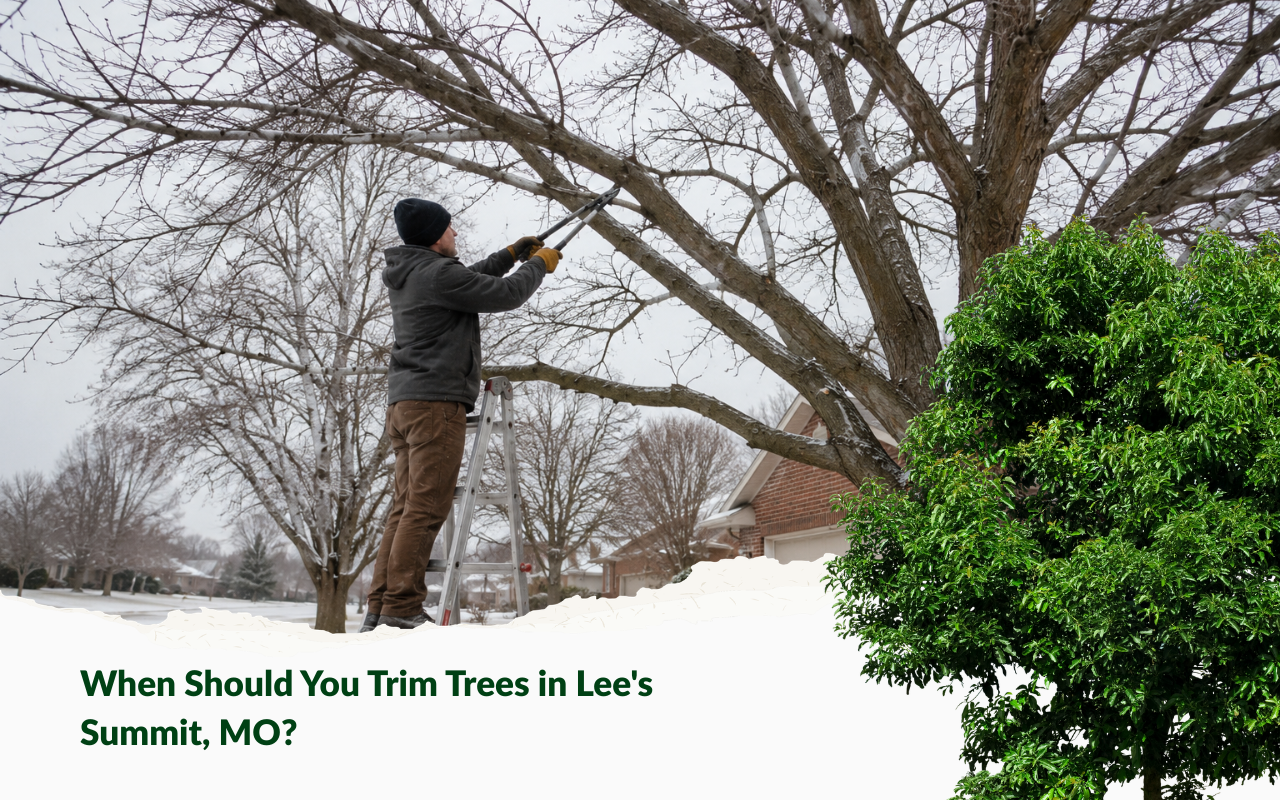
The best answer for when to trim trees in Lee’s Summit, MO is usually during late dormancy, before spring growth begins. However, damaged, hazardous, flowering, and species-sensitive trees may need a different window. Our seasonal tree care guide explains how timing changes throughout the year.
Plan Seasonal Pruning Around Tree Health and Growth
Most healthy shade trees respond well to pruning during late winter, while they remain dormant. Bare branches are easier to inspect, and spring growth can begin soon afterward. Still, the best time to trim trees depends on species, condition, flowering cycle, and the reason for cutting.
When deciding when to trim trees in Lee’s Summit, MO, we also consider age and growth pattern. Young trees often need structural cuts, while mature trees may need only selective care. With Perez Landscape and Trees LLC, you receive practical guidance based on visible concerns and seasonal conditions. Review our species-based trimming guidance before setting a routine.
- Dormant pruning supports a clear structural inspection.
- Corrective pruning may follow storm or limb damage.
- Flowering trees may need trimming after blooming.
Compare Summer and Fall Trimming Before Making Cuts
Summer vs fall tree trimming is not a simple choice because each season serves different needs. Light summer cuts can correct active growth or storm damage. Fall may offer cooler working conditions, but early cuts before full dormancy can encourage stress or affect how wounds respond.
When customers ask Perez Landscape and Trees LLC about seasonal choices, we first identify the purpose of the work. Summer can reveal crowded foliage, rubbing branches, and clearance problems. Fall offers better visibility after leaf drop, yet late winter is often more suitable for major planned pruning.
- Choose summer carefully for light, corrective work.
- Avoid heavy canopy removal during heat and drought.
- Use fall inspection to plan dormant-season cuts.
University of Illinois Extension explains that timing depends on the tree’s growth habit, bloom time, health, and condition.
Recognize Warning Signs That Require Prompt Tree Care
Some tree problems should not wait for the ideal season. Hanging limbs, cracked unions, storm damage, dead branches, and contact with structures can create immediate concerns. Prompt inspection helps separate urgent hazards from routine pruning that can safely wait for a better seasonal window.
Look for changes after wind, ice, or heavy rain. Branches that suddenly lean, split, or lose bark may need professional review. Crowded growth can also reduce airflow and hide weak attachments. For additional timing details, read our seasonal pruning recommendations.
- Dead branches above driveways, roofs, or walkways
- Limbs rubbing siding, gutters, or nearby branches
- Cracks where two large stems meet
- Fast-growing shoots that weaken the tree’s shape
Never trim near utility lines. Contact the utility provider or a qualified professional instead.
Follow a Clear Tree Trimming Schedule by Season
A practical tree trimming schedule by season keeps routine care separate from urgent work. Winter supports structural pruning for many deciduous trees. Spring requires care around new growth and blooms. Summer suits limited correction, while fall is useful for inspection and planning after leaves drop.
Use this simple schedule as a starting point, then adjust it for species and condition:
- Late winter: inspect structure and complete planned pruning.
- Spring: protect blooms and watch for storm damage.
- Summer: make limited cuts for safety or clearance.
- Fall: identify deadwood and schedule dormant work.
A fixed annual trim is not necessary for every established tree. Instead, inspect trees regularly and prune when structure, health, safety, or clearance creates a clear need. This approach provides a more useful answer for when to trim trees in Lee’s Summit, MO.
Prepare Confidently for Your Professional Pruning Appointment
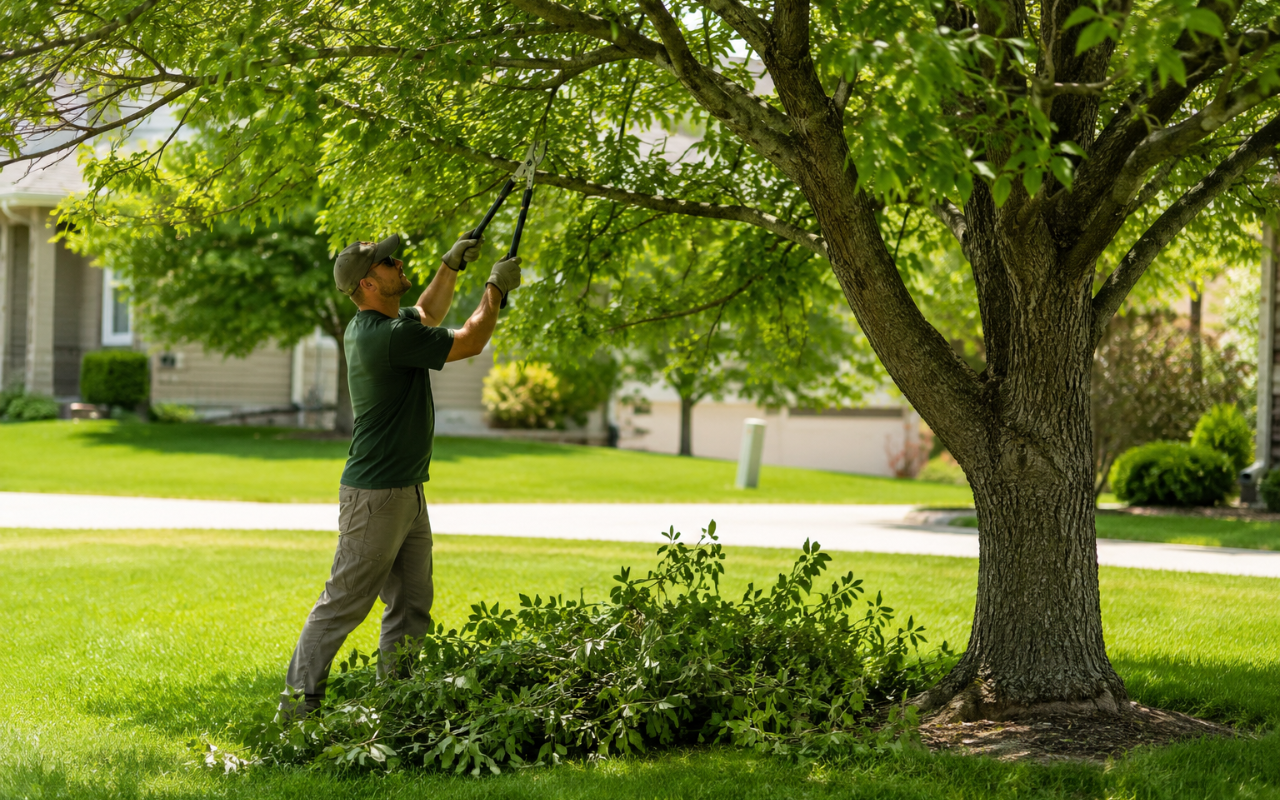
A professional tree trimming service should begin with clear information about the tree and the concern. Photos, location details, recent storm damage, and nearby structures help guide the first review. During the inspection, the crew can explain which cuts are needed and which branches should remain.
At Perez Landscape and Trees LLC, we keep the process focused on practical needs rather than unnecessary cutting. When you request a tree assessment, be ready to share what changed and where the tree sits.
- Describe the tree and visible problem.
- Review branch condition and nearby risks.
- Discuss seasonal timing and suitable cuts.
- Confirm the work area before pruning begins.
- Review the tree after the work is complete.
Frequently Asked Questions
What is the safest season for most tree trimming?
Late winter is often the safest general window because many deciduous trees are dormant and branch structure is visible. Species and health still matter. Use our seasonal tree care guide to compare timing before planning nonurgent work.
Can trees be trimmed safely during hot Missouri summers?
Yes, but summer pruning should usually be light and targeted. Remove urgent storm damage or small branches causing clearance problems. Avoid major canopy reduction during heat or drought because losing too much foliage can add stress when the tree needs leaves for energy.
Why does tree species change the ideal pruning time?
Tree species differ in growth cycles, flowering habits, sap flow, and disease risks. A timing rule that suits one tree may harm another. Our species-based trimming guidance explains why pruning frequency and season should match the tree.
Should damaged branches wait until the dormant season?
No. Broken, hanging, or dangerous branches should be inspected promptly, regardless of season. Safety comes before routine timing. Avoid standing beneath unstable limbs, and do not attempt cuts near power lines, roofs, or large overhead branches without suitable equipment and training.
Do mature trees need trimming every single year?
Not always. Many established shade trees need occasional, purpose-driven pruning rather than annual cutting. Regular inspection is more useful than a fixed schedule. Read our seasonal pruning recommendations to identify the right window when work becomes necessary.
Protect Long-Term Tree Health With Timely Local Care
Good timing protects structure, appearance, and safety without removing more growth than needed. With Perez Landscape and Trees LLC, you can discuss visible concerns and choose a suitable pruning window for your property. Request a tree assessment when branches look damaged, crowded, or unsafe.