
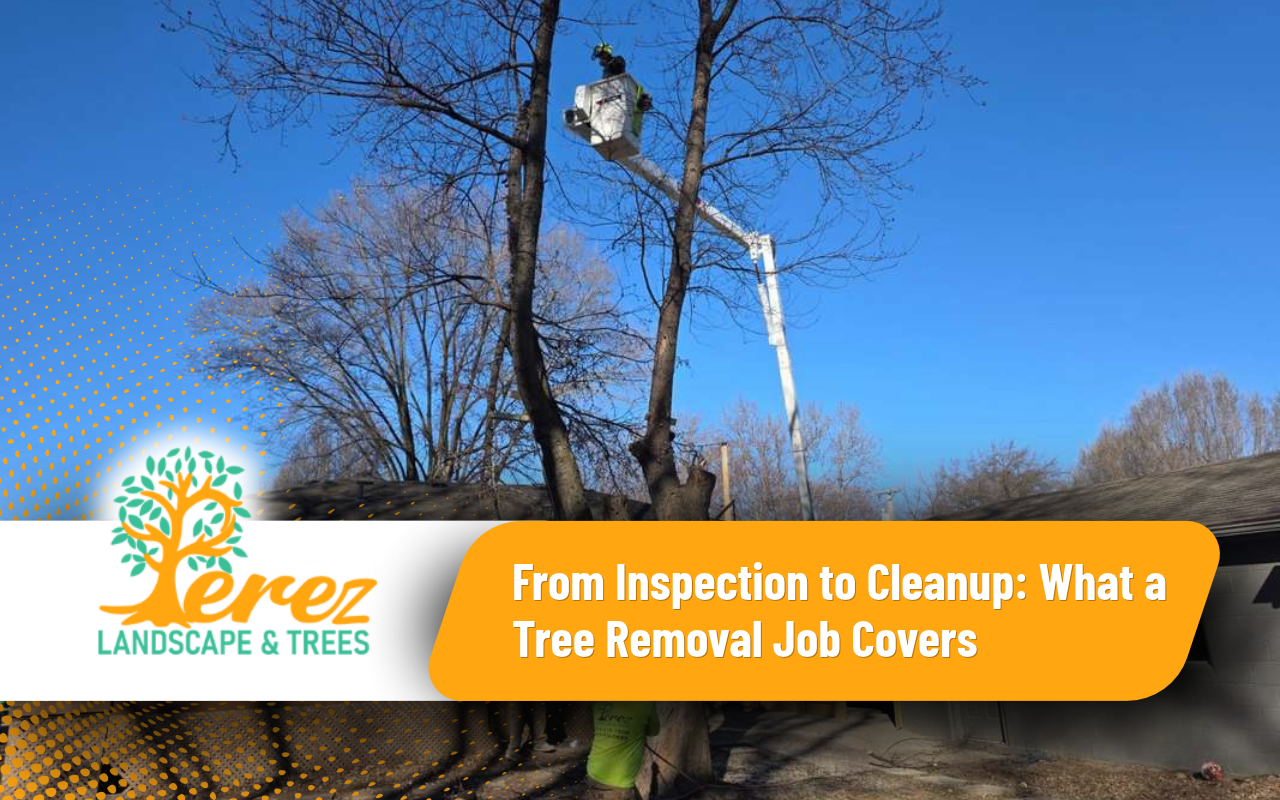
Two quotes for the same tree can look very different, and the reason is usually not the price of cutting. One may include hauling, cleanup and stump work, while the other stops once the trunk is on the ground. Before comparing offers, you can request a removal estimate that lists every step in writing. Free estimates are available.
Knowing what does tree removal include helps you compare quotes fairly and avoid surprises on removal day. The sections below walk through each stage, from the first inspection to the final rake of the yard.
How Do You Know if a Tree Needs to Be Removed?
Removal makes sense when a tree is dead, structurally unsafe or causing damage that pruning cannot fix. A single symptom rarely decides it. An inspection looks at the trunk, roots, canopy and what the tree could hit if it failed.
- Large dead branches or a mostly bare canopy
- Deep cracks, cavities or fungus at the base
- A new or worsening lean with lifted soil
- Roots damaging foundations, driveways or sewer lines
- Storm damage that removed a major part of the crown
If only part of the tree is affected, trimming or cabling may still be an option. Our licensed crew explains both choices before recommending removal.
What Does a Tree Removal Service Usually Cover?
A full service usually covers the inspection, cutting, chipping, hauling and final cleanup. Stump grinding and permit checks vary by company and city, so they should be listed separately in the quote.
| Stage | What happens | Often included? |
|---|---|---|
| Site inspection | Check tree condition, access, wires and nearby structures | Yes |
| Permit check | Confirm whether local rules apply | Varies by city and tree |
| Cutting and lowering | Remove limbs in sections, then the trunk | Yes |
| Debris hauling | Chip branches and remove wood | Usually, but confirm |
| Stump grinding | Grind the stump below grade | Often quoted separately |
| Final cleanup | Rake, blow and clear the work area | Should be, but confirm |
Ask each company which of these lines are part of the quote. The cheapest offer may leave logs and a stump behind. A clear answer to what does tree removal include should come in writing, not just in a phone call.
What Happens Step by Step on Tree Removal Day?
Most removals follow the same order, adjusted for the tree’s size and surroundings. When you are ready to set a date, you can set your removal date and confirm access details ahead of time.
- The crew sets up a safe work zone and protects nearby surfaces.
- Limbs are cut in sections and lowered with ropes when space is tight.
- The trunk is taken down in pieces or felled if the area is open.
- Branches are chipped and wood is cut for hauling.
- The stump is ground if it was included.
- The yard is raked and cleared before the crew leaves.
Can a Tree Be Removed in Winter?
Yes, and winter is often a good time. Without leaves, crews can see the branch structure clearly, and frozen ground helps protect lawns from heavy equipment. Dormant trees are also lighter to handle than trees full of summer growth.
Scheduling is often easier too, since winter is a slower season for most tree crews outside of storm events.
Ice storms can change plans quickly. Our guide on Grandview winter storm recovery explains what to check after heavy ice or snow.
Do You Need a Permit Before Cutting a Tree?
Sometimes. Some cities regulate removal of certain trees, especially those near streets or in public right-of-way areas. Rules can change, so it is smart to confirm before work starts. Our article on the Grandview removal permit process covers what local homeowners should know. Trees near property lines may also need a conversation with neighbors before work begins.
Which Mistakes Make Tree Removal Harder and Slower?
Waiting until a dead tree drops limbs on the roof is the most common one. Others include parking vehicles under the tree on removal day, forgetting to mark sprinkler heads and hiring crews without proof of licensing or insurance.
Clearing the work area and pointing out buried lines or invisible fences saves time and protects your property.
At Perez Landscape and Trees LLC, we walk the site with the homeowner before the crew arrives. That short walkthrough confirms where the wood will be stacked or chipped, which gate the equipment will use and which plants need extra protection.
How Do You Choose a Tree Removal Company in Grandview, MO?
Choose a licensed crew that gives written estimates, explains every step and plans around tight lots, fences and nearby homes.
Grandview yards often mix mature oaks, maples and older silver maples close to homes and fences. With more than 16 years of experience, our team at Perez Landscape and Trees LLC plans each removal around those tight spaces. Our Grandview tree removal service page explains our local approach.
We work with both residential and commercial properties, from backyard trees to trees along business parking lots.
Frequently Asked Questions
Is stump grinding part of tree removal?
Not always. Many companies quote it separately, so ask if you want the stump gone.
Will the crew haul away all the wood?
Usually, but some homeowners keep logs for firewood. Say so before work starts.
How long does a removal take?
Small trees may take a few hours, while large trees near structures can take a full day or more.
What if a tree falls during a storm?
We offer 24/7 emergency service for trees on homes, driveways or power lines.
Comparing Tree Removal Quotes With Confidence and Clarity
When you know what does tree removal include, it is easier to spot quotes that leave work undone. Ask about cleanup, hauling and stump grinding before you sign. At Perez Landscape and Trees LLC, every estimate lists those details clearly.
Call (816) 315-1508 or get a written quote from our licensed crew today.