
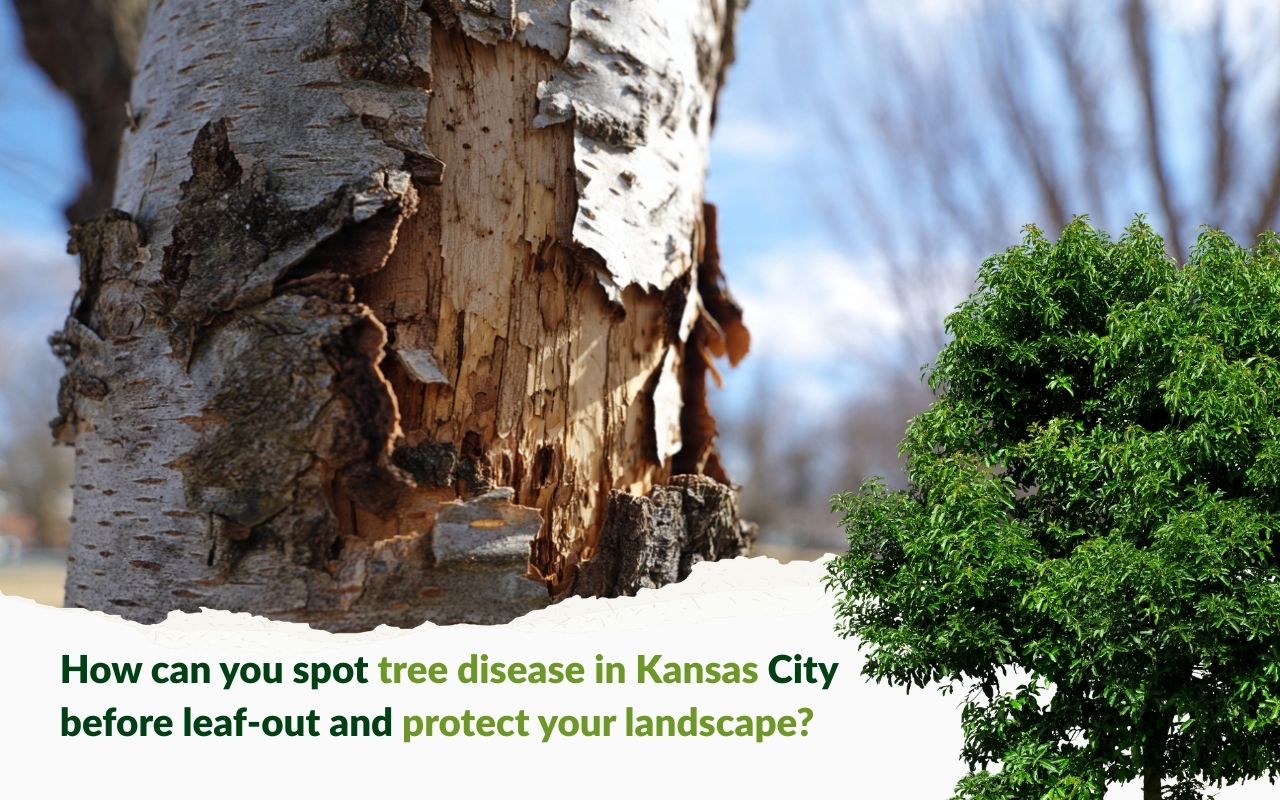
Healthy trees start with early checks. Before spring growth, you can catch problems that stay hidden later. By scanning bark, buds, and the base, you can act sooner. That timing protects shade, safety, and curb appeal. This guide explains what to look for in Kansas City and when to call a pro.
How can you spot tree disease in Kansas City before leaf-out and protect your landscape?
Kansas City spotting tree disease before leaf-out works because symptoms show clearly on bare branches. Therefore, you can see cankers, sap leaks, and fungal growth sooner. As a result, you can prune early, reduce spread, and protect the canopy. Perez Landscape and Trees LLC can also confirm the cause and recommend the safest next step.
Early warning signs to check before spring growth
When Kansas City spotting tree disease before leaf-out is your goal, start with a slow, visual scan. First, look at the trunk and main limbs. Then, check buds and small twigs for changes.
- Cracks, sunken bark, or dark streaks on the trunk
- Sticky sap or oozing near branch unions
- Dead twig tips and brittle branch ends
- Shriveled buds that look brown or hollow inside
- Mushrooms or shelf growth near the soil line
Meanwhile, document what you see with photos. Consequently, you can compare changes week to week.
If you want a service team that knows local risks, explore Who Provides Dependable Tree Care and Landscaping in Kansas City. Then, request an evaluation that fits your yard.
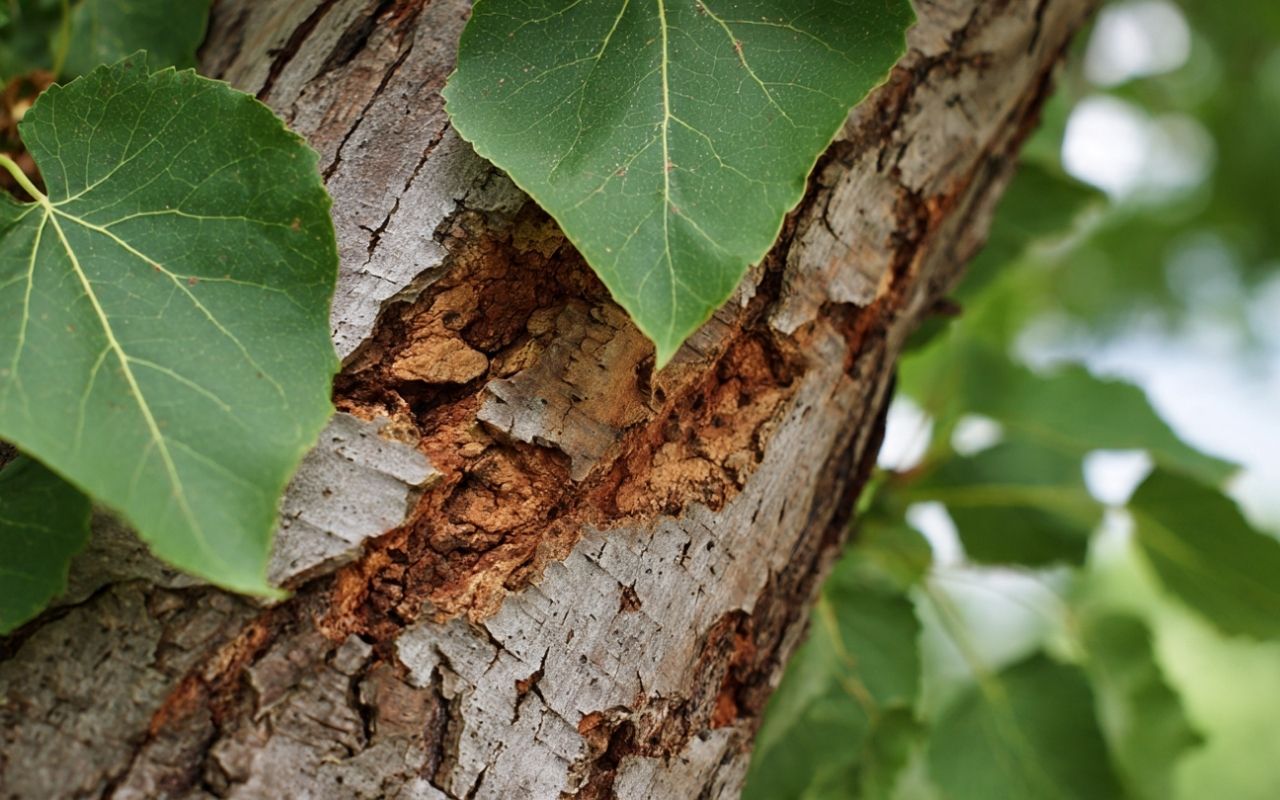
What canker and bark symptoms may be telling you
Canker & bark symptoms often appear as sunken, dead patches on limbs or the trunk. However, they can also look like peeling bark with a discolored edge. In addition, you may notice sap bleeding from the margin.
When Kansas City spotting tree disease before leaf-out, use a simple touch-and-look check. Healthy bark feels firm. Diseased areas may feel soft or look scaly.
Also watch for repeated cankers along one branch. If that pattern grows, the tree can lose water flow quickly. Therefore, early action matters.
How to recognize fungi on trunk or base
Fungi on trunk or base can appear as small mushrooms, brackets, or fuzzy threads. Often, those growths suggest wood decay inside. So, even a small cluster deserves attention.
Clear away loose mulch and leaf litter. Then, inspect the root flare and exposed roots. If you see white, orange, black, or tan growth, take photos. After that, limit injuries to the bark.
When Kansas City spotting tree disease before leaf-out, remember that fungi can signal stability issues. Therefore, keep people and pets away from suspect trees until assessed.
Why proactive checks save time, money, and trees
Waiting until full leaf-out can hide trunk damage under fresh growth. Consequently, problems may look “sudden” even when they started months earlier. Kansas City spotting tree disease before leaf-out helps you respond while symptoms are clear.
Moreover, early steps can reduce spread to nearby trees. As a result, you protect the whole landscape, not just one trunk.
When to schedule a disease assessment in Kansas City
A disease assessment service for Kansas City helps you confirm the cause, not just the symptom. Therefore, you avoid guesswork and unnecessary cutting. Perez Landscape and Trees LLC can evaluate structure, roots, and canopy health.
- Schedule an assessment if you see multiple cankers or fast dieback.
- Book a visit if fungi appear at the base or on major limbs.
- Call quickly if the tree leans, shifts, or drops large branches.
To understand what an inspection includes, read Arborist Inspection in KC and When to Schedule Tree Removal. Then, use that checklist for your property.
How to do a quick pre-leaf-out inspection
This routine is simple, and it supports Kansas City spotting tree disease before leaf-out. Still, stay safe and avoid climbing or cutting near power lines.
- Walk a full circle around the tree and scan the trunk.
- Look for canker & bark symptoms, including sunken patches and sap leaks.
- Check buds and twig tips for browning or hollow centers.
- Inspect the base for fungi on trunk or base and soft, crumbly wood.
- Photograph problem spots and note the date and weather.
- If risks seem high, schedule a professional assessment right away.
When you need help fast, contact Perez Landscape and Trees LLC through Let’s Bring Your Dream Project to Life—Contact Us Today!. After that, you can plan next steps with confidence.
Preventive measures that strengthen tree health
Prevention works best when it supports tree vigor. Therefore, focus on roots, airflow, and stress reduction. Perez Landscape and Trees LLC can also recommend pruning timing for your species.
- Mulch 2–4 inches deep, and keep it off the trunk.
- Water deeply during dry spells, especially before temperature swings.
- Prune crossing branches to improve airflow and light.
- Disinfect tools between cuts to limit disease spread.
- Reduce soil compaction around the root zone.
If you suspect underground stress, review Root Damage Indicators That Signal It’s Time to Take Action. Then, pair root care with canopy checks.
FAQs
What is the easiest first step for early detection in late winter?
Start with a slow trunk scan, and then check the base for fungal growth. Next, inspect buds for browning. Kansas City spotting tree disease before leaf-out is easier when you document changes weekly. If you want a guided overview, see What Are the Tree Disease Warning Signs Before Winter (and How Do You Respond)?.
When do cankers mean a tree could become hazardous?
Cankers become serious when they expand, repeat along a limb, or surround the trunk. Consequently, the branch can weaken and fail. If you notice fast spread, book an evaluation. Use Arborist Inspection in KC and When to Schedule Tree Removal to understand what pros look for.
Does fungus at the base always mean the tree must be removed?
Not always, because some fungi colonize dead outer wood. However, base fungi can signal internal decay and stability risk. Therefore, keep the area clear and schedule a check. Perez Landscape and Trees LLC can confirm whether the structure is still sound.
How can I tell if a tree is dead before leaf-out?
Check for brittle twigs, no green tissue under thin bark, and buds that are hollow. Also look for repeated dieback on the same limbs. For more signs, read Signs of Dead Trees and When to Remove Them From Your Yard.
Who should I call for a disease assessment service in Kansas City?
Call a trusted local team that can assess roots, trunk, and canopy together. Perez Landscape and Trees LLC provides inspections and practical action plans. To start, use Let’s Bring Your Dream Project to Life—Contact Us Today! and share your photos.
References
For storm-related tree safety guidance, see
What to Do with Storm-Damaged Trees in Your Yard.
Also, for a news report highlighting why hazardous limbs should be addressed quickly, read
Family Sues City After 4-Year-Old Boy Killed by Falling Tree Branch While Playing with His Brother.