
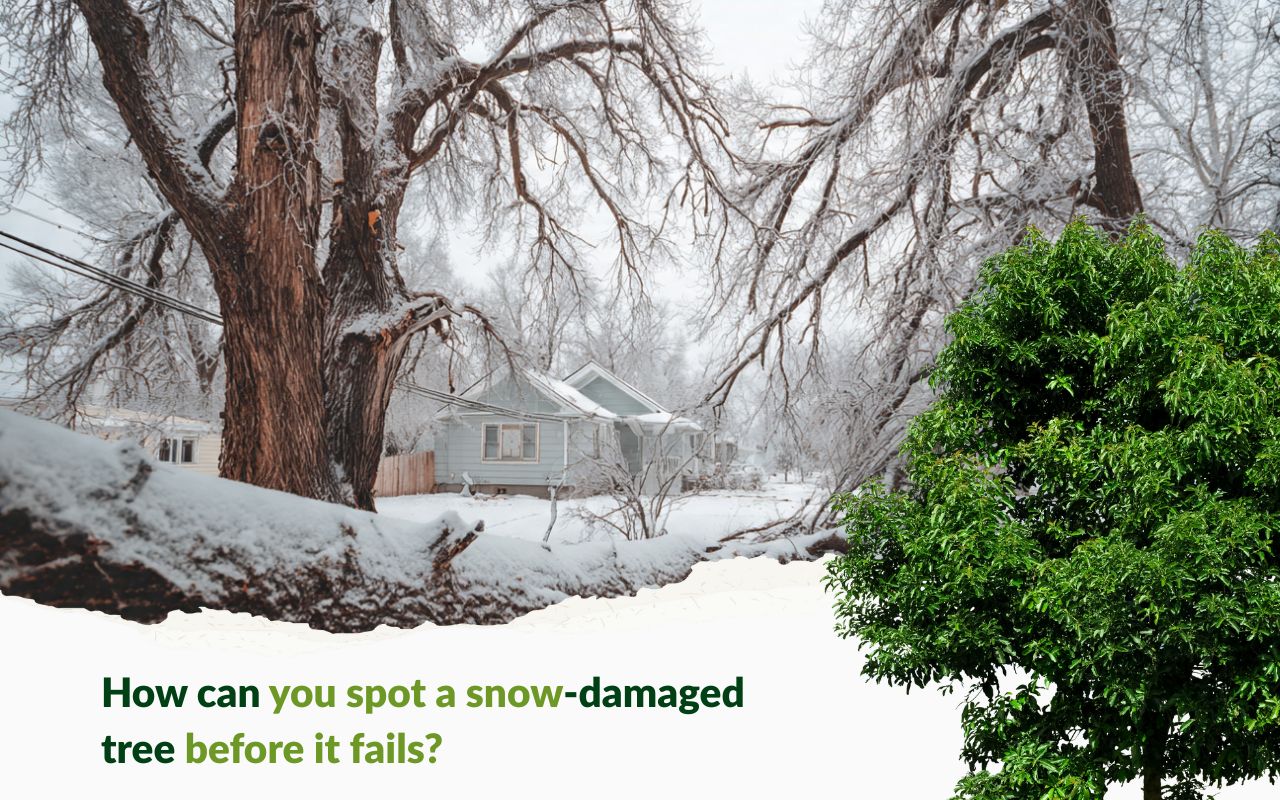
Snow can look harmless on trees. However, hidden damage can form fast. This guide explains How to tell if a tree is dangerous after snow using simple checks. You will learn what to spot, what to avoid, and when to call for help in Kansas City.
How can you spot a snow-damaged tree before it fails?
Start by looking for fresh cracks, sudden leaning, and loose soil at the base. Then, check for hanging limbs and new splits along major branches. If risk signs appear near people, roofs, or power lines, treat it as urgent. In other words, How to tell if a tree is dangerous after snow is about spotting change, fast.
Why snow and ice can turn a healthy tree risky
First, wet snow adds heavy weight to every limb. Meanwhile, freezing temperatures make wood more brittle. As a result, older unions can split without warning. Therefore, How to tell if a tree is dangerous after snow begins with a calm scan of the canopy and trunk.
- Look for new sagging or a shifted crown shape.
- Also listen for creaks during wind or thaw.
- Next, notice whether small branches drop without wind.
- Finally, watch for a new lean toward a driveway or porch.
If you want a proven storm checklist, use this guide from Storm-Damaged Trees Signs You Should Never Ignore. Also, Perez Landscape and Trees LLC can help you judge what is urgent.
Signs that branches are cracking under load
Often, damage starts at branch unions. However, snow can hide those weak points. Signs of cracked branches include bark splitting, jagged seams, and sudden drooping. Therefore, inspect from several angles and stay out from under the canopy.
- Check for dark split lines along major limbs.
- Also look for peeling bark near a fresh seam.
- Next, spot hanging limbs caught in the crown.
- Finally, note any limb that now points downward.
If you see multiple failures, consider a professional evaluation. For deeper storm guidance, read Storm-Damaged Trees Signs You Should Never Ignore. Perez Landscape and Trees LLC can also recommend safe next steps.
How to spot root instability during the thaw
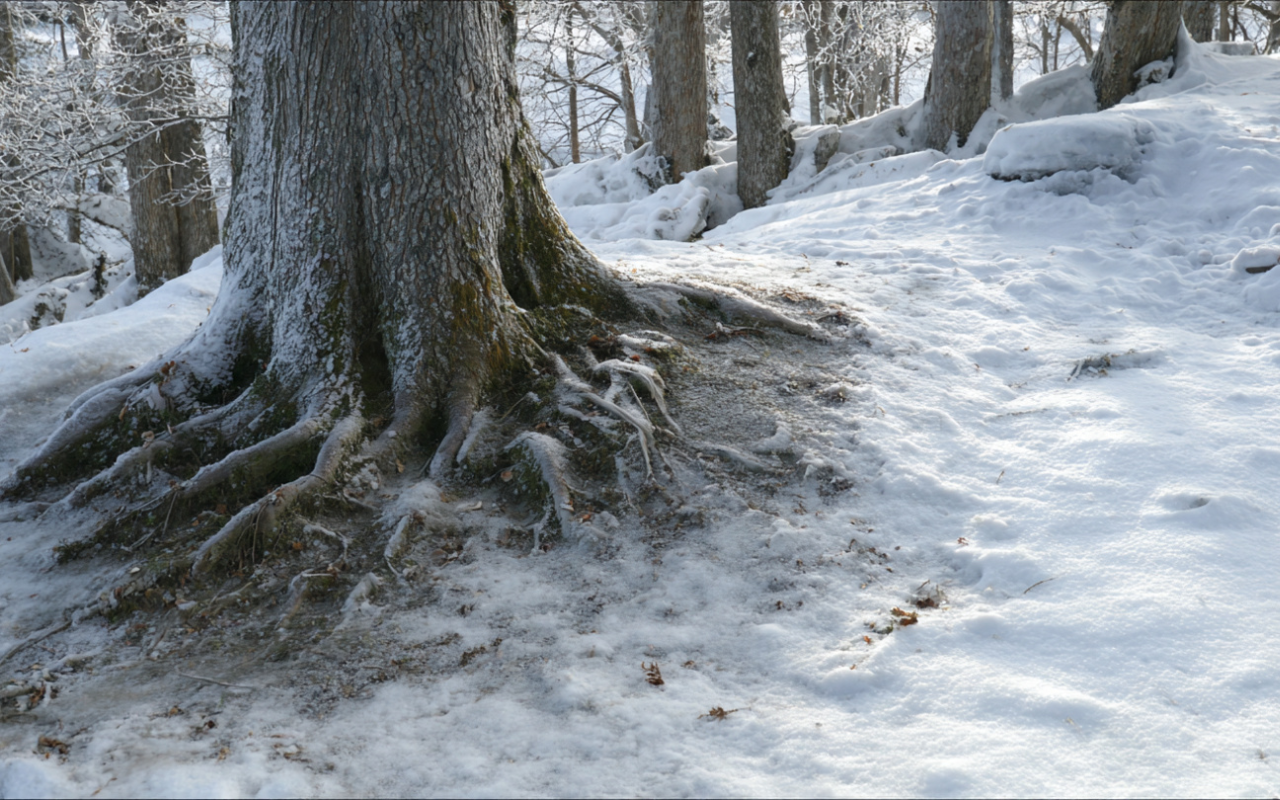
After snow melts, soil can loosen quickly. Consequently, roots may lose grip in wet ground. The clearest clue is root plate movement on thaw. For that reason, watch the soil line and root flare closely.
- Look for lifted soil or new ridges around the trunk.
- Also check for exposed roots that were buried before.
- Next, notice whether the tree leans more each day.
- Finally, avoid pushing or rocking the trunk near targets.
If the tree sits near your home, act early. In that case, schedule a risk review using Arborist Inspection in KC and When to Schedule Tree Removal. Perez Landscape and Trees LLC can help you reduce guesswork.
How to check your tree safely after a snowfall
Use a ground-based approach first. Meanwhile, keep children and pets away from the drop zone. If you are unsure, stop and call a pro. Still, these steps explain How to tell if a tree is dangerous after snow without taking risks.
- First, walk the perimeter and look up for hanging limbs.
- Next, scan the trunk for fresh vertical or spiral cracks.
- Then, check branch unions for widening gaps or splits.
- After that, inspect the base for heaving soil and exposed roots.
- Finally, document changes with photos for a professional review.
If snow is bending small limbs, remove it gently from a safe distance. However, do not try to break ice off branches. Instead, consider an inspection plan with Perez Landscape and Trees LLC.
When it becomes an emergency in Kansas City
Sometimes, waiting makes the risk worse. Therefore, treat these situations as urgent. If the tree threatens people, vehicles, or structures, request emergency tree removal Kansas City support right away.
- A major limb is cracked and hanging over a walkway.
- The trunk has a deep split or a sudden new lean.
- The base soil is lifting near sidewalks or foundations.
- Branches touch or threaten power lines.
For fast help, review What’s the Safest Way to Remove a Tree in Independence, MO. Then, reach out to Perez Landscape and Trees LLC to plan safe removal and cleanup.
FAQs about snow-damaged tree safety
What is the first thing to check after a heavy snow?
First, look for hanging limbs and fresh cracks. Next, review storm warning signs in Storm-Damaged Trees Signs You Should Never Ignore. If hazards are near targets, contact Perez Landscape and Trees LLC.
How do I know if a tree is dead or just stressed from winter?
Winter stress can look dramatic at first. However, dead wood often stays brittle and lifeless over time. Use Signs of Dead Trees and When to Remove Them From Your Yard to compare symptoms. Then, Perez Landscape and Trees LLC can confirm with an on-site check.
Should I try to remove snow from branches myself?
Sometimes you can remove light snow safely. However, you should avoid forcing ice off limbs. If limbs are high, cracked, or over structures, use Arborist Inspection in KC and When to Schedule Tree Removal instead. This is often the safest choice.
When should I choose removal instead of pruning?
Choose removal when stability is compromised. For example, deep trunk cracks, major lean, or severe canopy loss are red flags. Use Storm-Damaged Trees Signs You Should Never Ignore to understand common thresholds. After that, a crew can advise on next steps.
If you are worried, act early. In other words, How to tell if a tree is dangerous after snow is also about getting expert eyes quickly. Use the Contact page to request help and share photos. Perez Landscape and Trees LLC can guide you from inspection to action.
Year-round habits that reduce winter failures
Preventive care lowers winter risk over time. Therefore, prune weak limbs before heavy snow season. Also thin dense canopies to reduce load pockets. In addition, schedule periodic inspections after severe weather. With these habits, How to tell if a tree is dangerous after snow becomes easier each year.
References
For safer snow removal techniques, see
We Asked Experts for the Safest Way to Remove Snow from Trees to Keep Them Healthy All Winter.
For guidance on when to brush snow off plants, read
When You Should-And Shouldn’t-Brush Snow Off Your Plants.