
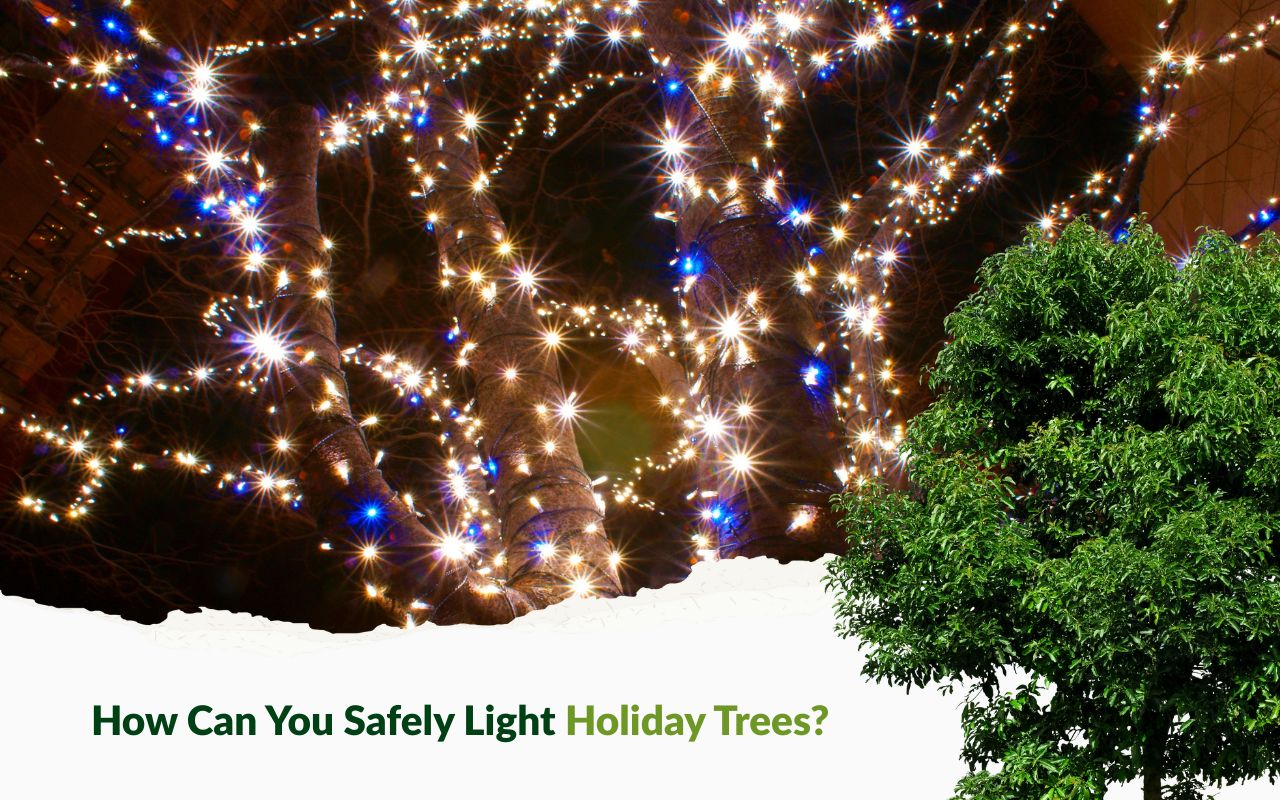
Holiday lights can turn any Grandview, MO yard into a winter showpiece, but they also introduce real electrical and fire risks, especially on live trees. With a little planning, you can enjoy a bright, welcoming display and still protect your family, property, and trees by following simple Holiday Lighting Safety Around Trees best practices all season without extra stress later.
How Can You Safely Light Holiday Trees?
You safely light holiday trees by pairing outdoor-rated LED strands with grounded outlets, GFCI protection, and cords kept off wet ground. Combine that with regular inspections, moisture-safe connections, and a clear fire plan to maintain Holiday Lighting Safety Around Trees while still enjoying a bright, welcoming display in Grandview, MO.
Choosing the Safest Lights for Your Trees
Not all light sets are equal when you decorate mature trees in Grandview, MO. Choosing cool-running, outdoor-rated LED strings and certified components is one of the easiest ways to support Holiday Lighting Safety Around Trees for both towering shade trees and small ornamentals near your home. Before decorating, confirm your trees are pruned according to the recommended tree trimming schedule.
- Look for UL or ETL marks showing the lights have passed independent safety testing.
- Use LED strands that stay cool to the touch and reduce energy use.
- Match light length to tree height so you do not exceed the manufacturer’s maximum connected strands.
- Reserve indoor-only sets for interior trees and choose “outdoor rated” products for your yard and landscape.

Preventing Electrical and Fire Hazards Outdoors
Electrical mistakes are a leading cause of holiday tree fires, but a few simple habits greatly reduce your risk. Always power lights through GFCI-protected outlets, match extension cords to the load, and avoid daisy-chaining too many strands so your Holiday Lighting Safety Around Trees efforts are not undone by an overloaded circuit or damaged cord.
- Use heavy-duty, three-prong extension cords clearly labeled for outdoor use.
- Keep plug connections off the ground and away from puddles, snow, and ice.
- Set a timer or smart plug so lights turn off automatically when you are asleep or away.
- Retire any strand with cracked sockets, frayed insulation, or loose plugs instead of trying to repair it.
Weatherproofing and Monitoring Your Holiday Display
Winter wind and ice can tug on cords, rub wires against bark, and stress older branches. Inspect limbs for weight, deadwood, and the signs of overgrown branches that might pull lights down. After storms, watch for leaning trunks or hanging limbs and review the signs of storm-damaged trees before plugging lights back in.
Use weatherproof covers on outdoor outlets and protect timers or smart plugs inside rated enclosures. Walk your yard weekly to check for loose strands, dark sections, or hot spots on cords. If you notice cracking bark, large dead limbs, or repeated breaker trips, it is wise to schedule an arborist inspection in Kansas City before continuing to decorate that tree.
Frequently Asked Questions
Can I leave my holiday tree lights on all night?
It is safer to turn lights off while you sleep. Use a timer to shut them down late in the evening so cords can cool and your panel is not under constant load. This simple habit supports Holiday Lighting Safety Around Trees and extends the life of your bulbs and wiring.
When should I call a professional for help with my tree lights?
Call a professional when trees are very tall, close to power lines, show structural problems, or require climbing to install lights. Instead of taking risks with ladders or electrical work, you can contact Perez Landscape & Tree Services to discuss safe lighting and tree care options for your Grandview, MO property.
How many light strands can I safely connect together?
The exact number depends on the manufacturer’s rating and whether you are using incandescent or LED sets. Check the box or tag for the maximum number of connectable strands and stay under that limit. If you need more coverage, split lights across additional outlets and circuits instead of pushing a single plug to its limit.
What should I check before reusing last year’s lights and cords?
Lay strands flat and inspect every plug, socket, and section of insulation. Discard any set with exposed copper, brittle plastic, or loose bulbs that will not stay seated. Examine extension cords for stiff areas, crushed spots, or cuts in the jacket. If you are unsure, replace them rather than risk a shock or fire.
Is my tree still safe to decorate after a severe storm?
After high winds or ice, look for fresh cracks, hanging limbs, and soil heaving around the base of the tree. Compare what you see with the signs of storm-damaged trees. If anything looks unstable, pause decorating and request a professional inspection before adding lights or outdoor décor.
How to Safely Install Holiday Tree Lights
Follow these practical steps to protect your family, property, and trees while maintaining Holiday Lighting Safety Around Trees during every stage of your decorating project.
- Plan your design from the ground, noting outlet locations, cord paths, and ladder placement on firm, level surfaces.
- Inspect every strand and extension cord, testing lights before climbing or wrapping branches.
- Prune small, low branches that interfere with light placement and review the benefits of using a pole saw for hard-to-reach limbs.
- Use plastic clips or insulated ties instead of nails or staples so insulation is not punctured or crushed.
- Wrap lights in a gentle spiral from the base upward, keeping tension light so wires are not pinched as branches move in the wind.
- Route cords away from walkways, securing them under cord covers where foot traffic is unavoidable.
- Connect strands according to the manufacturer’s maximum count and plug them into GFCI-protected outlets or rated surge protectors.
- Set timers so displays shut off automatically at night, then perform quick visual checks throughout the season to catch issues early.
References
- 10 Safety Tips for Hanging Christmas Lights Like a Pro – Better Homes & Gardens offers practical guidance on outdoor-rated lights, extension cords, and safe mounting techniques to reduce decorating hazards.
- Holiday Lighting Safety Tips From the Pros – Popular Mechanics explains how to avoid overloaded circuits, damaged cords, and unsafe installations when creating outdoor holiday lighting displays.