
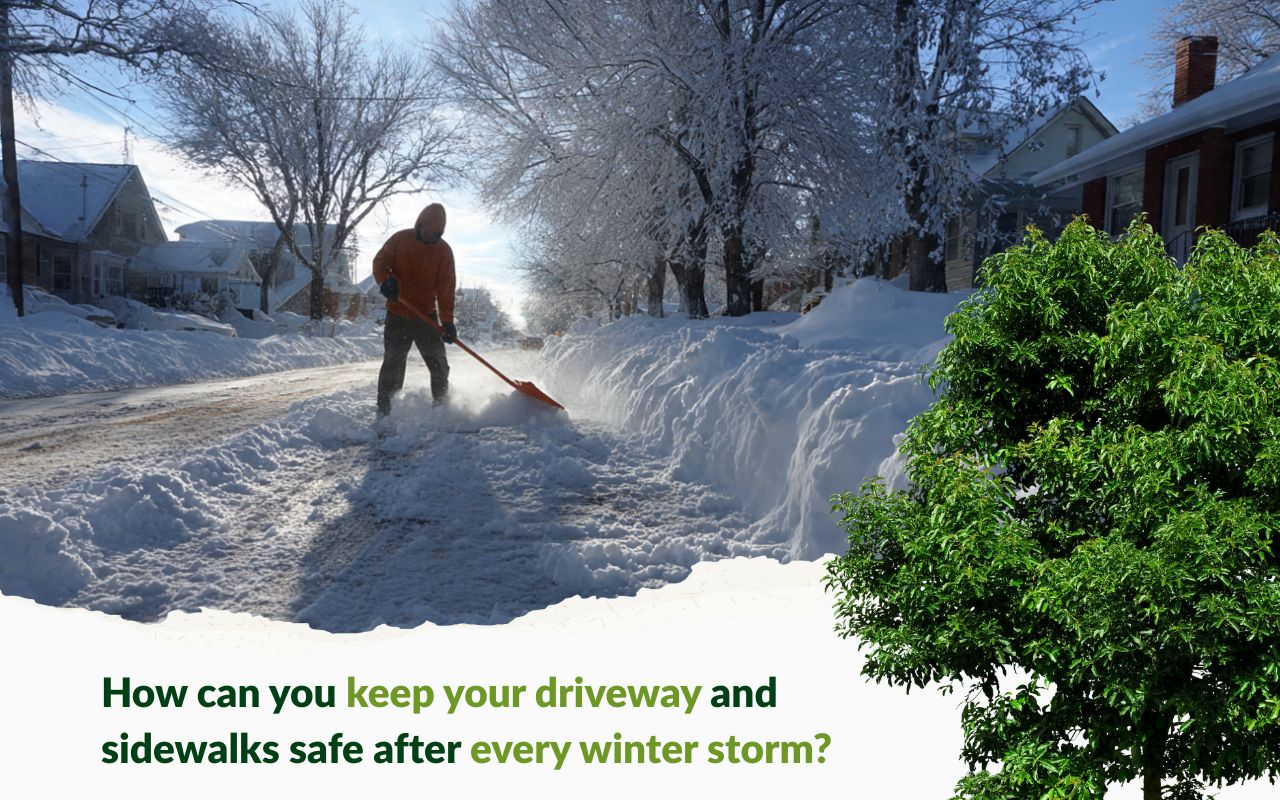
Winter storms can block the places you use most. Therefore, driveway and sidewalk clearance in winter should be a simple routine. When snow sits, it packs down fast. As a result, slips become more likely. With the right tools and timing, you can keep paths open, safe, and easy to maintain.
How can you keep your driveway and sidewalks safe after every winter storm?
To stay safe, start early and clear often. Therefore, driveway and sidewalk clearance in winter works best with quick passes. First, remove fresh snow before it compacts. Next, treat thin ice with the right product. Finally, protect trees and walkways with smart pruning and careful de-icing.
Why winter clearance matters for safety and access
Snow and ice turn small steps into big risks. Therefore, driveway and sidewalk clearance in winter protects guests and delivery teams. Also, it reduces the chance of hidden cracks causing falls.
- First, it lowers slip-and-fall risk for kids and seniors.
- Next, it keeps emergency access open during storms.
- Also, it prevents hard ice layers that take longer to break.
- Finally, it supports daily routines with fewer delays.
For local help and seasonal planning, Perez Landscape and Trees LLC can guide you toward safer outdoor spaces.
Tools that make clearing faster and less exhausting
Good tools reduce strain and save time. Therefore, set up your gear before the first storm. Also, store supplies near the door for quick action.
- First, use an ergonomic snow shovel to reduce back stress.
- Next, add a wide snow pusher for long sidewalk runs.
- Also, consider a snow blower for heavy or wet snow.
- Finally, keep a stiff broom for light dustings and steps.
To support tree-safe winter prep, Perez Landscape and Trees LLC can also recommend pruning that improves light and airflow.
Prepare your property before snow arrives
Preparation makes every storm easier. Therefore, mark edges and corners before snowfall. Also, trim branches that hang over paths.
Keep Safe limb height over walkways so people can pass without ducking. Meanwhile, reduce the risk of falling limbs during wind and ice.
If you want a pro approach, consider a clearance pruning service Kansas City homeowners trust. Also, review risk signs in Overgrown Branches Risks Every Homeowner Should Know.
Before storms, apply a light pre-treatment on hard surfaces. As a result, snow lifts faster during the first shovel pass.
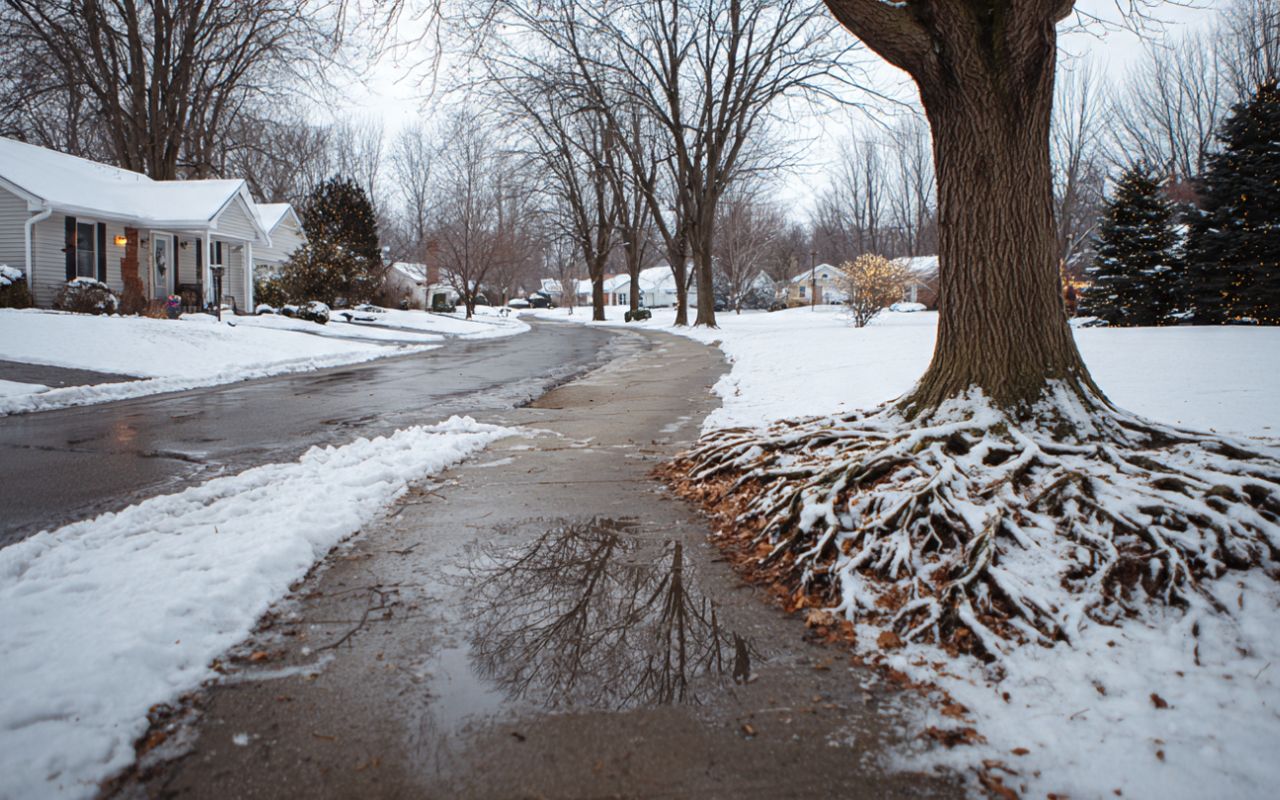
Prevent ice while protecting plants and trees
Ice control should be targeted, not excessive. Therefore, use the minimum amount needed. Also, choose products based on temperature and location.
- First, use calcium-based products for colder conditions.
- Next, apply evenly to avoid piles and runoff.
- Also, sweep extra granules after surfaces dry.
- Finally, add sand for traction on steep spots.
Be careful with de-icing around roots near trees and shrubs. Therefore, avoid overapplication near planting beds. Also, use traction materials where plants are close.
For trimming that reduces shade and refreeze, explore Trimming Frequency by Species and Why It Matters.
How to build a simple storm routine for clear paths
Consistency keeps chores small. Therefore, plan short sessions instead of long cleanups. Also, aim to clear before foot traffic packs snow.
- First, clear a narrow center lane on the driveway.
- Next, widen the lane by pushing snow outward.
- Then, clear sidewalks from the door to the street.
- After that, scrape thin layers before they freeze solid.
- Finally, apply a light de-icer only where needed.
With this approach, driveway and sidewalk clearance in winter stays manageable. Also, it reduces refreeze in shaded areas.
If trees are blocking sunlight, review local trimming options in Who Handles Precision Tree Trimming in Grandview, MO.
FAQs
How soon should I start clearing after snowfall?
Start early, because fresh snow is lighter. Therefore, driveway and sidewalk clearance in winter is easier within the first hours. Also, early clearing prevents packed layers that turn into ice.
If overhang adds shade and refreeze, read Overgrown Branches Risks Every Homeowner Should Know.
What is the safest way to handle ice near trees?
Use minimal product and focus on traction. Therefore, choose methods that reduce salt exposure. Also, avoid heavy spreading when plants are nearby.
For planning that improves melt, use pruning guidance from Trimming Frequency by Species and Why It Matters.
How can I reduce refreezing on shaded sidewalks?
Improve sunlight and airflow where possible. Therefore, trim branches that block winter sun. Also, clear earlier in the day to maximize melt time.
For local trimming support, see Who Handles Precision Tree Trimming in Grandview, MO.
How do I know if branches are too low over a walkway?
Look for spots where people must duck or detour. Therefore, raise clearance before storms and ice loads. Also, remove weak limbs that could snap.
For warning signs and prevention, review Overgrown Branches Risks Every Homeowner Should Know.
When should I call a professional instead of doing it myself?
Call a pro when ice loads threaten limbs or structures. Therefore, don’t risk ladders or power-line zones. Also, schedule pruning before peak storms.
To get help fast, use Let’s Bring Your Dream Project to Life—Contact Us Today!.
Next steps to keep paths safe all season
Small habits create big safety gains. Therefore, driveway and sidewalk clearance in winter should be part of your weekly rhythm. Also, keep tools ready and supplies refilled.
If you want expert trimming support alongside winter planning, Perez Landscape and Trees LLC can help reduce hazards. To start, connect through Let’s Bring Your Dream Project to Life—Contact Us Today!.
With a steady routine, driveway and sidewalk clearance in winter stays quick and dependable. As a result, everyone moves safely from door to street.
References
- Popular Mechanics: Tips for making snow shoveling easier and safer
- The Weather Channel: Guide to safe and effective snow shoveling