
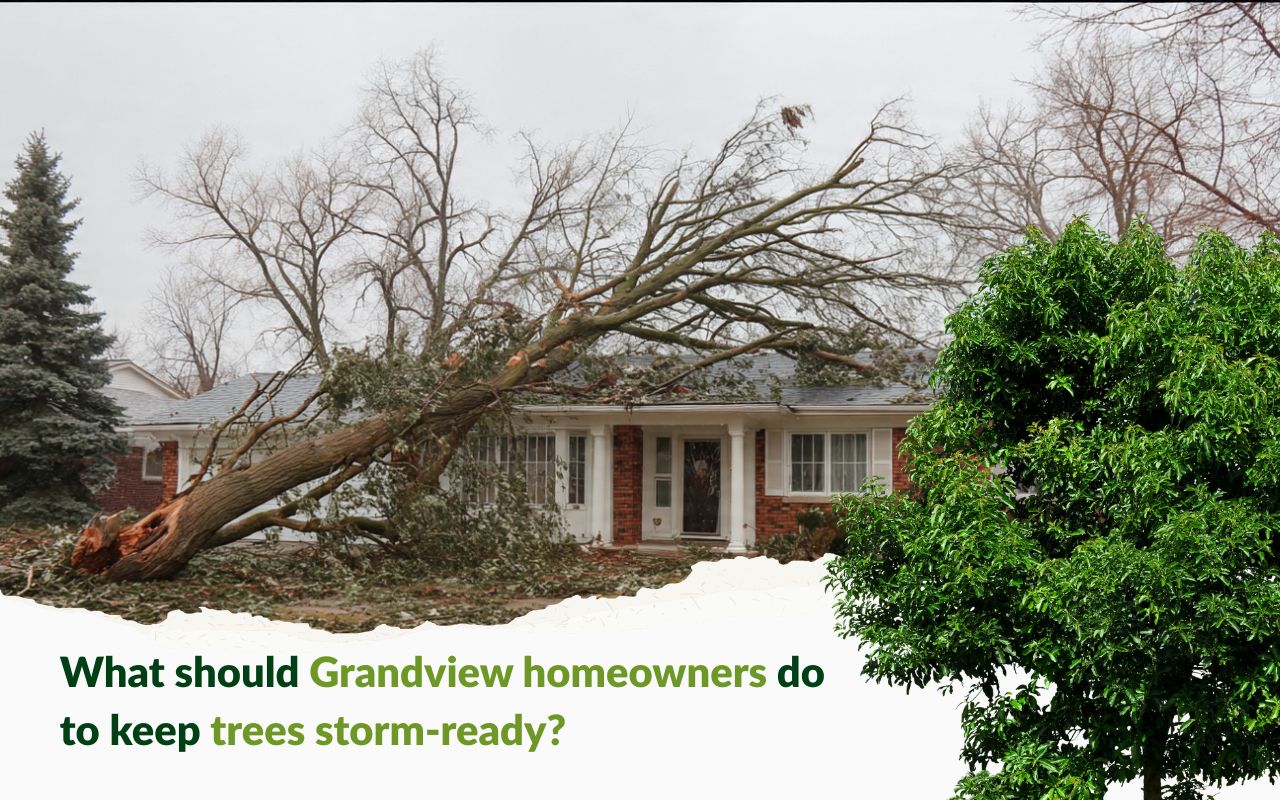
Storms can arrive fast in Grandview. Therefore, your trees should be ready before the first strong wind. Because weak structure can break, it can damage roofs, cars, and fences. However, a few smart checks can reduce risk. This article explains what to watch for, what to prune, and when to call a pro.
What should Grandview homeowners do to keep trees storm-ready?
Grandview homeowners should inspect tree structure, reduce canopy wind resistance, and correct problems early. Therefore, the Grandview homeowner guide to storm-ready trees focuses on weak attachments, smart thinning, and timely pruning. In addition, routine maintenance improves safety, curb appeal, and long-term tree health.
Why storm-ready trees matter in Grandview
Healthy trees add shade and value. However, unsafe trees can become liabilities during severe weather. Consequently, the Grandview homeowner guide to storm-ready trees starts with prevention, not panic.
Perez Landscape and Trees LLC helps local homeowners reduce tree-related risks each season. Moreover, Perez Landscape and Trees LLC emphasizes safe practices that protect families and property.
How to spot risky branch connections
First, learn the most common weak branch union signs. Then, you can act before cracks become failures. Additionally, you can document changes after each storm.
- Look for narrow branch angles and tight “V” crotches.
- Check for bark inclusion, which looks like bark trapped inside the union.
- Notice seams, splits, or fresh cracking sounds in wind.
- Watch for rust-colored streaks, sap flow, or staining near junctions.
- Also note sudden drooping, especially after rain.
Next, use a phone camera to zoom in on suspect areas. However, avoid climbing or cutting near power lines. If you want a local crew to handle structural trimming, explore Tree Trimming in Grandview, MO, for Better Yards.
As a reminder, the Grandview homeowner guide to storm-ready trees treats early detection as your best defense.
How crown thinning reduces wind load
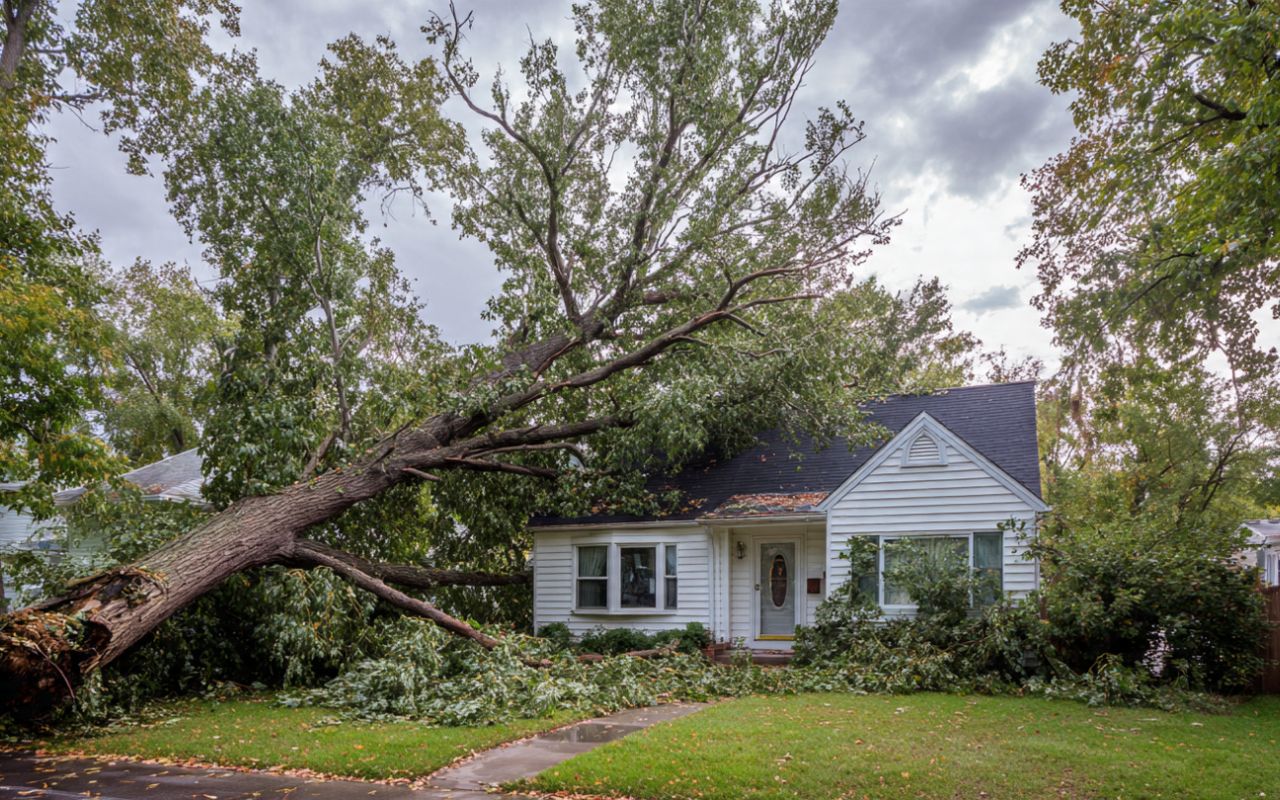
Now, let’s cover crown thinning basics. This method removes selected smaller branches to reduce the canopy’s “sail” effect. Therefore, wind can pass through more easily, and limbs carry less stress.
- Start by removing dead, damaged, and hanging branches.
- Then, reduce crowding inside the canopy with selective cuts.
- Next, keep the strongest scaffold limbs and remove crossing growth.
- Finally, avoid removing more than 20–25% of the live crown in one session.
Additionally, spacing work every two to three years helps mature trees adjust. Because over-thinning can shock trees, slow and steady wins. In other words, crown thinning basics should improve structure, not strip the canopy.
Tree health checks before storm season
First, check the ground around each tree. If soil stays soggy, roots may weaken. Also, if soil is compacted, roots may struggle to spread.
Next, inspect the trunk. Look for cavities, fungal growth, soft spots, or deep wounds. Meanwhile, review the canopy for thin foliage, dieback, or sudden leaf drop.
Finally, notice lean changes over time. If the trunk angle worsens, stability may be declining. At that point, Perez Landscape and Trees LLC can help you evaluate risk and plan corrective care.
Preventive pruning habits that reduce storm damage
Preventive pruning for Grandview works best when it is routine. Therefore, schedule light corrections before storms are frequent. Also, focus on improving structure while branches are still small.
- Remove deadwood promptly, because it breaks easily.
- Reduce rubbing and crossing branches to prevent wounds.
- Maintain clearance over roofs, driveways, and sidewalks.
- Develop a strong central leader on young trees when possible.
- Also avoid “topping,” because it creates weak regrowth.
Additionally, preventive pruning for Grandview should be species-aware. For that reason, timing matters for tree health and recovery. Perez Landscape and Trees LLC can recommend seasonal pruning that fits your trees and your property layout.
How to prepare your yard before the next big storm
Use this quick process to apply the Grandview homeowner guide to storm-ready trees. Then, repeat it each year for better results.
- Walk the property and mark trees near structures.
- Next, photograph weak branch union signs for comparison later.
- Then, schedule pruning to correct hazards and reduce overhang.
- After that, clear loose items that could become wind projectiles.
- Finally, save emergency contacts and review safe zones with family.
If you want a clear plan for post-storm decisions, read Storm-damaged trees: what to do in Kansas City. Also, if you prefer an expert evaluation before storm season, review Arborist Inspection in KC and When to Schedule Tree Removal.
When supports and bracing may help
Sometimes, pruning is not enough. Therefore, support systems can reduce failure risk in specific cases. However, cabling and bracing must be designed correctly.
In general, supports can help when a union is weak but the tree is worth preserving. For example, a large split-prone junction may benefit from reinforcement. Still, only trained professionals should install hardware. Perez Landscape and Trees LLC can guide you toward the safest option for your specific tree.
FAQs
How often should I inspect my trees in Grandview?
Ideally, inspect twice a year, plus after severe weather. Additionally, pay extra attention to trees near roofs and driveways. If you want broader answers to common service questions, see Frequently Asked Questions.
What are the most important weak branch union signs to watch for?
Look for tight “V” angles, bark inclusion, cracking, and seams at junctions. Also watch for sudden drooping after heavy rain. If you need local trimming help, start with Tree Trimming in Grandview, MO, for Better Yards.
How much crown thinning is safe for mature trees?
In most cases, remove no more than 20–25% of the live crown in one session. Therefore, spread work over time for healthier recovery. For planning support and risk evaluation, review Arborist Inspection in KC and When to Schedule Tree Removal.
What should I do right after a storm damages a tree?
First, prioritize safety and avoid hanging limbs and downed lines. Then, document damage for records if needed. Next, call professionals for hazardous situations. For a step-by-step approach, read Storm-damaged trees: what to do in Kansas City.
How do I schedule help for preventive pruning for Grandview properties?
Start by requesting an evaluation and discussing your goals. Then, build a maintenance plan that fits your trees and risk areas. To reach Perez Landscape and Trees LLC, use Contact Perez Landscape and Trees LLC in Kansas City, MO.
Protect your home with consistent tree care
Storm readiness is built over time. Therefore, use the Grandview homeowner guide to storm-ready trees each season, not just after damage. Also, keep notes, photos, and dates to track changes.
Perez Landscape and Trees LLC supports homeowners with trimming, inspections, and storm-focused recommendations. Moreover, Perez Landscape and Trees LLC can help prioritize hazards and reduce risk. If you are ready to plan ahead, contact Perez Landscape and Trees LLC and schedule your next checkup.
For additional reading from editorial outlets, see What to Do with Storm-Damaged Trees in Your Yard and Family Sues City After 4-Year-Old Boy Killed by Falling Tree Branch While Playing with His Brother.