
Winter in Grandview, MO is the perfect time to shape, protect, and strengthen your trees. When temperatures drop and growth slows, careful pruning can boost safety and long-term health. This guide on Winter Tree Pruning Safety & Tool Tips in Grandview, MO explains how to plan, cut, and clean up so every session is safer and more effective.
How can you prune winter trees safely in Grandview?
Prune on dry, above-freezing days, wear full protective gear, and use sharp, well-maintained tools. Start with dead, damaged, or crossing branches, make clean three-step cuts at the branch collar, and call a certified arborist for large, high, or power-line hazards.
Importance of winter tree pruning in Grandview, MO
Pruning during dormancy improves structure, safety, and spring growth. With leaves gone, you can clearly see weak or crossing limbs and remove them before snow or ice pulls them down. Following Winter Tree Pruning Safety & Tool Tips in Grandview, MO helps prevent storm damage, roof impact, and broken branches over driveways or sidewalks.
- Health: Remove dead, diseased, and rubbing limbs to reduce decay and insect pressure.
- Safety: Reduce the chance of falling branches during winter storms and high winds.
- Performance: Improve light penetration, air flow, and future fruit or flower production.
Understanding tree dormancy cycles in Missouri winters
Dormancy is your signal that trees are ready for structural work. In Grandview, most deciduous trees enter true dormancy from late December through February. Sap flow slows, making cuts less stressful and reducing the risk of bleeding on species like maple and birch. Aim major pruning for this window and avoid work in deep, sub-freezing cold snaps.
Identifying local tree species and their pruning needs
Different species need different strategies. Red oaks, silver maples, ornamental crabapples, and fruit trees all respond uniquely to pruning. Oaks need sanitary cuts and cautious timing to limit disease risk, while maples benefit from late-winter pruning to minimize sap flow. Crabapples and fruit trees often need thinning for air circulation and light.
Common Grandview landscape trees
Walk your yard and note bark color, branching pattern, and buds. Group similar trees so you can repeat the same pruning approach. When in doubt, take clear photos and consult a certified arborist or local extension office before making large or structural cuts.
Safety precautions before you start pruning
Personal safety always comes before any cut. Survey the area from the ground up and never work near energized lines. In winter, frozen soil, ice, and snow make footing tricky, so slow down and secure every step you take.
- Check for power lines, sheds, vehicles, and walkways in the drop zone.
- Wear helmet, eye and ear protection, gloves, sturdy boots, and warm, snug-fitting layers.
- Use non-conductive ladders and never overreach; move the ladder instead.
- Have another adult nearby when handling saws or working above shoulder height.
- Call a professional for any large limb, trunk defect, or tree leaning over a structure.
Essential tools for safe winter tree pruning
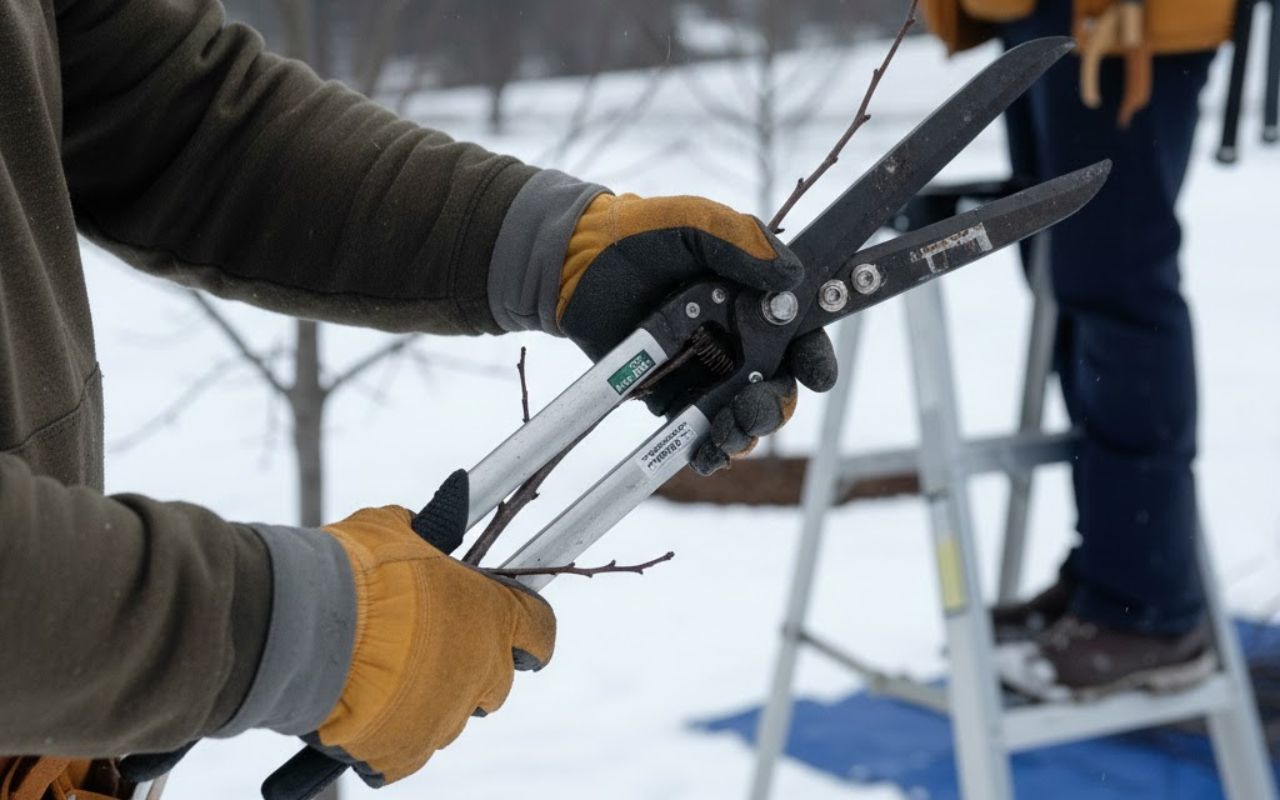
Using the right tool for each branch keeps cuts clean and your body safer. Match tool size to branch diameter to avoid forcing cuts or twisting your wrists. Keep blades sharp and handles tight to maintain control.
- Bypass hand pruners for live branches up to about ¾ inch thick.
- Loppers for limbs up to 1½–2 inches, especially higher or awkward angles.
- Curved pruning saws for larger limbs and three-step cuts at the branch collar.
- Pole pruners or pole saws for higher limbs you can safely reach from the ground; learn more about pole saw benefits for tree trimming.
- Disinfectant, replacement blades, and a small tool kit for quick field maintenance.
Proper techniques for pruning winter branches
Clean, well-placed cuts heal fastest and protect tree structure. For larger branches, use the three-cut method: an undercut, a top cut to remove weight, then a final cut just outside the branch collar. This prevents bark from tearing down the trunk.
For finishing cuts, your saw should follow the natural flare of the branch collar without leaving a stub or cutting into the trunk. Combine this with a careful cut and clean pruning technique so wounds are smooth and free of ragged fibers that slow closure.
Addressing common winter tree pruning mistakes
Most problems come from taking too much or cutting in the wrong place. Overpruning weakens trees, while stub or flush cuts invite decay. Limit total removal to about one quarter of the live canopy in a single winter, and spread major structural work over multiple seasons.
If you see clusters of weak sprouts after pruning, it may signal stress from heavy cutting. In future seasons, shift toward lighter, more frequent pruning to guide growth instead of forcing major corrections all at once.
Best practices for cleanup and tool care
Cleanup is part of pruning, not an optional extra. Remove all branches, twigs, and leaf piles so insects and fungi have fewer places to overwinter. Chip healthy wood for mulch or stack it neatly; bag or haul away material from diseased trees.
Once the yard is clear, clean and dry your equipment. Follow a regular routine based on these tool maintenance for tree trimming best practices to sharpen blades, oil moving parts, and store tools out of the weather between winter projects.
How to prune winter trees safely in Grandview, MO
- Check weather: Choose a dry day above freezing with no strong wind in the forecast.
- Inspect each tree: Identify dead, cracked, rubbing, or downward-growing branches and mark them.
- Gear up: Put on full PPE and set ladders or platforms on level, ice-free ground.
- Select tools: Match pruners, loppers, saws, and pole tools to branch size and height.
- Make cuts: Use the three-cut method on larger limbs and avoid removing more than 25% of the canopy.
- Clean and monitor: Remove debris, disinfect tools, and check cuts periodically through late winter.
Monitoring tree health after winter pruning
Post-pruning checks confirm whether your work helped or hurt. Through late winter and early spring, look for healthy bud swell along remaining branches and gradual closure around pruning cuts. Dark, sunken tissue or oozing sap may indicate disease or poor cuts that need expert evaluation.
Keep watering during extended dry spells when soil is not frozen. Light irrigation supports recovery, especially for recently planted trees or those recovering from storm damage and corrective pruning.
Frequently Asked Questions
When is the best time to do winter pruning in Grandview, MO?
Late December through February is usually best. Most deciduous trees are fully dormant, which minimizes stress and sap flow. Avoid pruning during severe cold snaps or wet, icy storms, and save emergency hazard work for professionals when conditions are risky.
Which pruning tools should I buy first for safe winter tree care?
Start with quality hand pruners, loppers, and a pruning saw. Then add a safe pole saw as needed, comparing options with guides like pruning shears vs. saws: best tree trimming tools and choosing pruning blades so your setup matches your trees and comfort level.
How can I tell if a winter pruning job is too dangerous to DIY?
Anything near power lines, rooftops, or large trunks is a red flag. If you must climb high, use a chainsaw aloft, or cut a limb bigger than your arm, it is usually safer to hire a certified arborist with proper rigging and insurance.
What should I do if I suspect disease in a branch I removed?
Dispose of diseased wood away from your yard. Do not chip it into mulch. Bag it, burn it legally, or take it to an approved facility. Disinfect tools after each cut and monitor nearby trees for wilting, cankers, or unusual leaf drop in the next growing season.
How can I arrange a professional winter tree safety inspection?
Schedule an on-site evaluation before tackling complex pruning. Share photos, your goals, and any concerns about weak or overgrown trees, then request a winter tree safety inspection in Grandview so an expert can recommend safe pruning, cabling, or removal options.
Ensuring safe and successful winter tree pruning
Safe winter pruning combines timing, technique, and tool care. When you work during dormancy, respect species needs, and follow structured Winter Tree Pruning Safety & Tool Tips in Grandview, MO, you reduce hazards for people and property. Partnering with qualified professionals for high-risk trees keeps your landscape healthier and more resilient year-round.