
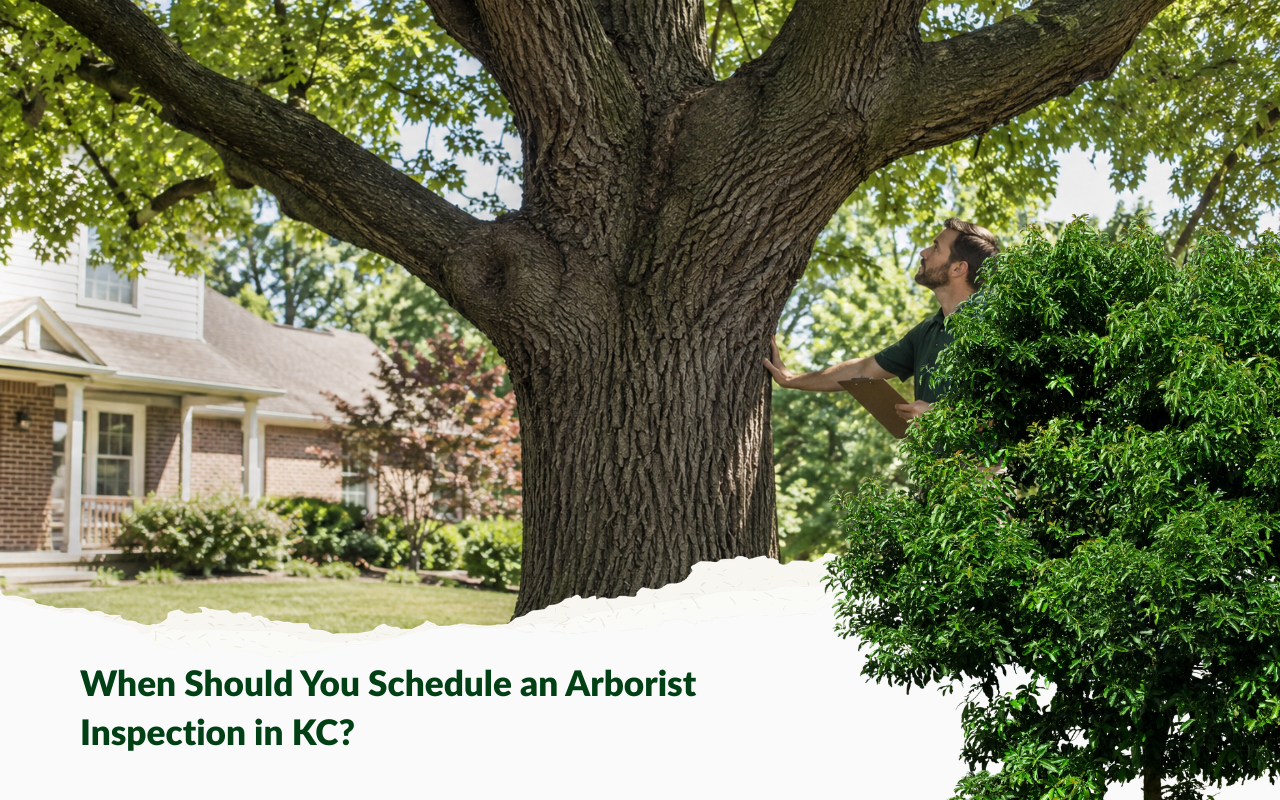
An arborist inspection in KC should be scheduled when trees show stress, storm damage, weak limbs, pest signs, or seasonal decline. Late summer is a smart time because the growing season reveals health issues before fall storms, winter weight, and property risks increase.
Our Tree Care Services help Kansas City homeowners make safer tree care decisions before conditions change.
Spot Tree Health Risks Before Late Summer Storms
Late summer tree inspections help reveal stress that may not appear earlier in the season. Heat, dry soil, insects, heavy canopy growth, and past storm damage can weaken trees before stronger seasonal weather arrives.
| Storm Damage Concern | Why It Needs Attention |
|---|---|
| Cracked branches | Branches that survived summer storms may still be weakened and unsafe. |
| Overloaded limbs | Heavy or stressed limbs can create risks for nearby people, homes, and property. |
| Poorly attached branches | Weak branch attachments may fail later, especially after wind, rain, or seasonal changes. |
| Stressed roots | Drought, saturated soil, or nearby property work can affect root stability and tree health. |
| Hazards to life and property | According to MU Extension, these hazards should be handled first after storm damage. |
- Early leaf drop or unusual leaf color
- Cracks, cavities, or soft areas in the trunk
- Dead limbs over roofs, drives, or walkways
- Soil lifting near the base of the tree
- Visible insects, holes, or sap leakage
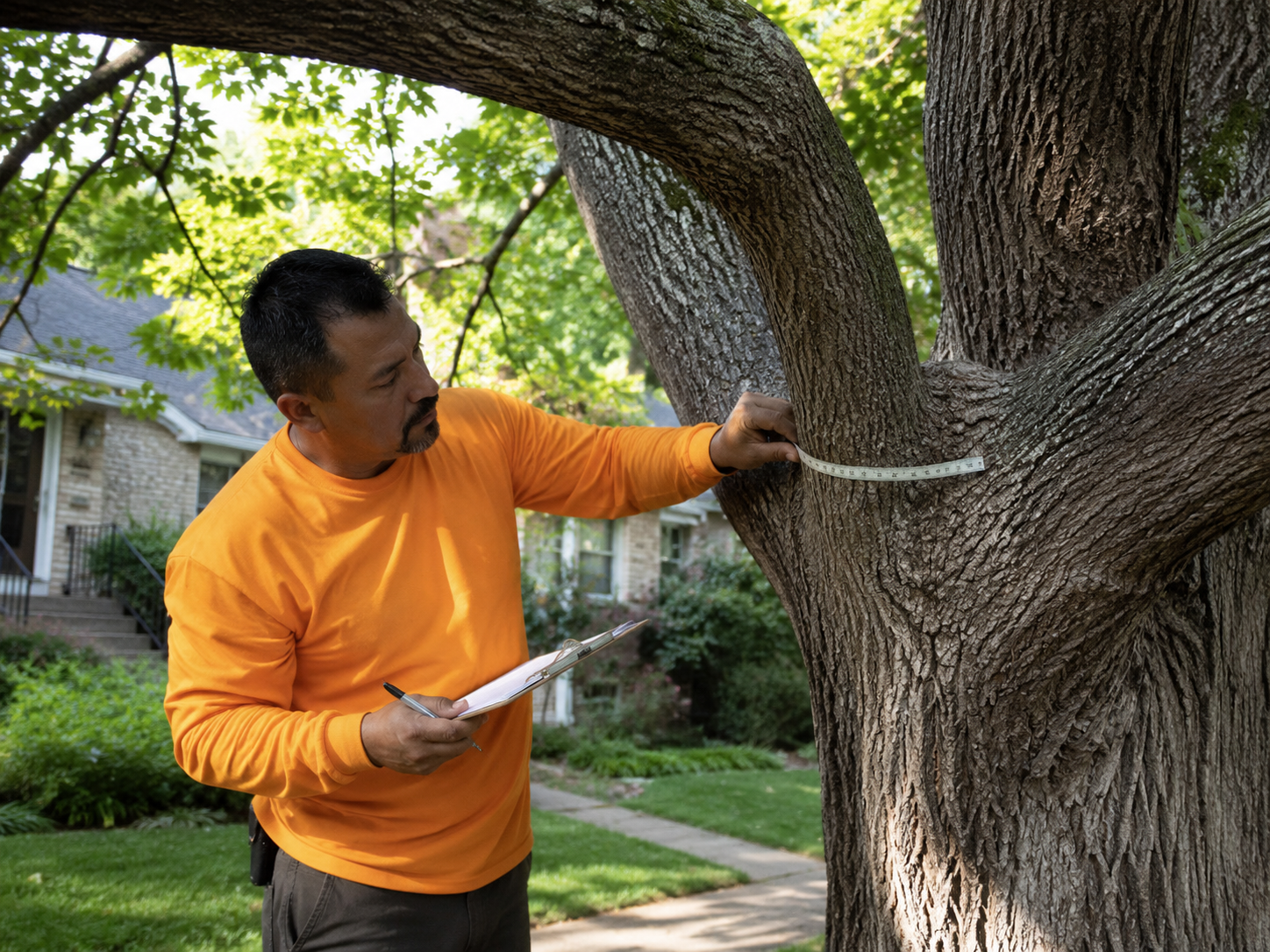
Protect Structures With End Of Season Tree Inspection
An end of season tree inspection helps homeowners understand which trees may struggle during fall winds, ice, snow, or heavy rain. It gives a clear view of structural issues before seasonal weather adds more pressure.
Branches that survived summer storms may still be cracked, overloaded, or poorly attached. Roots may also be stressed from drought, saturated soil, or nearby property work. According to MU Extension, hazards to life and property should be handled first after storm damage.
When customers contact Perez Landscape and Trees LLC, we ask about visible damage, tree location, recent weather, and nearby structures. Then we explain whether a closer inspection, pruning, or another tree care step makes sense.
Choose A Certified Arborist For Clear Safety Recommendations
A certified arborist can help identify tree risks with trained judgment and a structured review. Certification shows a base level of tree care knowledge, which helps homeowners receive clearer guidance about health, pruning, support, or removal.
Tree decisions should not rely on guesswork. The International Society of Arboriculture explains that tree risk should be managed by understanding hazards and using proper care. With Perez Landscape and Trees LLC, you get plain recommendations based on what we can see, check, and explain.
- Inspection first: Review the tree before choosing work.
- Risk level: Consider targets like homes and walkways.
- Care options: Discuss pruning, monitoring, or removal.
- Next step: Use Contact Our Tree Care Team for scheduling questions.
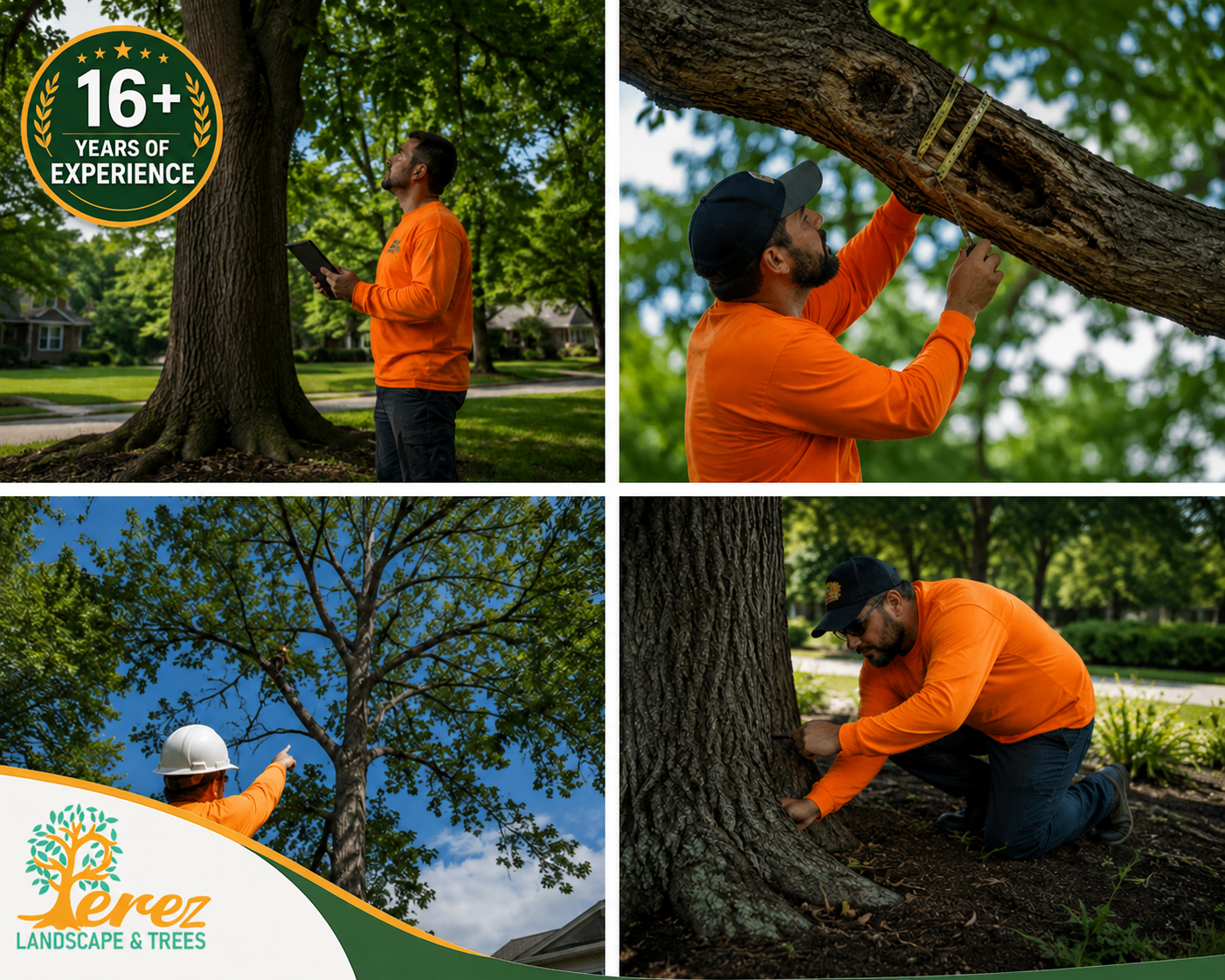
Review Weak Limbs Pests Roots And Trunk Damage
A full arborist inspection in KC should review more than the leaves. Tree safety depends on the trunk, roots, branch structure, canopy balance, pest activity, and the space around the tree.
Our crew at Perez Landscape and Trees LLC reviews limbs for deadwood, cracks, weight, and poor attachment. We also check the trunk for cavities, decay, peeling bark, and fungal growth. Root issues can be harder to see, so we look for soil movement, damaged roots, and a changing lean.
Pest signs matter because insects can weaken a tree from the inside. If a tree has holes, sawdust-like material, sap, or thinning leaves, an inspection can help decide whether treatment, pruning, or monitoring is the safer path.
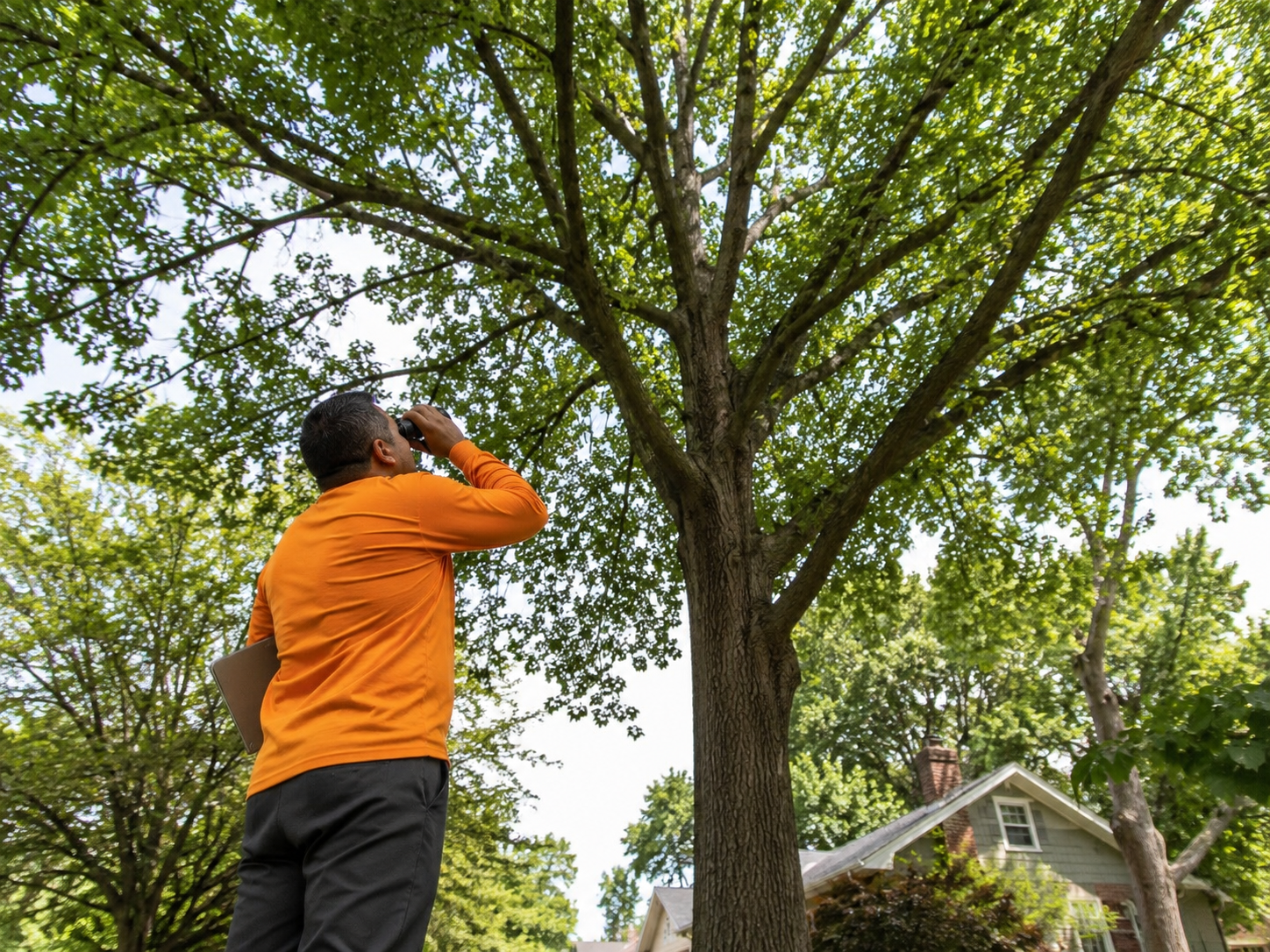
Prepare Your Inspection Appointment With Simple Next Steps
A tree inspection appointment is easier when homeowners know what information helps. Clear details about the tree, recent storms, visible damage, and nearby property risks help us focus on the right concerns quickly.
When you reach Perez Landscape and Trees LLC, we first ask what you noticed and where the tree is located. Then we review the concern, explain what may need to be checked, and help you understand possible next steps.
- Share photos of visible damage when possible.
- Tell us if limbs have fallen recently.
- Point out roofs, fences, wires, and walkways nearby.
- Keep people away from hanging or cracked limbs.
- Ask about Landscape And Tree Maintenance if ongoing care is needed.
During the inspection, we check the tree’s condition and explain concerns in simple terms. Afterward, we may recommend pruning, monitoring, support, improved care, or removal if the tree cannot be managed safely.
Frequently Asked Questions
When is the best time for tree inspection?
Late summer and early fall are useful times because tree stress is often visible. Leaves, limbs, pests, and storm damage can be easier to review before colder weather. You can also schedule after strong wind, heavy rain, or sudden branch failure.
Can inspection show whether tree removal is needed?
Yes, an inspection can help explain whether removal should be considered. Severe decay, root damage, major cracking, repeated limb failure, or unsafe leaning may point toward removal. For next steps, use Request A Tree Review.
What signs suggest a tree may be unsafe?
Warning signs include large dead limbs, trunk cracks, hollow areas, fungal growth, exposed damaged roots, and sudden leaning. Trees near homes, drives, patios, or walkways deserve faster attention because falling limbs can damage property.
Does summer arborist inspection help before storm season?
Yes, a summer arborist inspection can find weak limbs, canopy weight, decay, and pest signs before seasonal storms. If several trees need attention, our Outdoor Property Care Services can help you plan practical work.
How should homeowners prepare before an arborist arrives?
Write down recent changes, fallen limbs, storm events, and areas of concern. Keep vehicles and outdoor items away when possible. If you are unsure what to share, Ask Our Tree Care Team before the appointment.
Plan Safer Tree Care Before Seasonal Weather Changes
An arborist inspection in KC gives homeowners clear direction before small concerns become larger risks. If your tree shows stress, weak limbs, pest signs, or storm damage, schedule a practical review before the season changes. Visit Schedule A Tree Care Appointment to ask questions and choose the next safe step.