
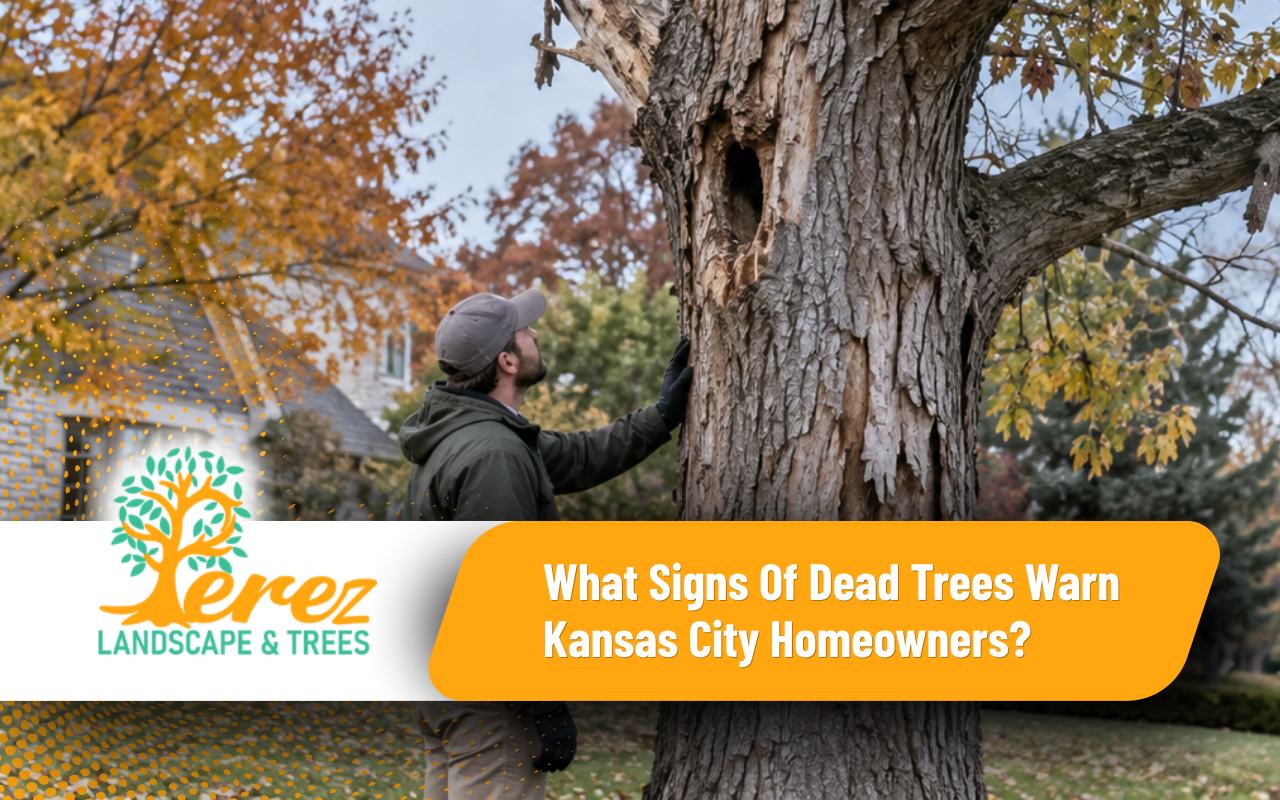
Signs of dead trees include brittle branches, sparse leaves, peeling bark, trunk decay, fungus, damaged roots, and sudden leaning. These clues help homeowners spot tree decline before fall storms, ice, snow, or winter winds increase the risk of falling limbs.
If your trees look thin, cracked, brittle, or unstable, review the warning signs early and explore Kansas City tree care options before winter adds more stress.
Early Foliage Changes Reveal Tree Stress Before Fall
Leaf changes often give the first visible warning that a tree is struggling. Dry edges, early leaf drop, small leaves, and a thin canopy may point to drought stress, root problems, disease, pests, or dead tree signs before fall in Kansas City.
At Perez Landscape and Trees LLC, we check canopy density, leaf condition, branch tips, and nearby soil conditions before suggesting the next step. One dry branch may not mean the whole tree is dead. However, several symptoms together deserve attention.
- Brown or curled leaves during the growing season
- Early leaf drop before normal fall timing
- Large bare sections in the canopy
- Weak new growth near branch ends
- Sparse leaves compared with nearby trees
According to University of Missouri Extension, many active tree roots sit near the top of the soil. Because of that, heat and drought can affect water uptake quickly. Foliage stress becomes more serious when it appears with cracks, fungus, or brittle limbs.
Bark And Branch Defects Expose Bigger Safety Concerns
Bark and branch problems can show whether a tree still has strong living wood. Peeling bark, deep cracks, hanging limbs, missing buds, and brittle branches often suggest weakened areas that may break during wind, ice, or snow.
Healthy small branches usually bend a little. Dead branches often snap easily. Missing bark can also expose wood to moisture, insects, decay, and more damage. When customers contact Perez Landscape and Trees LLC, we ask where the tree stands and what nearby structures may be at risk.
- Brittle branches may fall during storms.
- Deep trunk cracks may show structural weakness.
- Missing bark may expose damaged wood.
- Hanging limbs may already be partly failed.
The U.S. Forest Service explains that visible tree defects can indicate where failure is more likely. If branches hang over a roof, driveway, or walkway, use our request a property review page to describe what you see.
Root And Trunk Problems Create Hidden Winter Risks
Root and trunk damage can be more serious than leaf loss because those areas support the whole tree. Fungus, cavities, soft wood, exposed roots, soil lifting, and sudden leaning may signal decay or poor anchoring before severe weather arrives.
A tree may still have green leaves while part of the trunk or root system is weak. That is why checking for dying trees September in Missouri should include the base, visible roots, bark wounds, and the direction of any lean.
Watch closely for these risk signs:
- Mushrooms or fungus near the trunk base
- Soft, hollow, or sunken trunk areas
- Cracks extending into major limbs
- Exposed, broken, or decaying roots
- A lean that appeared after storms
With Perez Landscape and Trees LLC, you get clear guidance before work begins. We explain whether monitoring, trimming, or removal may be the safer option. A sudden lean needs fast attention, especially near people, cars, or structures.
Pre-Winter Dead Tree Inspection In KC Guides Safer Decisions
A pre-winter dead tree inspection in KC helps homeowners find weak limbs, decay, trunk cracks, and root issues before ice and snow add weight. This check is especially helpful for trees near roofs, fences, driveways, sidewalks, and outdoor spaces.
Start from a safe distance and look at the whole tree. Notice whether the canopy is balanced, whether large limbs are bare, and whether the trunk shows cracks or holes. Then check the base for fungus, damaged roots, or soil movement.
At Perez Landscape and Trees LLC, we explain what we see in simple terms. We do not recommend climbing unstable trees or cutting large limbs without the right equipment. Safe inspection protects people first and helps prevent rushed decisions after bad weather.
Photo tracking can also help. Take pictures of cracks, fungus, leaning, or dead branches. Comparing photos over several weeks can show whether the issue is spreading.
Simple Booking Steps Prepare Homeowners For Tree Reviews
The booking process is easier when homeowners know what details matter. Before an appointment, we ask about the tree location, visible damage, nearby structures, recent storms, fallen branches, and any sudden change in the tree’s lean.
After you reach out, we review the concern and prepare for the property check. During the review, we look at visible branches, bark, trunk condition, roots, lean, access, and cleanup needs when relevant.
- Describe the tree and its location.
- Share photos through our contact page.
- Tell us what structures are nearby.
- We inspect visible risk signs on-site.
- We explain practical next steps clearly.
Good details help us prepare for the appointment. Mention if the tree stands near power lines, a roof, parked vehicles, or a high-use walkway. These facts help us understand the risk before work starts.
Frequently Asked Questions
Can a tree be dead with green leaves?
Yes, a tree can have green leaves while parts of the trunk, roots, or large limbs are weak. Living foliage does not prove the whole tree is structurally sound. A closer review through our local tree services can help clarify the concern.
When should homeowners check trees before winter weather?
Early fall is a useful time to check trees before winter. Leaves, bark, branches, roots, and trunk defects are often easier to notice before ice and snow arrive. Prioritize trees near roofs, walkways, driveways, fences, and outdoor sitting areas.
Which dead tree signs need professional attention fastest?
Fast attention is important when a tree suddenly leans, drops large limbs, shows major trunk cracks, or has fungus with soft wood near the base. Use our estimate request page if the tree may threaten people or property.
Are mushrooms near a tree always dangerous?
Mushrooms do not always mean immediate danger, but they may be connected to decay when they appear with cavities, soft wood, bark loss, or declining leaves. A professional can inspect the visible symptoms and explain whether decay may affect stability.
Should I remove large dead branches myself?
Large dead branches can shift, split, or fall in unsafe ways. Avoid climbing, working near power lines, or cutting heavy limbs without proper tools. For safer planning, send details through our contact form and explain where the branch is located.
Timely Tree Care Protects Properties Before Severe Weather
Signs of dead trees should not be ignored when several warnings appear together. Contact Perez Landscape and Trees LLC when you notice brittle limbs, fungus, trunk cracks, root damage, sudden leaning, or storm damage. To plan a safer next step, schedule a tree review before winter weather raises the risk.